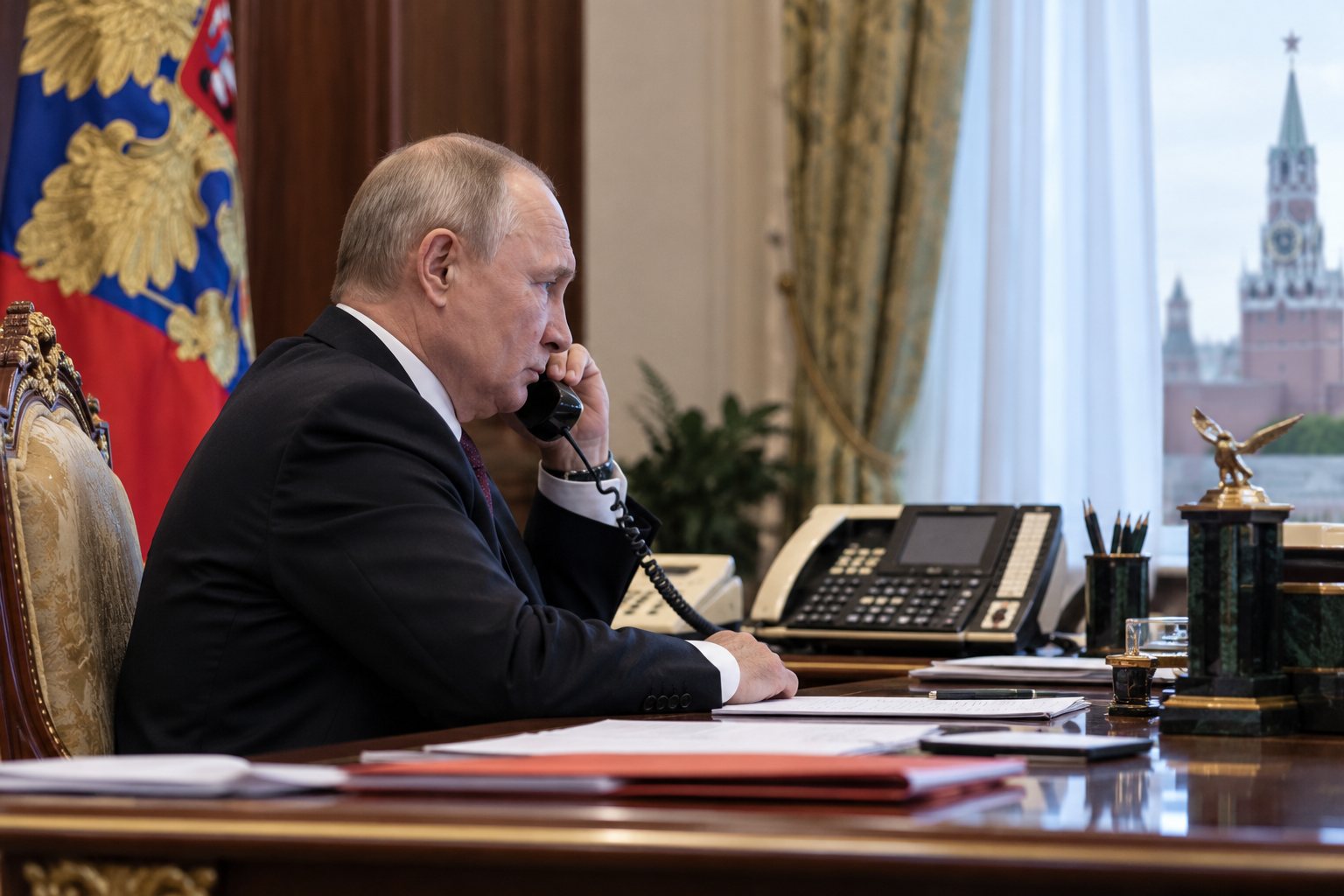
Donald Trump's relationship with Vladimir Putin apparently may not have ended when Trump left the White House.
That was another major revelation from Bob Woodward's book War, details of which became public on October 8, 2024.
Woodward reported that Trump and the Russian president may have spoken privately as many as seven times after Trump left office in January 2021.
One alleged conversation was particularly striking.
According to Woodward, in early 2024 Trump was at Mar-a-Lago when he instructed an aide to leave his office because he was going to speak privately by telephone with Putin.
If accurate, that would mean a former American president—and a candidate attempting to return to the White House—was privately communicating with the Russian president while Russia was waging its war against Ukraine.
But unlike Woodward's separate revelation that Trump sent COVID testing equipment to Russia during the pandemic, the alleged post-presidency phone calls were not independently confirmed by the Kremlin.
Russia denied they happened.
An Aide Reportedly Witnessed One Call Being Arranged
Woodward's account described an incident at Trump's Mar-a-Lago residence in Florida in early 2024.
According to the book, Trump ordered an unnamed aide out of his office so that he could conduct a private telephone conversation with Putin.
Woodward did not report what Trump and Putin allegedly discussed.
The aide cited by Woodward reportedly indicated that Trump and Putin may have spoken as many as seven times since Trump left the presidency in January 2021.
That would place at least some of the alleged communications during an extraordinary period in U.S.-Russian relations.
Russia launched its full-scale invasion of Ukraine in February 2022.
The United States under President Joe Biden became one of Ukraine's principal military, financial and intelligence supporters.
Trump, meanwhile, remained the most influential figure in the Republican Party and by 2024 was campaigning to regain the presidency.
Private conversations between Trump and Putin during that period would therefore raise obvious questions about what the two men discussed.
Woodward's reporting did not answer those questions.
Trump's Campaign Denies the Story
Trump's campaign rejected Woodward's reporting.
Campaign communications director Steven Cheung said the stories in Woodward's book were fabricated and launched a series of personal attacks against the veteran journalist.
Trump's campaign broadly denied the allegations contained in War.
Woodward nevertheless reported that he had attempted to verify the Trump-Putin contacts through people around Trump.
The Washington Post reported that Trump campaign adviser Jason Miller told Woodward he had not heard that Trump and Putin were speaking and pushed back against the suggestion.
That was not confirmation.
Nor did Woodward publish recordings or transcripts of the alleged conversations.
The claim rested on his reporting and unnamed sources.
Then the Kremlin Responded
The Russian government's response is particularly important because it differed dramatically depending on which Woodward revelation it was addressing.
Woodward also reported that Trump had secretly sent scarce COVID testing equipment to Putin during the pandemic.
The Kremlin subsequently acknowledged that testing devices had indeed been sent from the United States to Russia.
But when asked about Woodward's allegation that Trump and Putin continued speaking after Trump left office, Kremlin spokesman Dmitry Peskov gave a different answer.
He denied it.
Asked whether Trump had spoken with Putin as many as seven times after leaving office, Peskov said the report was not true.
That leaves the alleged calls fundamentally different from the COVID-test shipment.
COVID testing equipment sent to Russia: confirmed by the Kremlin.
Post-presidency Trump-Putin telephone calls: reported by Woodward, denied by Trump's camp and denied by the Kremlin.
Trump Later Declined to Say Whether He Had Spoken With Putin
The controversy didn't disappear.
A week after Woodward's revelations became public, Trump was asked directly whether he had spoken with Putin since leaving office.
He did not provide a straightforward yes-or-no answer.
Instead, Trump said that if he had spoken with Putin, it would have been a “smart thing” to do.
Trump argued that maintaining relationships with powerful foreign leaders was beneficial rather than problematic.
But he still did not confirm Woodward's account.
That left the central question unresolved:
Had Trump privately communicated with Putin after leaving the presidency?
Woodward said yes.
Trump's campaign disputed his reporting.
The Kremlin said no.
And Trump himself declined to definitively settle the question when publicly asked.
The Timing Would Have Been Significant
If Woodward's account was accurate, the timing of the alleged conversations would have been notable.
Trump left office on January 20, 2021.
Russia invaded Ukraine on February 24, 2022.
The war quickly became one of the largest international crises facing the United States and its NATO allies.
Washington supplied Ukraine with weapons, intelligence and billions of dollars in assistance.
The United States imposed extensive sanctions on Russia.
Relations between Washington and Moscow deteriorated sharply.
Putin wasn't simply another former colleague of Trump's from his years in office.
He was the leader of a country engaged in a major war against a nation receiving extensive American support.
Trump simultaneously remained a major political figure in the United States and eventually became the Republican presidential nominee in 2024.
That context is what made Woodward's allegation consequential.
Trump and Putin Had Frequently Communicated While Trump Was President
There was nothing unusual about Trump speaking with Putin while serving as president.
American presidents routinely communicate with foreign leaders—including adversaries.
Trump and Putin spoke numerous times during Trump's presidency and met face-to-face on several occasions.
Their relationship nevertheless attracted unusual scrutiny.
Trump repeatedly argued that having a productive relationship with Putin was good for the United States.
His critics accused him of being overly accommodating toward the Russian leader.
One of the most controversial moments occurred at the 2018 Helsinki summit, when Trump publicly questioned U.S. intelligence findings about Russian interference in the 2016 election while appearing alongside Putin.
But those interactions occurred while Trump was president.
The Woodward allegation concerned something different:
Private communications after Trump had returned to being a private citizen.
We Still Don't Know Whether the Calls Happened
That is ultimately the most important fact surrounding this part of Woodward's reporting.
There is no publicly available transcript of seven conversations.
There are no publicly released recordings.
Neither Trump nor Putin publicly confirmed that they occurred.
The Kremlin explicitly denied them.
Woodward nevertheless stood by his reporting.
And his account contained a striking detail: an unnamed Trump aide allegedly witnessing Trump clear his Mar-a-Lago office so he could privately speak with Putin.
The allegation became public on October 8, 2024, alongside Woodward's separate revelation concerning the COVID testing equipment sent to Russia.
One part of Woodward's reporting quickly received unexpected corroboration from Moscow.
The other did not.
The Kremlin confirmed receiving the COVID testing equipment.
But when it came to the allegation that Donald Trump and Vladimir Putin had continued privately talking after Trump left the White House, Moscow's answer was unequivocal:
It said the calls never happened.