For months, President Donald Trump has insisted that relief from America's energy crisis is just around the corner.
Winter may be about to test that promise.
The war with Iran is entering its eighth month, the Strait of Hormuz remains severely disrupted, diesel prices have reached record levels and fuel inventories are dangerously low just as the Northern Hemisphere prepares for its heaviest energy-consuming season.
Throughout much of the spring and summer, Trump repeatedly predicted that a resolution to the Iran conflict was approaching.
Oil markets frequently reacted to those expectations.
But the war did not end.
Now the calendar is becoming part of the problem.
During warmer months, countries can draw down inventories while demand for heating fuel remains relatively low.
Winter changes that equation.
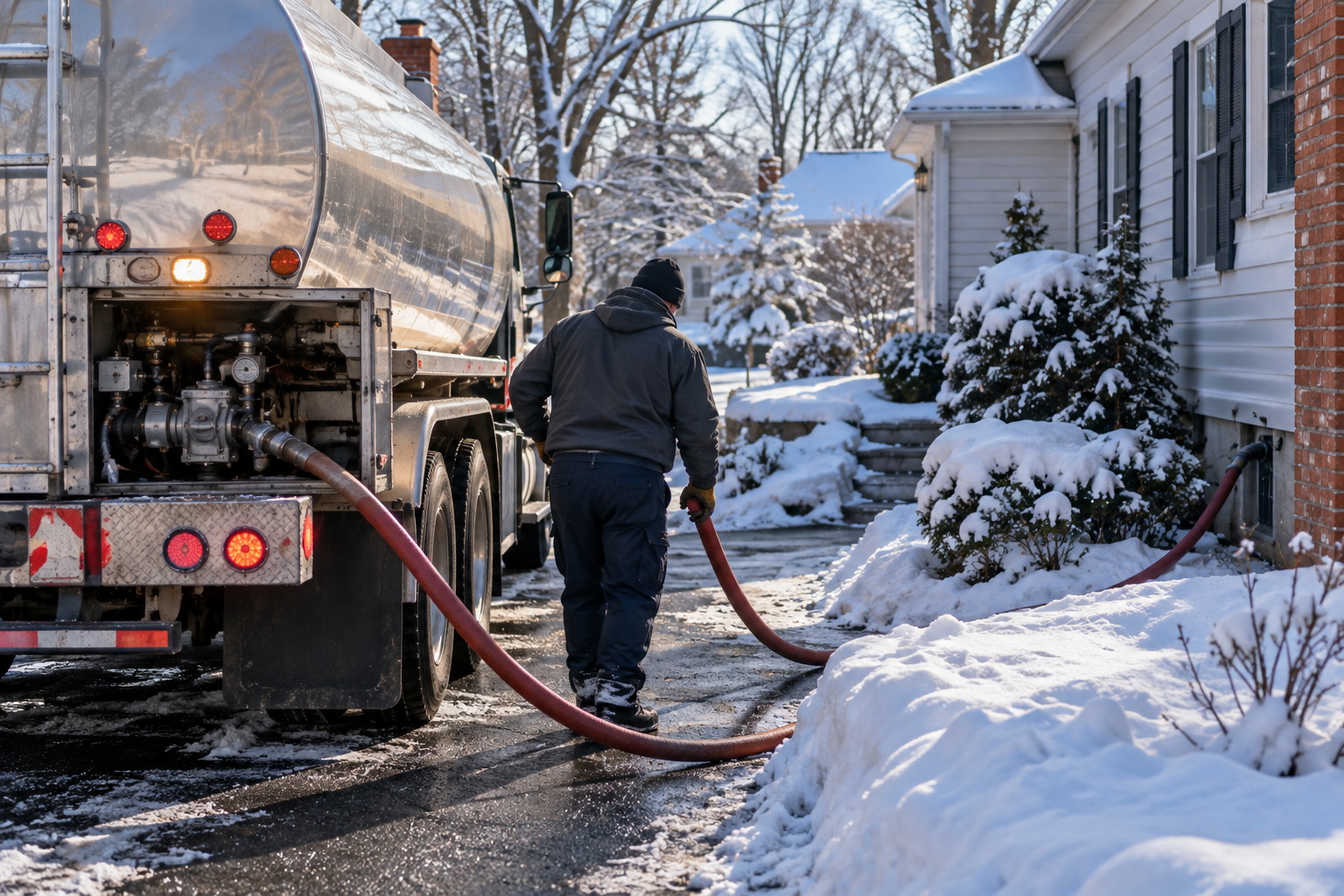
Millions of American homes depend on heating oil. Diesel powers the trucks that deliver groceries, the machinery that harvests crops, construction equipment and much of the country's commercial transportation network.
And diesel and heating oil are closely related products produced by the same refining system.
That means a shortage doesn't stop at the gas station.
It works its way through the economy.
Higher diesel prices increase the cost of moving food and consumer products. Farmers pay more to operate machinery. Shipping companies face higher fuel bills. Businesses eventually pass at least some of those costs to consumers.
And families who heat their homes with oil face the impact directly.
The warning signs are already appearing.
U.S. diesel prices have climbed to record levels while distillate inventories — which include diesel and heating oil — have fallen to unusually low levels.
The U.S. Energy Information Administration expects those inventories to remain below their five-year lows through the end of 2026 and much of 2027.
The problem extends far beyond the United States.
Europe is confronting its own energy-price crisis, while diesel inventories in major European trading hubs have fallen below their five-year averages.
All of it is happening while one of the world's most important energy arteries remains disrupted.
Before the war, roughly one-fifth of the world's oil and liquefied natural gas supplies passed through the Strait of Hormuz.
The energy industry has found increasingly elaborate ways to keep some oil moving.
Tankers are transferring crude between ships in the Gulf of Oman. Producers are using alternative pipelines. Ships willing to enter the region are demanding enormous premiums.
Those improvisations have prevented a complete collapse in supply.
But they are expensive.
Freight costs for transporting Middle Eastern crude to Asia have soared, and the global system increasingly depends on military escorts, temporary transfer operations and alternative routes.
Trump continues to insist that the situation will improve.
On Sunday, he predicted that oil prices would fall sharply once the war ends.
But there is one enormous problem with that prediction:
The war hasn't ended.
Trump rejected an Iranian proposal this weekend that would have reopened the Strait of Hormuz within seven days while restarting negotiations.
Trump said the proposed agreement wasn't acceptable to him.
At the same time, he says additional negotiations with Iran could take place this week.
The president may ultimately get the agreement he says he wants.
But energy markets cannot heat homes with promises.
And winter is approaching.
The consequences are already becoming visible in the Northeast, where heating oil is especially important.
Maine's two U.S. senators — Republican Susan Collins and independent Angus King — have asked the administration to release fuel from the Northeast Home Heating Oil Reserve because of rapidly rising prices.
The senators said Maine households were already paying hundreds of dollars more to fill a heating-oil tank than they did last year.
The situation creates an uncomfortable contrast with Trump's repeated assurances about energy prices.
For months, the administration could point to temporary declines in oil prices as evidence that predictions of an energy catastrophe had been exaggerated.
The global energy system proved remarkably adaptable.
But adaptation isn't the same thing as solving the problem.
Inventories can be depleted.
Tankers can become more expensive.
Emergency reserves are finite.
And heating demand rises when temperatures fall.
Trump has repeatedly said that oil prices will tumble once the Iran war ends.
He may be right about the direction prices would move after a durable settlement restores normal shipping through Hormuz.
But Americans don't buy gasoline, diesel or heating oil in some hypothetical postwar future.
They buy it today.
And increasingly, they will need it to keep their homes warm.
Trump managed to get through much of the summer arguing that cheaper energy was coming.
Winter is about to find out whether he can actually deliver it.