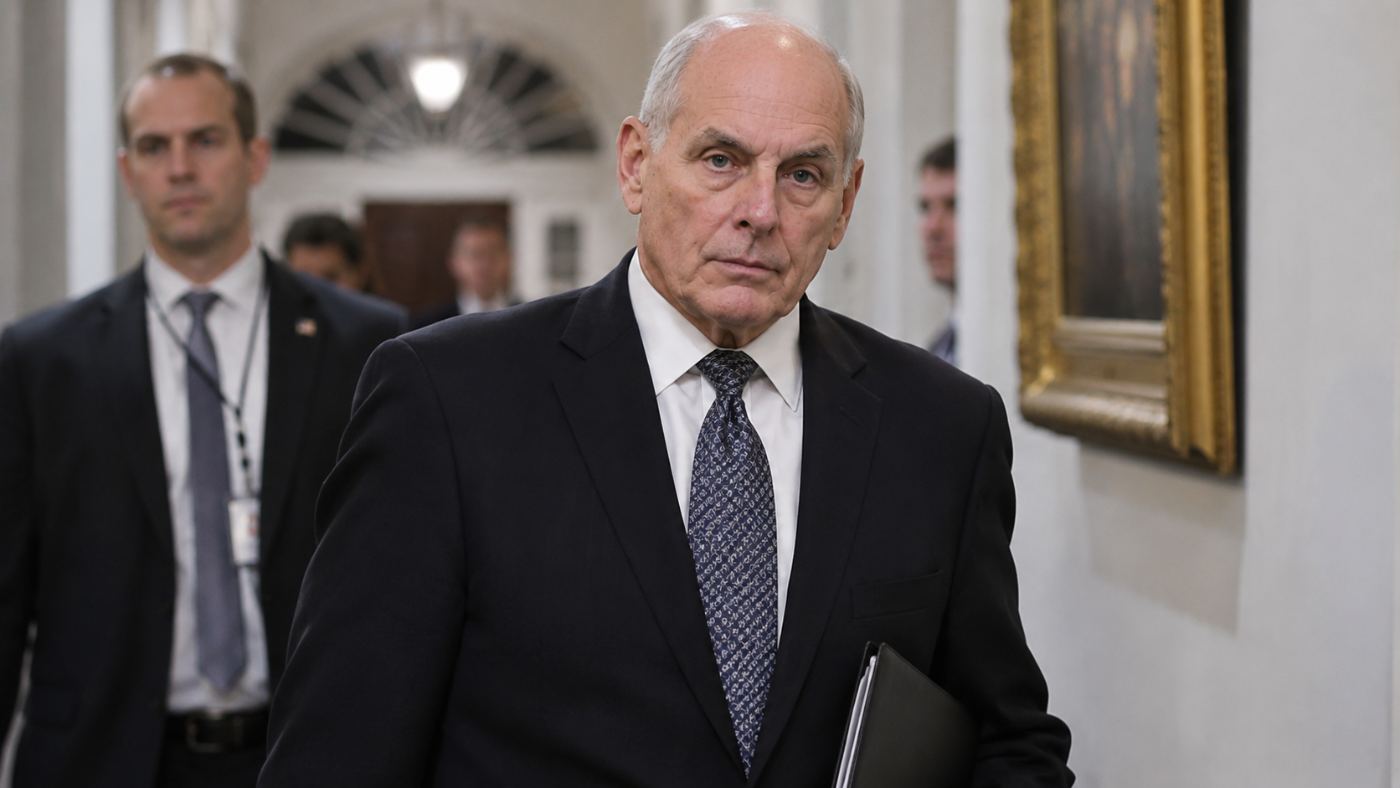
On December 7, 2018, President Donald Trump's White House faced another major leadership shake-up as reports emerged that Chief of Staff John Kelly, a retired four-star Marine general brought in to restore discipline to the administration, was preparing to leave.
The anticipated departure followed months of disagreements between Trump and Kelly over White House management, personnel decisions, and the president's resistance to established procedures.
For an administration already experiencing unusually high turnover, the breakdown represented another significant disruption at the highest levels of government.
The General Who Was Supposed to Restore Order
Kelly became White House chief of staff in July 2017, replacing Reince Priebus after only six months.
A retired Marine Corps general and former secretary of homeland security, Kelly was expected to impose military-style discipline on a White House struggling with internal rivalries, unauthorized disclosures, and competing centers of influence.
He restricted access to the Oval Office, established more formal decision-making procedures, and attempted to control which advisers could reach the president.
Those changes initially brought greater structure to daily operations.
But Trump's preference for informal advice and direct access increasingly conflicted with Kelly's management approach.
According to contemporary reporting, Trump frequently bypassed the procedures Kelly had established, gradually weakening his chief of staff's authority.
Months of Arguments and Frustration
By December 7, reports described a relationship that had deteriorated significantly.
Trump had privately complained about Kelly's political abilities, while Kelly had expressed frustration with the president's governing style.
The two men had reportedly engaged in heated arguments, sometimes leaving other White House officials uncertain about Kelly's future.
Kelly also clashed with influential administration figures, including Jared Kushner and Ivanka Trump.
The disputes exposed a fundamental disagreement over how the White House should operate.
Kelly sought a structured chain of command. Trump preferred greater flexibility and personal control over decisions.
Although White House officials had previously indicated that Kelly would remain through Trump's 2020 reelection campaign, that arrangement was now unraveling.
Another Senior Official Headed for the Exit
The reports arrived during a broader administration reshuffling.
Just one month earlier, Trump had removed Attorney General Jeff Sessions following prolonged disagreements over the Russia investigation.
On December 7, Trump announced William Barr as his choice to lead the Justice Department and Heather Nauert as his nominee for United Nations ambassador.
Meanwhile, Vice President Mike Pence's chief of staff, Nick Ayers, emerged as a potential replacement for Kelly.
The administration was preparing for a Democratic-controlled House of Representatives, which would bring increased congressional oversight beginning in January.
The White House also faced continuing scrutiny from Special Counsel Robert Mueller's investigation.
Losing another senior adviser during this period raised questions about leadership continuity and the administration's ability to manage competing political and governmental challenges.
Trump Confirms Kelly's Departure
On December 8, Trump publicly confirmed that Kelly would leave his position around the end of the year.
The president praised Kelly's service despite their reported disagreements.
Kelly ultimately remained into early January 2019, when Mick Mulvaney became acting chief of staff.
Kelly's tenure was not without controversy. He had supported several of Trump's immigration policies and faced criticism over his handling of the Rob Porter domestic abuse allegations.
Nevertheless, his departure removed an experienced military leader whom colleagues had credited with introducing greater organizational discipline.
A Continuing Pattern of White House Instability
By the end of 2018, Trump's administration had experienced repeated departures involving senior advisers, Cabinet officials, and White House leadership.
Kelly's impending exit illustrated the difficulty of maintaining a stable management structure when the president and his senior staff disagreed over fundamental operating procedures.
December 7, 2018, marked another turning point in the Trump White House, as the general recruited to impose order prepared to depart amid the very internal conflicts he had been hired to address.