The Trump administration is confronting yet another rapidly expanding crisis in the Middle East — and this time, Washington appears caught between military options it does not want, allies demanding help and an enemy that keeps gaining ground.
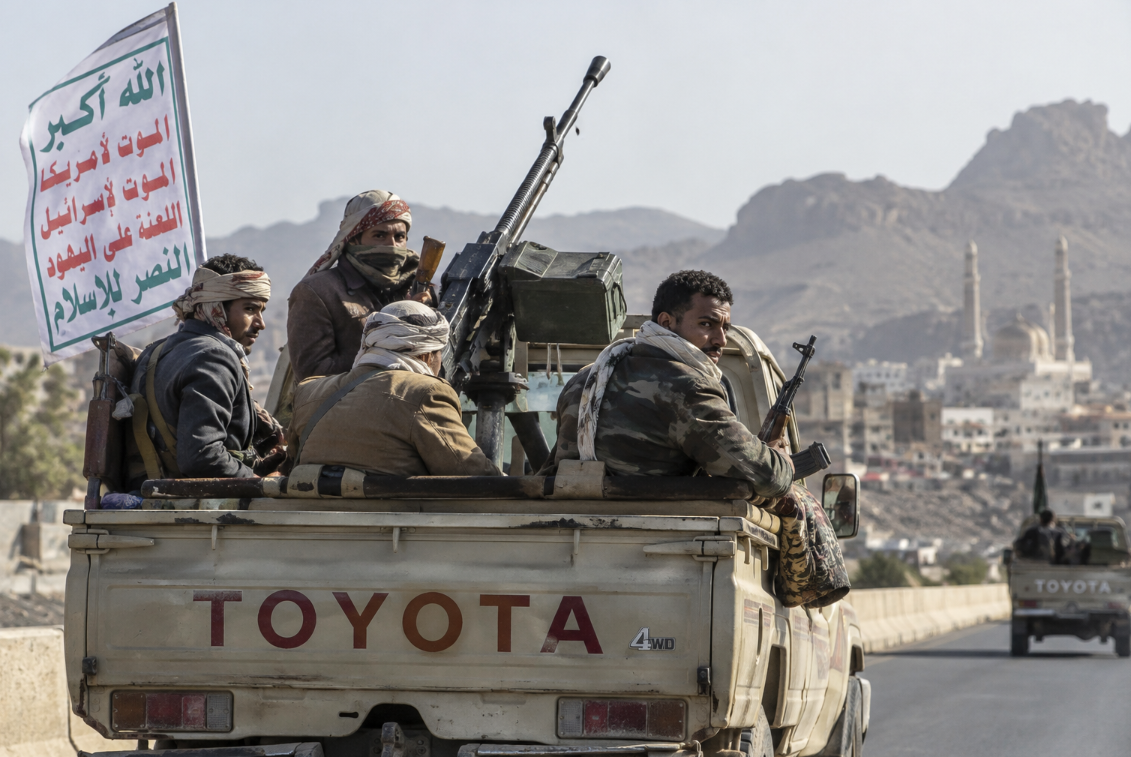
Iran-backed Houthi forces have surged through strategically important territory in Yemen, threatening the Bab el-Mandeb Strait, one of the world's most important shipping routes. Saudi Arabia is increasingly alarmed. Fighting is intensifying. Missiles and drones have struck Saudi targets.
And inside Washington, there is no obvious agreement about what the United States should do next.
The Trump administration has stopped short of committing American forces to another campaign. But it has also failed to produce a diplomatic solution capable of stopping the Houthi advance.
For a White House already struggling with a prolonged war against Iran, the result is another Middle East problem with no easy exit.
Trump Reportedly Came Close to Attacking
The uncertainty surrounding American policy became particularly striking over the weekend.
Trump reportedly authorized preparations for U.S. strikes against Houthi targets before the operation was called off.
Targets had reportedly been identified and preparations were underway before the administration reversed course.
That doesn't necessarily mean the decision was wrong. There are serious arguments against expanding American military operations into Yemen.
But the episode illustrates the larger problem facing the White House: Washington appears unable to settle on what it actually wants to do.
Attack the Houthis, and Trump risks opening another front in an already sprawling regional conflict.
Stay out, and the Houthis may continue expanding their control.
Support Saudi Arabia without directly entering the fighting, and Washington must hope Saudi forces can contain a movement that has survived years of warfare and airstrikes.
None of those choices provides anything resembling a quick solution.
Saudi Arabia Is Asking for Help
The pressure is particularly intense because Saudi Arabia is one of America's most important partners in the region.
Saudi leaders have sought additional assistance as Houthi forces have advanced and attacks against Saudi territory have intensified.
The United States has provided intelligence and targeting assistance while stopping short of committing itself to another direct military campaign.
Trump also spoke with Yemeni President Rashad al-Alimi, whose internationally recognized government is backed by Saudi Arabia.
Al-Alimi sought American assistance.
Trump did not pledge direct U.S. military support.
That leaves America's regional partners trying to determine exactly how far Washington is prepared to go.
The Pentagon Faces an Ugly Calculation
There are legitimate reasons for American military commanders to be cautious.
The United States is already deeply involved in the conflict with Iran. American forces must protect bases, ships and personnel throughout the region while maintaining sufficient stocks of missiles and other weapons for contingencies elsewhere.
A new campaign against the Houthis could consume additional precision weapons and air-defense resources while exposing American forces to retaliation.
The Houthis are also not an opponent that can necessarily be eliminated through a few nights of bombing.
They have survived years of Saudi-led military operations, previous American strikes and a devastating civil war.
They possess ballistic missiles, drones and anti-ship weapons.
And they have repeatedly demonstrated an ability to adapt.
Military action might destroy launchers, command facilities and weapons depots.
It would not necessarily solve the underlying problem.
Doing Nothing Has a Price Too
Unfortunately for Trump, avoiding another war doesn't make the Houthi problem disappear.
Their recent offensive has dramatically improved their strategic position.
Houthi forces have captured important territory along Yemen's Red Sea coast and are fighting to consolidate additional positions.
That puts increasing pressure on the Bab el-Mandeb Strait.
The narrow waterway connects the Red Sea with the Gulf of Aden and is a vital route for international commerce and energy shipments.
Its importance is even greater because another critical Middle Eastern chokepoint — the Strait of Hormuz — has already been disrupted by the confrontation with Iran.
Washington is therefore confronting the possibility of instability around two of the world's most strategically important maritime passages at the same time.
And there is no obvious American strategy for reversing that situation.
The Iran War Has Made Everything Harder
The Houthi crisis cannot be separated from Trump's larger confrontation with Iran.
Tehran has long supported the Houthis, providing weapons and assistance that helped transform the movement from a Yemeni insurgency into a formidable regional military force.
Now the United States faces the consequences of that relationship while already fighting Iran directly.
Every additional American commitment must therefore be measured against what the military is already being asked to do.
More aircraft.
More missiles.
More ships.
More air defenses.
More personnel.
More potential targets for retaliation.
Trump entered the Iran conflict promising American strength would produce results.
Instead, the strategic map has become increasingly complicated.
Washington Is Running Out of Comfortable Options
The White House can order strikes.
It can increase support for Saudi Arabia.
It can attempt another diplomatic arrangement with the Houthis.
Or it can continue trying to avoid direct involvement while hoping regional forces stop their advance.
But none of those options currently amounts to a demonstrated solution.
That is what makes the situation increasingly dangerous for the administration.
The problem isn't simply that Trump faces another difficult foreign-policy decision. Presidents routinely do.
The problem is that events on the ground are moving while Washington remains caught between competing choices.
The Houthis are advancing.
Saudi Arabia wants help.
American military resources are already stretched across a widening regional conflict.
Iran remains involved.
International shipping remains vulnerable.
And the White House has yet to publicly articulate how all of this ends.
For an administration already trying to find a way out of one Middle Eastern war, the Houthi offensive has presented Trump with another crisis at precisely the moment when America has the least room for one.