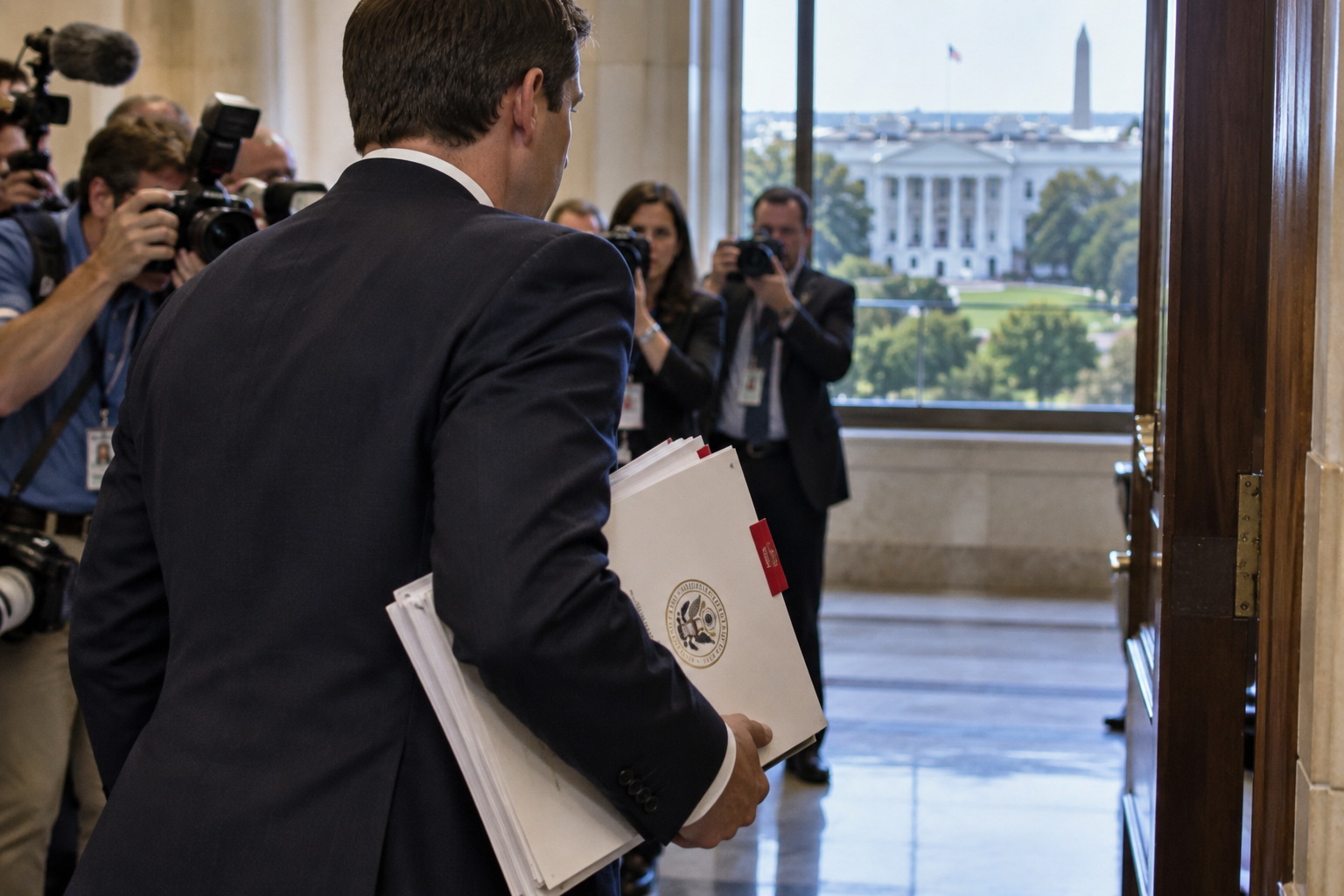
The impeachment inquiry into President Donald Trump's dealings with Ukraine escalated sharply on October 2, 2019, as House investigators announced that they were preparing to subpoena the White House for documents.
The move represented a significant turning point.
For weeks, congressional investigators had sought records concerning Trump's interactions with Ukraine, his personal attorney Rudy Giuliani's activities and the administration's decision to temporarily withhold congressionally approved military assistance to the country.
According to House investigators, the White House had failed to provide the requested documents or even meaningfully respond.
Now Congress was preparing to compel their production.
House Oversight and Reform Committee Chairman Elijah Cummings notified committee members that he intended to issue a subpoena to the White House on October 4 after consultation with the House Intelligence and Foreign Affairs committees.
The document fight was becoming another major front in an impeachment inquiry that had formally begun only days earlier.
The Ukraine Call
At the center of the controversy was Trump's July 25 telephone conversation with Ukrainian President Volodymyr Zelensky.
During the call, after Zelensky discussed purchasing additional American military equipment, Trump responded by saying, “I would like you to do us a favor though.”
Trump asked Zelensky to examine a theory involving Ukraine and the 2016 U.S. election.
He later brought up former Vice President Joe Biden and Biden's son Hunter.
Trump asked Zelensky to speak with Attorney General William Barr and Giuliani concerning the matters.
At the time, Joe Biden was seeking the Democratic presidential nomination and was therefore a potential opponent for Trump in the 2020 election.
Trump maintained that his interest was fighting corruption and examining legitimate questions involving Ukraine.
Democrats argued that the president was using the power of his office to encourage a foreign government to investigate a domestic political rival.
Hundreds of Millions in Military Aid Had Been Delayed
Adding to the controversy was the administration's decision to temporarily withhold nearly $400 million in security assistance Congress had approved for Ukraine.
The aid was particularly important because Ukraine was fighting Russian-backed forces following Russia's 2014 annexation of Crimea.
Trump administration officials offered several explanations for the hold, including concerns about corruption and Trump's belief that European countries should contribute more toward Ukraine's defense.
The aid was eventually released in September.
But the combination of the delayed military assistance and Trump's requests during the Zelensky call became central to the impeachment investigation.
Investigators wanted documents that could help establish why the assistance had been withheld and whether the decision was connected to the investigations Trump wanted Ukraine to pursue.
A Whistleblower Changes Everything
The controversy accelerated after an intelligence-community whistleblower filed a complaint concerning Trump's interactions with Ukraine.
The complaint alleged that Trump had used the power of his office to solicit foreign interference in the 2020 election.
The White House disputed that characterization.
Under mounting pressure, the administration released a memorandum summarizing the July 25 Trump-Zelensky call.
Rather than ending the controversy, its release intensified it.
The document confirmed that Trump had raised Biden and asked Zelensky to work with Giuliani and Barr.
House Speaker Nancy Pelosi announced a formal impeachment inquiry on September 24.
The political crisis was now moving extraordinarily quickly.
Congress Wants the Documents
House committees had already requested records from the White House before the formal impeachment inquiry began.
Chairmen Adam Schiff of the Intelligence Committee, Eliot Engel of the Foreign Affairs Committee and Elijah Cummings of the Oversight Committee had sought documents relating to Trump's and Giuliani's dealings with Ukraine.
According to Cummings' October 2 memorandum, those efforts had failed.
The committees had attempted several times to obtain voluntary compliance, he wrote, but the White House had refused to engage with or respond to their requests.
Cummings said that left investigators with little choice but to issue a subpoena.
The planned subpoena would demand records related to the administration's dealings with Ukraine and the matters under investigation.
Republicans Object
Republicans strongly disputed the Democrats' characterization of both Trump's conduct and the impeachment inquiry.
They argued that the July 25 call did not establish that Trump had improperly pressured Zelensky and noted that the Ukrainian president had publicly said he did not feel pressured.
Republicans also argued that Trump had legitimate concerns about corruption in Ukraine and longstanding concerns about foreign aid.
As the subpoena confrontation developed, Republican members of the Oversight Committee objected to the process Cummings was using.
They accused Democrats of conducting a partisan impeachment effort and argued that committee members should have an opportunity to debate and vote on the proposed subpoena.
Those disagreements foreshadowed the increasingly bitter procedural battles that would characterize the impeachment inquiry.
The White House and Congress Head Toward Collision
The significance of October 2 went beyond another request for paperwork.
The constitutional confrontation between Congress and the executive branch was beginning to take shape.
Congress has broad investigative powers and can issue subpoenas seeking documents and testimony.
Presidents and executive-branch officials can resist congressional demands on various legal grounds, including executive privilege.
But the Ukraine investigation involved something even more consequential: impeachment.
House investigators argued that the White House could not simply refuse to cooperate with an impeachment inquiry examining the president's own conduct.
The Trump administration would soon take an extraordinarily broad position against participating in the investigation.
The Subpoena Arrives
Cummings followed through.
On October 4, the House Oversight Committee issued the subpoena, requiring the White House to produce documents by October 18.
The White House did not comply.
Four days later, White House Counsel Pat Cipollone sent congressional leaders a lengthy letter declaring that the administration would not participate in what it described as an unconstitutional and partisan impeachment inquiry.
The confrontation over documents and witnesses would eventually become part of the impeachment case itself.
From Ukraine Investigation to Impeachment
The House investigation continued through the fall.
Current and former administration officials testified about the administration's dealings with Ukraine, the withholding of military assistance and efforts to persuade Ukrainian officials to announce investigations sought by Trump and his allies.
Democrats concluded that Trump had abused the power of the presidency by pressuring Ukraine for investigations that could benefit him politically.
Republicans rejected that conclusion, arguing that the evidence did not establish an improper pressure campaign or a corrupt connection between military aid and the requested investigations.
On December 18, 2019, the House impeached Trump on two articles.
The first charged him with abuse of power.
The second charged him with obstruction of Congress, based on the administration's refusal to provide documents and allow witnesses to cooperate with the House investigation.
Trump denied wrongdoing.
The Senate acquitted him on both articles in February 2020.
But on October 2, 2019, none of that had happened yet.
The impeachment inquiry was barely a week old.
Congress was still asking the White House to turn over evidence.
And after investigators said their requests had been ignored, they were preparing to stop asking.
The next step was a subpoena.