Simon Andriesz, the former Wall Street executive who helped uncover evidence contradicting Commerce Secretary Howard Lutnick’s public account of his relationship with Jeffrey Epstein, has died at age 57.
Andriesz died by suicide, according to reporting by The Banker, which cited Andy Agathangelou, founder of the Transparency Task Force. His death comes only months after Andriesz emerged publicly as a central figure in uncovering previously undisclosed connections between Lutnick and Epstein.
There is currently no evidence that Andriesz’s death was connected to his whistleblowing, and nothing publicly available indicates foul play.
But his death brings renewed attention to what he uncovered — and to questions about how accurately one of President Donald Trump’s Cabinet officials described his relationship with Epstein.
A Whistleblower Searches the Epstein Files
Andriesz had spent decades in financial markets and previously worked as a managing director at BGC Group, where Lutnick served as chief executive.
Years before becoming involved in the Epstein story, Andriesz raised concerns about alleged financial irregularities at BGC.
He was fired in 2017.
Some of the regulatory concerns he raised ultimately contributed to enforcement action against BGC, although the company disputed Andriesz’s broader allegations and denied retaliating against him.
Then came the massive release of government records connected to Jeffrey Epstein.
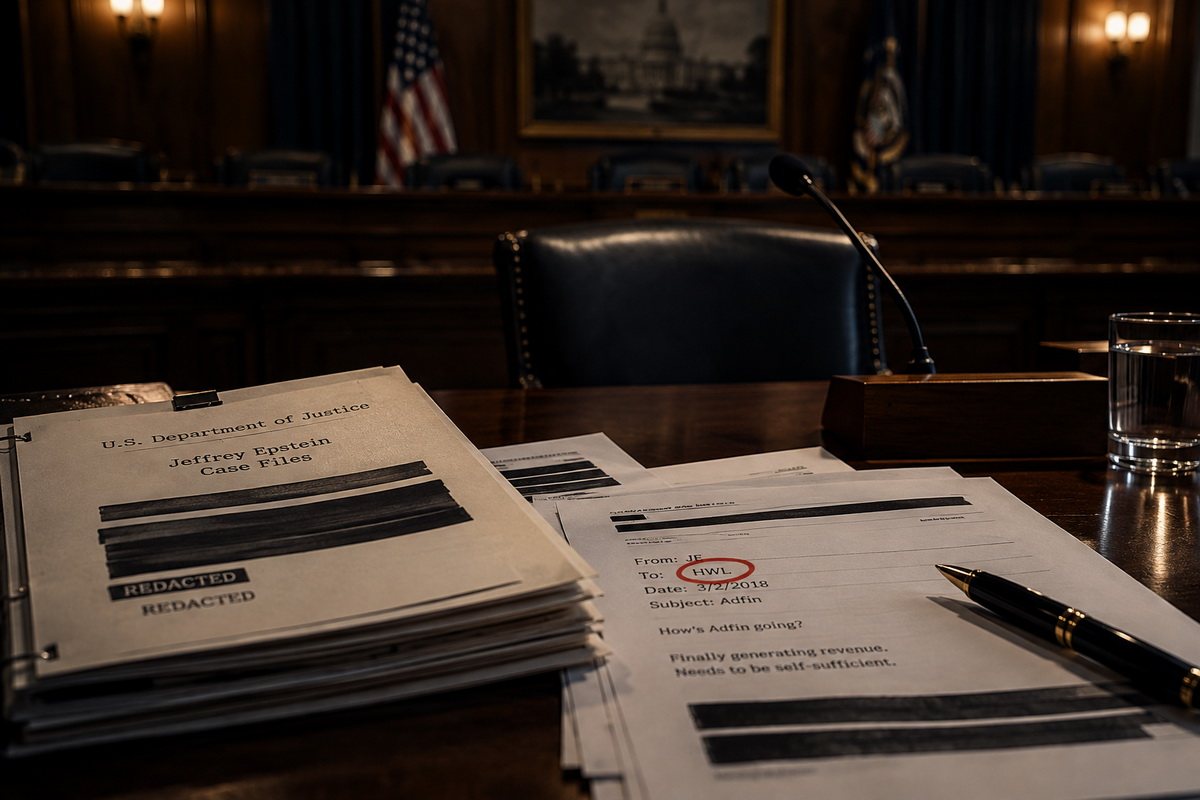
Andriesz knew something about Lutnick that ordinary researchers combing through millions of pages did not: executives at Cantor Fitzgerald frequently communicated using their initials.
Instead of searching simply for “Lutnick,” Andriesz searched for “HWL” — Howard William Lutnick.
It worked.
Among the documents he discovered was a 2018 email exchange involving Epstein and Lutnick concerning a digital advertising company called Adfin.
Epstein asked Lutnick about the company’s prospects.
Lutnick responded with an assessment of the business, saying it was finally producing revenue and needed to become economically self-sufficient.
Both Epstein and interests connected to Lutnick had invested in the company.
That discovery mattered because it appeared difficult to reconcile with the story Lutnick had previously told publicly about Epstein.
Lutnick Said He Had Essentially Cut Epstein Off
Lutnick had portrayed his encounter with Epstein very differently.
He said he met Epstein after becoming his Manhattan neighbor in 2005 and was so disturbed by what he saw inside Epstein’s home that he wanted nothing more to do with him.
But documents released in the Epstein files complicated that account.
A photograph showed Lutnick with Epstein on Little St. James — Epstein’s private Caribbean island — in 2012.
That visit occurred years after Epstein had already pleaded guilty in Florida to charges including soliciting prostitution from a minor.
Lutnick subsequently acknowledged visiting the island, saying he had lunch there while traveling with his wife, children and nannies.
The 2018 Adfin correspondence discovered by Andriesz indicated contact continued even later.
Andriesz gave his findings to members of the House Oversight Committee before Lutnick appeared for an off-camera congressional interview in May.
Lutnick told investigators that, to the best of his recollection, he had not known Epstein was also an investor in Adfin until the Epstein records became public.
Democratic members of the committee subsequently accused Lutnick of misleading Congress and called for his resignation.
Lutnick has denied wrongdoing and condemned Epstein’s conduct.
Andriesz Had Already Gone to the FBI
Andriesz’s concerns about Lutnick were not something he invented after the Epstein documents became public.
Government records show that information concerning Lutnick was reported to the FBI years earlier.
An FBI intake record dated October 19, 2020, documents a caller from the United Kingdom who had worked for a Lutnick-connected company and told investigators that Lutnick “could be connected to Jeffrey Epstein.”
The caller said he possessed documentation he was willing to provide.
Andriesz later told the BBC that he spoke with the FBI in 2020 and 2021 and raised concerns about what he believed were undisclosed business connections between Lutnick and Epstein.
The BBC reported that the FBI did not investigate those particular allegations.
Years later, Andriesz found documentary evidence in the government’s own Epstein files that he believed supported what he had been trying to tell authorities.
“I’m exposing Howard Lutnick’s relationship, financial links, with Jeffrey Epstein,” Andriesz told the BBC in an interview published in July, expressing frustration at what he viewed as a lack of interest in his findings.
The Cost of Whistleblowing
Andriesz also spoke publicly about what years of whistleblowing and litigation had done to him.
He described serious damage to his career, finances, health and family life.
Although he received a $420,000 whistleblower award from the U.S. Commodity Futures Trading Commission, Andriesz maintained that regulators in both the United States and United Kingdom had failed to adequately protect him.
BGC rejected his allegations of retaliation and disputed his account of the circumstances surrounding his departure from the company.
Just months after Andriesz helped bring the Lutnick-Epstein correspondence into public view, he was dead.
His death does not establish a conspiracy, nor is there currently evidence that it resulted from the information he uncovered.
But the documents he found remain.
They show that Lutnick's interactions with Jeffrey Epstein extended substantially beyond the brief encounter he once described publicly.
Andriesz knew where to look.
He looked.
And what he found forced one of the most powerful officials in the Trump administration to answer questions that otherwise might never have been asked.