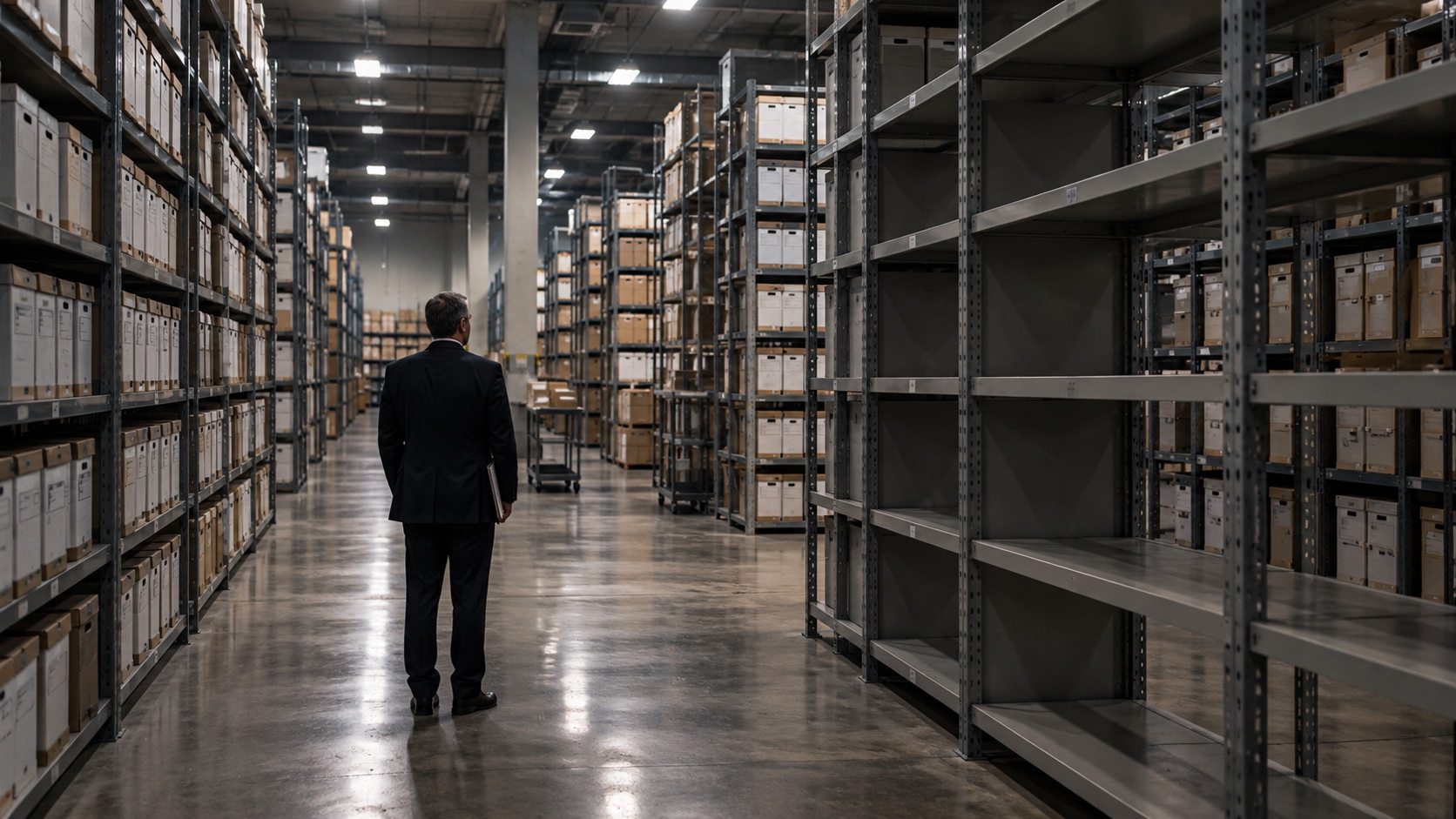
The Jeffrey Epstein files were supposed to bring answers.
Instead, they have produced another question:
Where is the rest of the material?
The Justice Department says it collected more than six million potentially responsive pages while reviewing government records connected to Jeffrey Epstein.
In January 2026, DOJ announced that approximately 3.5 million pages had been released to the public under the Epstein Files Transparency Act.
That's an extraordinary amount of material.
It's also millions of pages short of the amount the government initially collected.
The Justice Department says there are legitimate explanations for that difference. According to DOJ, material was withheld because it was duplicative, unrelated to Epstein, protected by legal privilege or covered by legal protections designed to safeguard victims.
Some material unquestionably should never be released publicly.
That includes child sexual-abuse material, photographs or videos that could identify victims, personal information about survivors and certain records protected by court orders or grand-jury secrecy.
Protecting Epstein's victims isn't a cover-up.
It's the law — and it's the right thing to do.
But that still doesn't explain away the broader transparency controversy surrounding the files.
Months after the massive document release, lawmakers, journalists, victims' advocates and federal courts are still fighting with the Justice Department over records they believe should have been disclosed.
And there is evidence that the public release wasn't complete.
Records obtained separately through Freedom of Information Act litigation reportedly revealed communications involving senior FBI and Justice Department officials that were not included in DOJ's official Epstein library.
A federal judge has also scrutinized some of the government's redactions and demanded explanations for why particular information was withheld.
Meanwhile, members of Congress have continued pushing for additional disclosure.
That brings us to an even more disturbing development.
A new lawsuit alleges that Epstein accumulated an enormous cache of child sexual-abuse imagery that could involve thousands of victims, including people who may not even know such images existed.
That allegation has not been established as fact, and the number of potential victims remains uncertain.
But it raises an important distinction that frequently gets lost in the debate over the Epstein files.
Nobody needs to see those images.
Nobody should see them.
The public doesn't need photographs of abused children to understand what Epstein did.
But investigators should be able to determine where those images came from, when they were created, who possessed them, whether additional victims can be identified and whether anyone else committed crimes connected to their production or distribution.
Those are investigative questions.
And the answers can be disclosed without publishing the images themselves or identifying victims.
That's why the continuing mystery surrounding the Epstein files matters.
The question isn't whether every piece of evidence seized from Epstein should be dumped onto the internet.
It shouldn't.
The question is whether every document that can legally and safely be released has actually been released — and whether the government has adequately explained everything it continues to withhold.
DOJ maintains that it has complied with the Epstein Files Transparency Act.
But the controversy hasn't disappeared.
There are still disputes over redactions.
There are still documents surfacing through other channels.
There are still lawmakers demanding additional records.
There are still court battles over withheld information.
And there are still questions about the people who surrounded Epstein, facilitated his lifestyle, participated in his crimes or knew what was happening.
Jeffrey Epstein died in 2019.
His victims have waited far longer than that for answers.
The American public was told that releasing the Epstein files would finally provide transparency.
Millions of pages later, we know far more than we did before.
But until the government can clearly account for what was released, what wasn't, and precisely why it was withheld, one question isn't going away:
Where is the rest?