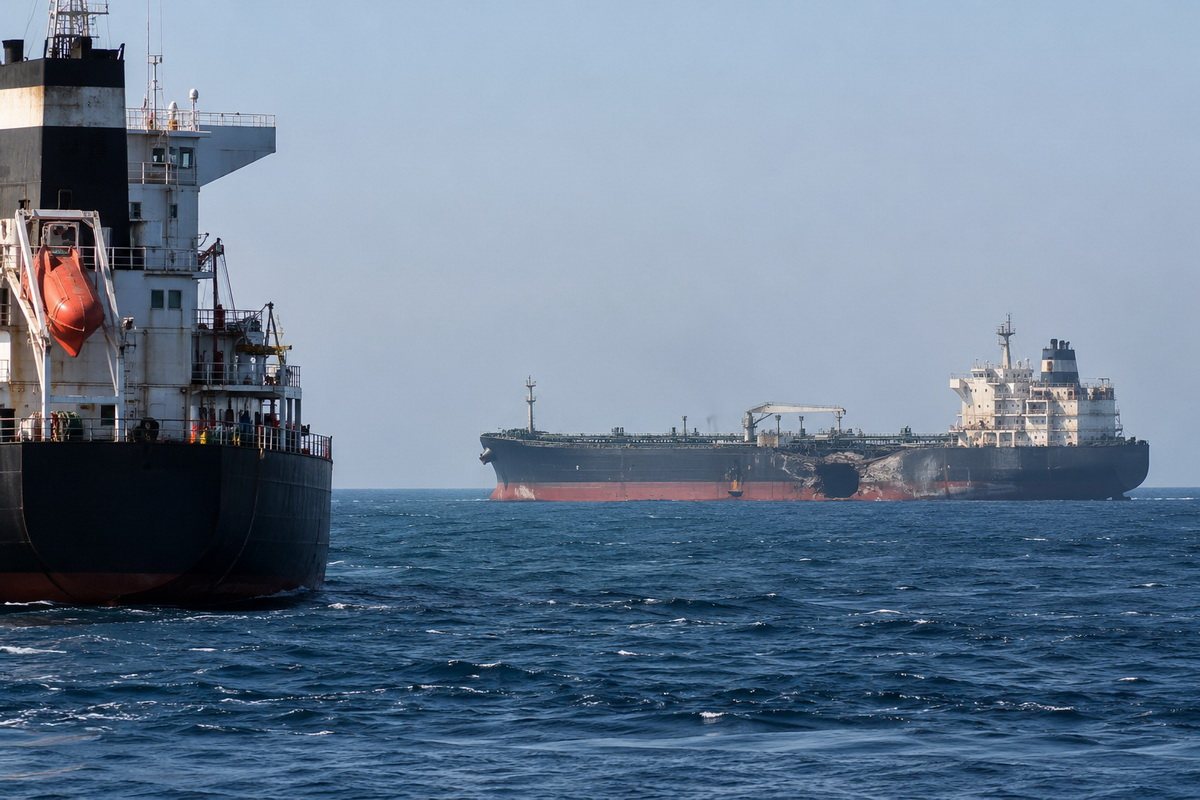
Missile attacks, burning oil tankers, threatened shipping lanes and rising energy costs have become routine under President Donald Trump. Seven months into the war with Iran, the administration's promises of strength and stability are colliding with an increasingly dangerous reality.
Another day, another crisis in the Middle East.
Iran is threatening to keep the Strait of Hormuz closed until American forces leave the region. Commercial vessels are being attacked. Iranian-backed Houthi militants are striking Saudi Arabia, and the conflict in Yemen is intensifying.
And in Washington, President Donald Trump continues to insist his administration has the situation under control.
This is becoming the new normal in Trump's America.
A War With No Clear End
The conflict began February 28, when the United States and Israel launched strikes against Iran. More than seven months later, the fighting has spread across the region, threatening international shipping, oil production and American allies.
According to CBS News, an Iranian military spokesman declared Friday that the Strait of Hormuz would reopen if the United States withdrew from the Middle East.
Meanwhile, maritime monitors have warned that commercial ships remain vulnerable to attacks, even when they disable tracking equipment to avoid detection.
The Trump administration maintains that the strategic waterway is open. Iran disputes that claim, and the continuing attacks demonstrate just how dangerous passage remains.
The Conflict Keeps Spreading
In Saudi Arabia, Houthi missile and drone attacks have struck critical infrastructure, including Riyadh's international airport and facilities associated with the country's oil industry.
The attacks have killed civilians, disrupted air travel and increased fears of further escalation.
Saudi Arabia has responded with military strikes against Houthi positions in Yemen. Trump is reportedly considering deeper American involvement.
What began as a military confrontation with Iran has become a regional crisis with no obvious exit.
Americans Are Paying the Price
For American families, the consequences extend far beyond the battlefield.
Disruptions to oil shipments and threats against major shipping routes have contributed to higher energy prices. Those costs can spread throughout the economy, affecting transportation, groceries and household budgets.
Trump returned to the White House promising economic prosperity, lower costs and an America respected around the world.
Instead, Americans are watching another prolonged Middle Eastern conflict unfold while worrying about what it will cost them.
Chaos Is Becoming Routine
Perhaps the most troubling development is how ordinary all of this has started to seem.
A tanker catches fire. Missiles strike an airport. Another shipping route becomes dangerous. Oil prices react. Washington issues another statement.
Then the next crisis arrives.
The administration can point to Iran's aggression and the Houthis' responsibility for attacks on civilians. Those threats are real. But Trump also bears responsibility for the American military strategy he chose and for explaining how this war will end.
Seven months after launching strikes on Iran, the White House still faces a fundamental question: What does victory actually look like?
Americans were promised strength, stability and prosperity.
Instead, they are being asked to accept an expanding war, economic uncertainty and constant international confrontation as part of everyday life.
And increasingly, that appears to be the new normal.