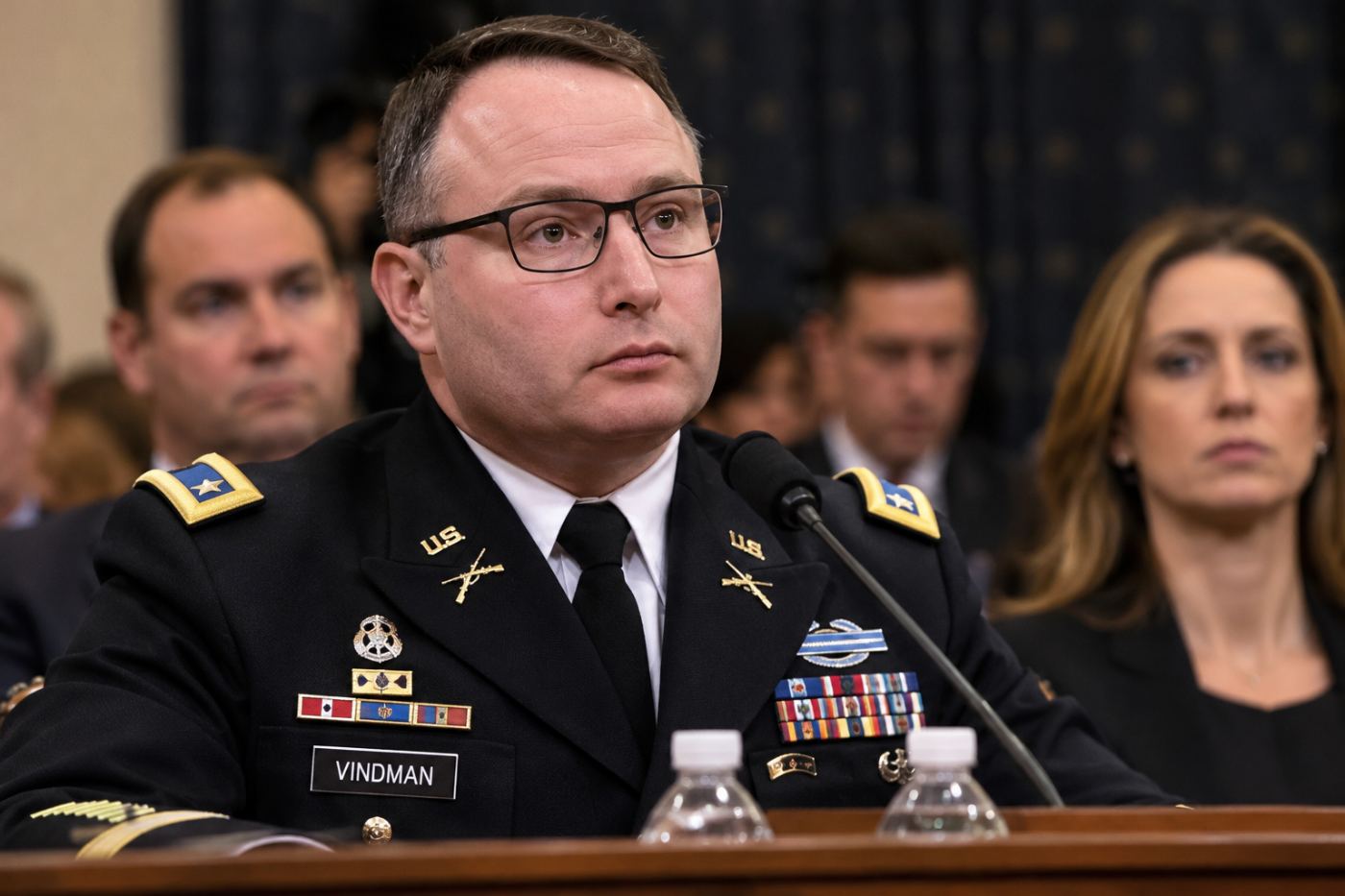
On November 19, 2019, a decorated American Army officer sat before Congress and delivered testimony that challenged President Donald Trump's account of his dealings with Ukraine.
Lieutenant Colonel Alexander Vindman, a Purple Heart recipient and National Security Council official, had personally listened to Trump's July 25 telephone conversation with Ukrainian President Volodymyr Zelensky.
What he heard disturbed him enough to report his concerns to White House lawyers.
Now, under oath and before a national television audience, Vindman was explaining why.
A Presidential Phone Call Raises Alarms
The controversy centered on Trump's request that Zelensky investigate former Vice President Joe Biden and his son Hunter, who had served on the board of Ukrainian energy company Burisma.
At the time, Biden was a potential opponent in the 2020 presidential election.
The Trump administration had also placed a hold on nearly $400 million in congressionally approved military assistance to Ukraine, a country confronting Russian aggression.
Vindman testified that he considered Trump's request inappropriate because it involved asking a foreign government to investigate an American political rival.
He feared that involving Ukraine in domestic American politics would undermine bipartisan support for the country and damage U.S. national security.
Following the call, Vindman reported his concerns through official White House channels.
Two Witnesses, One Troubling Conversation
Vindman was joined by Jennifer Williams, a career Foreign Service officer serving as an adviser to Vice President Mike Pence.
Williams had also listened to the July 25 call.
She described the conversation as unusual because it involved matters that appeared connected to American domestic politics rather than established foreign policy objectives.
Both witnesses acknowledged that the White House's publicly released memorandum substantially reflected the conversation.
But that did not mean they considered the president's requests appropriate.
Their testimony challenged the administration's repeated insistence that the conversation had been entirely proper.
A Soldier Faces Political Attacks
Vindman's appearance carried particular significance because of his military background.
Born in Ukraine when it was part of the Soviet Union, Vindman immigrated to the United States as a child.
He subsequently joined the Army, served in Iraq, was wounded by a roadside bomb, and earned the Purple Heart.
Yet as he prepared to testify, Trump and some of his political allies publicly questioned his credibility and loyalty.
Vindman rejected suggestions that his actions were politically motivated.
He explained that he had reported his concerns because of his responsibilities as a national security official.
During his opening statement, Vindman addressed his father, who had brought the family to America seeking freedom from authoritarian rule.
He reassured him that speaking truthfully before Congress was possible because they lived in the United States.
The moment underscored the personal stakes of the impeachment proceedings.
The Impeachment Investigation Deepens
The testimony strengthened the case presented by House Democrats that Trump had used presidential authority to seek investigations that could benefit him politically.
Republicans challenged the witnesses' interpretations, questioned the impeachment process, and argued that the evidence did not establish an impeachable offense.
Vindman and Williams nevertheless provided firsthand accounts of a conversation central to the inquiry.
On December 18, 2019, the House impeached Trump on charges of abuse of power and obstruction of Congress.
The Republican-controlled Senate acquitted him on February 5, 2020.
The Significance of November 19
The hearing became a defining moment in Trump's first impeachment.
Two government officials testified publicly about presidential conduct they considered inappropriate, despite the political controversy surrounding their appearances.
For Vindman, the decision was rooted in his understanding of military service and constitutional responsibility.
His testimony illustrated a fundamental question raised by the Ukraine affair: What happens when a public official believes a president's personal political interests are conflicting with the country's national security interests?
On November 19, 2019, Vindman answered that question by appearing before Congress and explaining what he had witnessed.