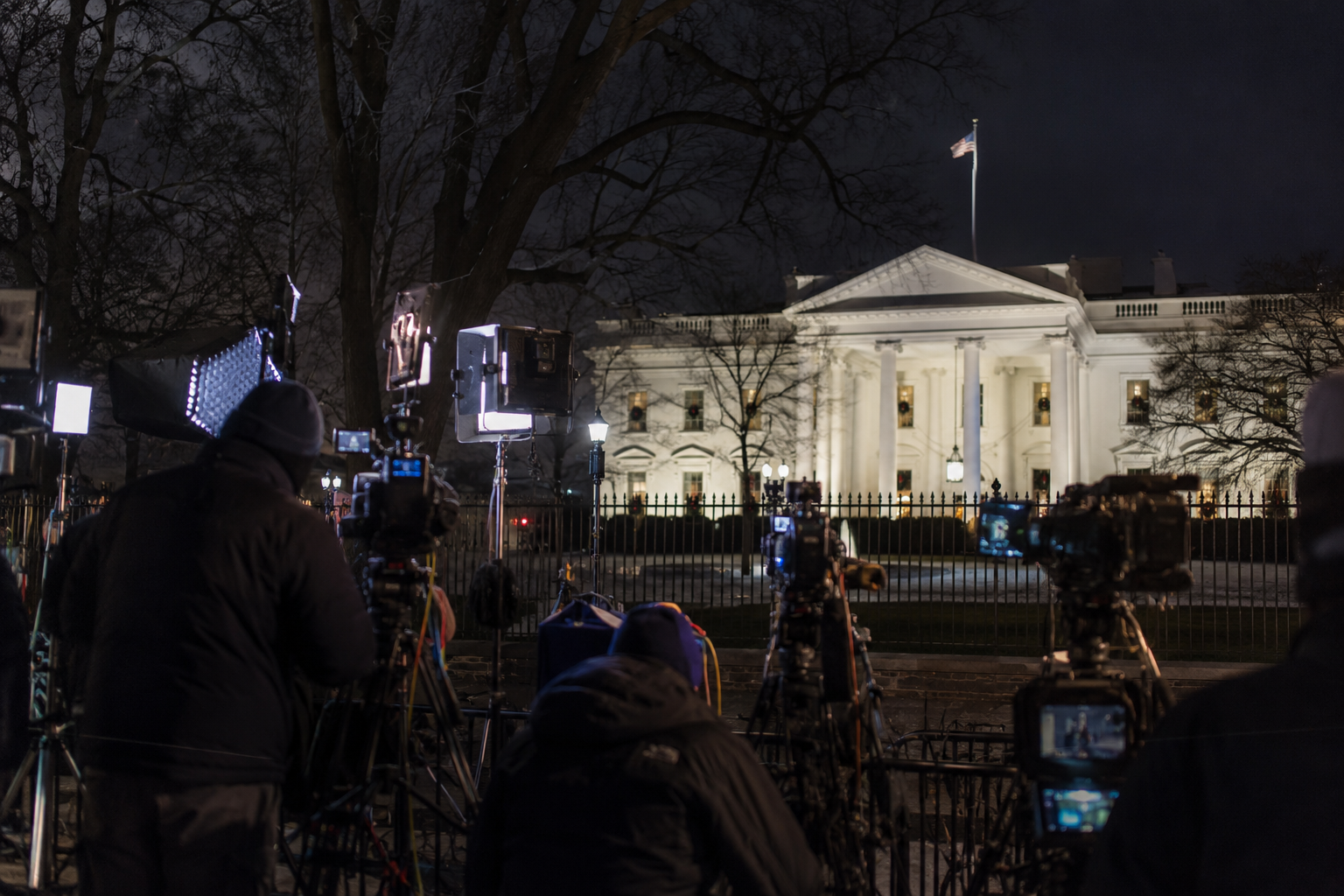
Donald Trump entered 2018 facing an extraordinary public revolt from inside his own political movement.
The release of Michael Wolff’s Fire and Fury: Inside the Trump White House exposed bitter divisions within the administration, triggered an explosive break between Trump and former chief strategist Steve Bannon, and prompted the president to publicly declare that he was not merely intelligent, but a “very stable genius.”
What might have been another controversial Washington book instead became a days-long crisis for a White House already accustomed to internal warfare.
Bannon Turns on Trumpworld
The confrontation began January 3, when excerpts from Wolff’s book revealed remarkably harsh comments attributed to Bannon, the former Breitbart executive who had helped run Trump’s general-election campaign and later served as White House chief strategist.
Among the most damaging passages involved the June 2016 Trump Tower meeting attended by Donald Trump Jr., Jared Kushner and campaign chairman Paul Manafort.
According to Wolff, Bannon described the meeting as “treasonous” and “unpatriotic.”
That was an extraordinary accusation coming from someone who had occupied one of the most powerful positions in Trump’s White House.
Trump responded almost immediately.
“Steve Bannon has nothing to do with me or my Presidency,” Trump said in an official statement. “When he was fired, he not only lost his job, he lost his mind.”
Trump portrayed Bannon as a marginal figure, saying he had joined the campaign only after Trump had already secured the Republican nomination and claiming that Bannon had exaggerated his influence inside the White House.
It was a remarkable rewriting of a relationship that had once placed Bannon among Trump’s most prominent political advisers.
A Book About a White House at War With Itself
Fire and Fury presented a deeply unflattering portrait of Trump’s first year in office.
Wolff described competing factions battling for influence, aides criticizing one another behind closed doors and senior figures questioning Trump’s knowledge, attention span and suitability for the presidency.
The White House fiercely disputed the book.
Press Secretary Sarah Huckabee Sanders called it “trashy tabloid fiction,” while Trump accused Wolff of fabricating stories and misrepresenting his access to the administration.
Some people quoted or described in the book also challenged Wolff’s accounts, and questions were raised about his reporting methods and the accuracy of particular anecdotes.
But the dispute over those details could not erase one central fact: Trump’s former chief strategist had provided Wolff with incendiary comments about members of Trump’s own family and campaign.
Trump’s response transformed the book from a publishing controversy into a presidential spectacle.
Trump Tries to Stop the Book
Trump’s attorneys attempted to prevent Fire and Fury from reaching readers, sending a cease-and-desist demand to the publisher.
It had the opposite effect.
Publisher Henry Holt moved the release forward to January 5 amid enormous public interest.
Instead of suppressing the book, the confrontation generated even more publicity.
Trump continued attacking Wolff and Bannon as the controversy dominated political coverage.
On January 6, Trump called Wolff a “total loser” and accused him of inventing stories. He also introduced a new nickname for his former strategist: “Sloppy Steve.”
But another part of Trump’s response would become far more memorable.
“A Very Stable Genius”
The book had renewed public discussion about Trump’s temperament and mental fitness — subjects that had followed him throughout the campaign and his first year in office.
Trump decided to answer those questions himself.
In a series of tweets on January 6, the president argued that his success demonstrated both his intelligence and psychological stability.
He wrote that his “two greatest assets” had been “mental stability” and being “like, really smart.”
Trump pointed to his careers in business and television and his election as president before reaching his now-famous conclusion:
“...genius....and a very stable genius at that!”
The phrase immediately became one of the defining quotations of Trump’s presidency.
Rather than allowing questions raised by Wolff’s book to fade, the president had personally elevated them into a national discussion.
Later that day at Camp David, Trump continued his attack, calling Fire and Fury a “work of fiction” and describing Wolff as a fraud.
He also complained that American libel laws were too weak.
The Bannon Alliance Collapses
The damage to Bannon was immediate.
Only months earlier, Bannon had been one of the most recognizable figures in Trump’s political movement. Now the president was publicly ridiculing him and minimizing his contribution to the 2016 victory.
Bannon attempted to repair the damage.
On January 7, he issued a statement praising Donald Trump Jr. as “both a patriot and a good man” and argued that his criticism of the Trump Tower meeting had been directed primarily at Paul Manafort rather than the president’s son.
The reconciliation attempt did not restore Bannon’s position.
Days later, Bannon stepped down as executive chairman of Breitbart News.
The strategist who had helped shape Trump’s populist campaign and entered the White House as one of its most powerful advisers had been pushed outside Trump’s political circle.
A Remarkable Start to 2018
The Fire and Fury episode captured many of the characteristics that had already come to define the Trump presidency: bitter internal rivalries, former allies becoming enemies, threats against critics, attacks on the press and presidential disputes conducted publicly through social media.
The underlying claims in Wolff’s book would continue to be debated, disputed and scrutinized.
Trump’s own reaction required no anonymous sources.
Within three days, the president of the United States had declared that his former chief strategist had “lost his mind,” attempted to stop publication of a book critical of his administration, attacked its author, branded Bannon “Sloppy Steve,” complained about American libel laws and publicly assured the country that he was a “very stable genius.”
Fire and Fury promised readers a portrait of chaos inside the Trump White House.
The response to its publication became a story of its own.