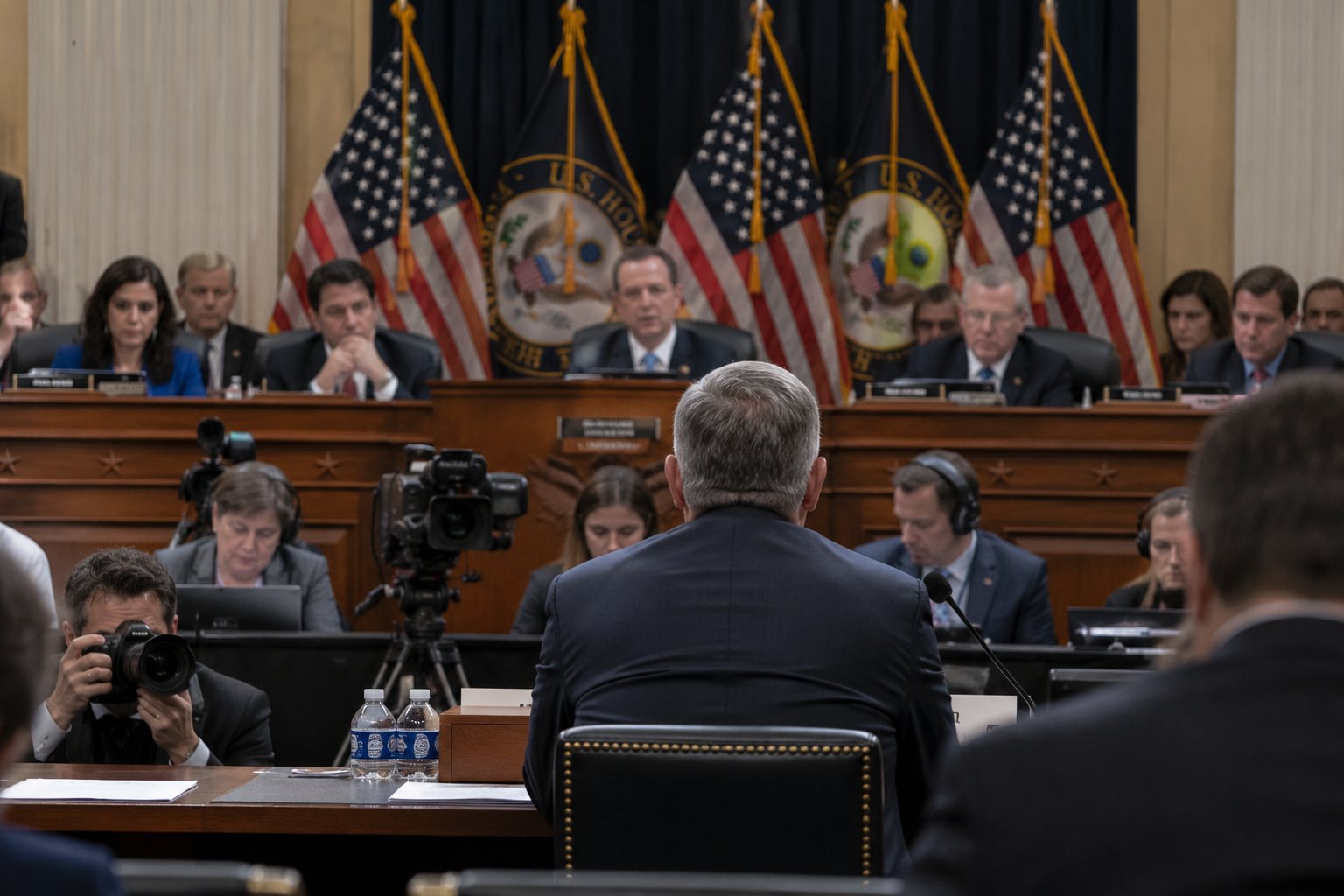
President Donald Trump's impeachment inquiry is entering a new phase Wednesday as House investigators release testimony from a senior American diplomat who says military assistance to Ukraine was tied to investigations that could politically benefit the president.
William Taylor, the acting U.S. ambassador to Ukraine, describes an unusual diplomatic operation involving Trump's personal attorney, Rudy Giuliani, and several administration officials.
His testimony raises questions about whether the president attempted to use American foreign assistance to pressure another country into investigating a potential political opponent.
Military Aid Becomes a Bargaining Chip
Taylor told investigators that nearly $400 million in congressionally approved military assistance to Ukraine was being withheld while the Trump administration sought public commitments from Ukrainian President Volodymyr Zelensky.
According to Taylor, the requested investigations involved former Vice President Joe Biden, his son Hunter, and allegations concerning Ukrainian interference in the 2016 presidential election.
Hunter Biden previously served on the board of Burisma, a Ukrainian energy company.
Taylor testified that he understood the military assistance would not be released until Zelensky publicly committed to pursuing the investigations.
The diplomat's account adds to concerns that American national security assistance was being used to obtain a political advantage for Trump.
A Shadow Foreign Policy Operation
Taylor describes a parallel diplomatic effort operating outside normal State Department channels.
He identifies Giuliani, Ambassador Gordon Sondland, and former special envoy Kurt Volker as important figures in efforts to persuade Ukrainian officials to announce investigations.
Taylor says he became increasingly concerned that the unofficial operation was undermining established American foreign policy.
Ukraine is fighting Russian-backed separatists and depends heavily on Western military assistance.
Taylor warned that withholding that support could weaken Ukraine's position and benefit Russia.
He also expressed concern that Zelensky might publicly announce investigations without receiving the promised assistance.
The diplomat describes that possibility as a nightmare scenario.
White House Denies Wrongdoing
Trump continues denying that he improperly pressured Ukraine.
The president maintains that his July 25 telephone conversation with Zelensky was appropriate and insists his administration was concerned about corruption.
Republican lawmakers have questioned whether Taylor possesses firsthand knowledge of Trump's intentions.
Taylor acknowledges that much of his understanding comes from conversations with other officials, including Sondland.
He has not testified that Trump personally explained the alleged arrangement to him.
Nevertheless, Democrats argue that the testimony provides substantial evidence supporting their investigation.
Public Hearings Begin Next Week
House Intelligence Committee Chairman Adam Schiff announced Wednesday that public impeachment hearings will begin November 13.
Taylor and State Department official George Kent are scheduled to testify first.
Former Ambassador Marie Yovanovitch, who was removed from her position earlier this year, is scheduled to appear November 15.
The hearings will allow Americans to hear testimony directly rather than relying exclusively on closed-door depositions and released transcripts.
Republicans continue criticizing the inquiry as politically motivated, while Democrats maintain that the president's conduct warrants congressional scrutiny.
A Presidency Under Investigation
The impeachment inquiry centers on a fundamental question: Did Trump condition American government assistance on a foreign government's willingness to pursue investigations benefiting his reelection campaign?
Taylor's testimony provides investigators with a detailed account of how the alleged arrangement developed.
The White House disputes the accusations, and Congress has not reached a conclusion.
With public hearings approaching, the dispute over Ukraine is becoming a defining confrontation between the Trump administration and the House of Representatives.
The coming testimony will determine how much additional evidence lawmakers and the American public receive about the president's dealings with Ukraine.