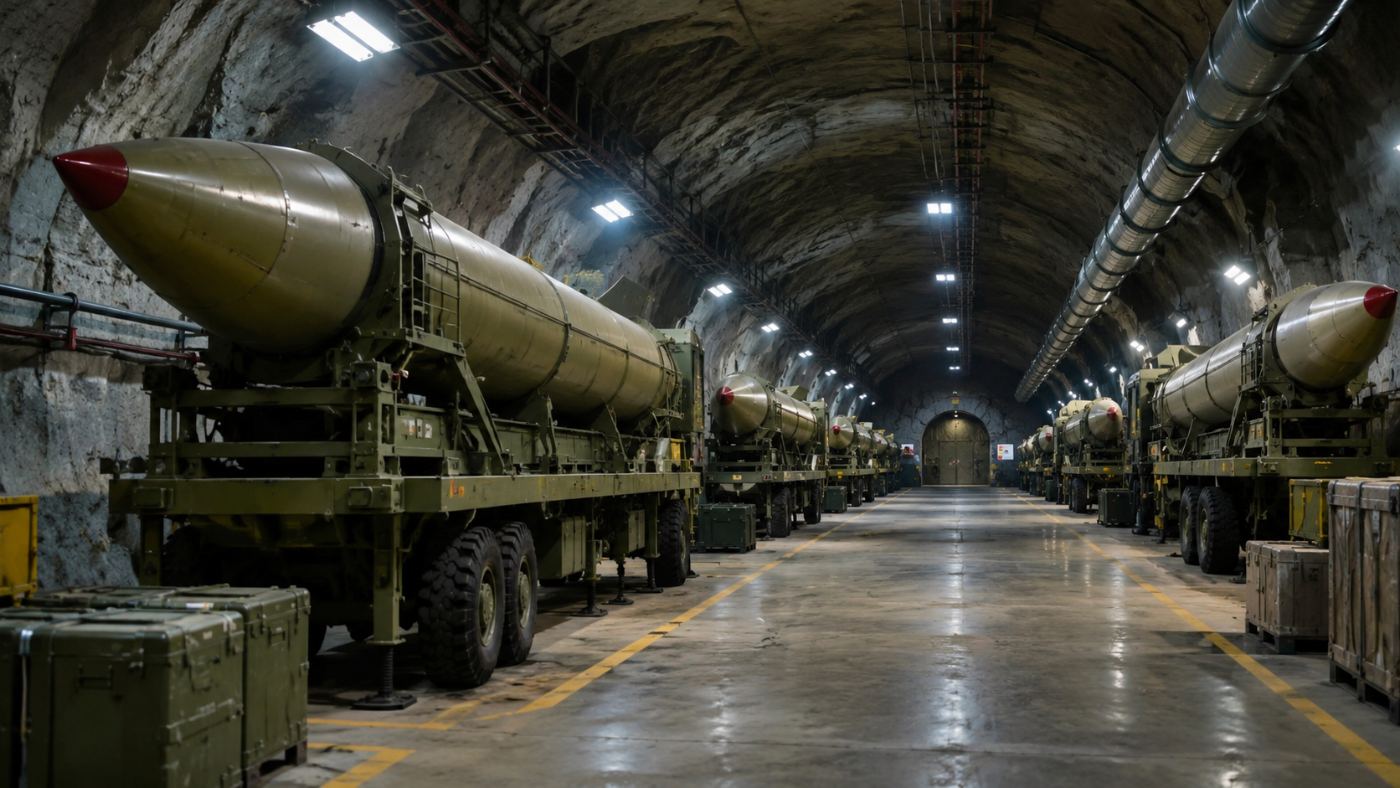
President Donald Trump repeatedly proclaimed that American military operations had destroyed Iran's military capabilities. But new intelligence assessments suggest that Tehran retains thousands of ballistic missiles, raising serious questions about how much the American bombing campaign actually accomplished.
According to reporting published November 14 by The Wall Street Journal, U.S. intelligence agencies estimate that Iran still possesses between 1,500 and 2,500 ballistic missiles, despite months of American and Israeli military operations.
The assessment comes as Trump considers whether to launch additional attacks against Iran, a decision complicated by Tehran's continuing ability to retaliate against American forces and regional allies.
Thousands of Missiles Remain
Operation Epic Fury began February 28, 2026, with American and Israeli strikes targeting Iranian military installations, air defenses, naval facilities, and weapons production infrastructure.
The campaign inflicted extensive damage. American forces reportedly struck more than 12,300 targets, while Iran's conventional navy and aging air force suffered devastating losses.
Trump repeatedly characterized Iran's military as effectively destroyed.
However, Iran's ballistic missile arsenal presents a substantially different picture.
Intelligence assessments reported by Bloomberg indicate that Iran may retain at least 1,700 ballistic missiles and continues manufacturing approximately 50 additional missiles every month.
Although intelligence officials acknowledge considerable uncertainty about the precise numbers, the findings suggest that Iran retains a substantial capacity to threaten American military installations, regional allies, and critical infrastructure.
The Problem With Declaring Victory
Iran's conventional military was never equipped to defeat American forces in a traditional confrontation.
Its aging fighter aircraft and surface warships were significantly outmatched by American military technology.
Ballistic missiles, however, have long represented a central component of Iran's military strategy.
Many missile facilities are located underground, making them considerably more difficult to identify and destroy.
Iran has also continued rebuilding its military infrastructure despite extensive bombing.
The distinction matters because destroying an opponent's conventional forces does not necessarily eliminate its ability to inflict serious damage.
Why Trump May Be Hesitating
The surviving missile arsenal reportedly figures prominently in administration discussions about renewed military action.
Additional American strikes could trigger retaliatory attacks against U.S. bases, Israel, Gulf nations, and regional energy infrastructure.
Iran has already demonstrated its willingness to retaliate. On November 15, Iranian forces claimed responsibility for a drone attack targeting an American military installation in Bahrain.
Meanwhile, attacks on commercial shipping and continued tensions around the Strait of Hormuz threaten international trade and energy markets.
Trump has reportedly told advisers that he may postpone additional attacks if Iran and its regional allies refrain from further provocations.
The administration also continues applying economic pressure in hopes of securing concessions without another major military offensive.
Military Success Is Not the Same as Strategic Victory
The American bombing campaign unquestionably damaged Iran's military infrastructure.
But the intelligence assessments reveal the limitations of equating destroyed equipment with achieving broader strategic objectives.
Iran retains missiles, continues rebuilding weapons production, and maintains the ability to threaten American interests.
The administration must now weigh the potential benefits of further military action against the possibility of another costly escalation.
Trump's declarations of military destruction may have conveyed a far more decisive outcome than the available intelligence supports.
The central question is no longer simply how much of Iran's military America destroyed. It is whether the campaign achieved enough to prevent the next confrontation.