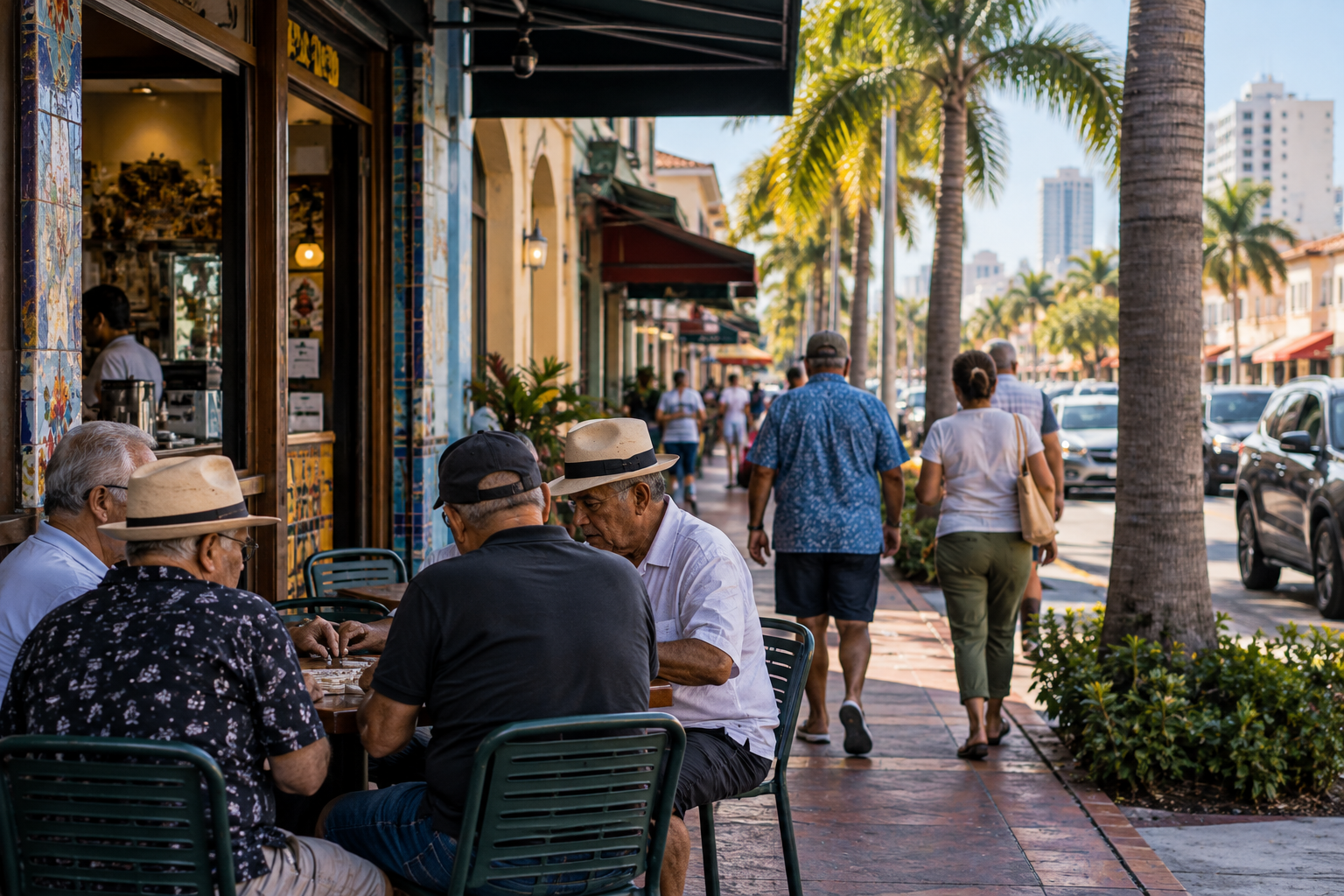
Donald Trump made historic gains with Hispanic voters in 2024. Less than two years later, polling shows those gains eroding as concerns over immigration enforcement and the economy collide with the promises that helped return him to the White House.
Donald Trump's performance with Hispanic voters was one of the defining political stories of the 2024 election.
After years of predictions that America's growing Latino population would naturally benefit Democrats, Trump demonstrated just how wrong that assumption could be.
He made substantial gains among Hispanic voters, particularly men, and performed strongly in communities that Democrats once considered reliably theirs.
South Florida provided some of the most striking examples.
But less than two years later, the political picture has changed.
Recent polling suggests that a significant portion of the Hispanic electorate that moved toward Trump in 2024 is moving away from him again.
And one of the clearest warnings is coming from inside Trump's own party.
Florida Republican Rep. Maria Elvira Salazar, whose Miami-area district has a heavily Hispanic population, publicly warned Trump in September that his administration's immigration enforcement had gone too far.
She pointed specifically to immigrants being detained despite having no criminal record.
Then she delivered the political warning.
The Hispanic voters who helped Trump return to the White House, Salazar said, now "feel betrayed."
That is an extraordinary admission from a Republican member of Congress representing one of the country's most important Hispanic communities.
Trump Broke Through in 2024
Trump's gains among Hispanic voters did not happen by accident.
Many Latino voters were frustrated by inflation and the cost of living. Others were dissatisfied with the Biden administration's handling of the border.
Republicans also successfully appealed to socially conservative voters and small-business owners while making significant inroads among working-class Hispanic men.
Trump's message worked.
But winning someone's vote once does not guarantee keeping it.
Polling conducted ahead of the 2026 midterms indicates that Republicans have surrendered a substantial portion of their advantage.
A recent bipartisan survey of more than 1,300 Latino registered voters across seven battleground states found Democrats leading Republicans 56% to 29% on the generic congressional ballot.
Other polling has shown substantial Hispanic dissatisfaction with Trump's job performance.
The reasons are not limited to immigration.
The economy and cost of living remain major concerns, demonstrating why it would be overly simplistic to attribute the entire movement to Trump's deportation policies.
But immigration enforcement has become impossible to separate from the political discussion.
The Difference Between Border Security and Mass Enforcement
One of the assumptions underlying Trump's immigration strategy was that his improvement among Hispanic voters demonstrated broad support for an aggressive crackdown.
The polling suggests something considerably more complicated.
Hispanic voters can support stronger border security while simultaneously opposing the detention or deportation of immigrants who have lived and worked in American communities for years.
Those positions are not inherently contradictory.
Recent polling has found considerable Latino support for stronger border enforcement alongside support for allowing undocumented immigrants who meet certain requirements to obtain legal permission to work.
That distinction matters.
Campaign rhetoric about criminals crossing the border can sound very different when immigration enforcement reaches someone's workplace, neighborhood, church or extended family.
And that is particularly significant in places such as Miami, where immigration isn't an abstract political issue.
It is part of everyday life.
A Warning From Miami
Salazar's criticism is notable precisely because she is not a Democratic critic of Trump.
She is a Republican.
She represents a heavily Hispanic South Florida district and has generally supported the president.
Yet she concluded that the administration's immigration policies had become politically damaging enough that she needed to warn Trump publicly.
Her message essentially asks the White House to recognize a distinction that polling suggests many Hispanic voters already make:
Securing the border is one issue.
What happens to immigrants already living inside the United States is another.
Trump successfully persuaded many Hispanic voters in 2024 that Republicans could handle the first.
His administration's actions may now be changing how some of those same voters view the second.
Latino Voters Aren't a Political Monolith
There is another lesson here that both parties have repeatedly struggled to understand.
There is no single "Latino vote."
Cuban Americans in Miami do not necessarily vote like Mexican Americans in Texas.
Puerto Rican voters in Pennsylvania do not necessarily share the priorities of Venezuelan immigrants in Florida.
Age, gender, income, religion, national origin and immigration history all influence political behavior.
Nor should declining support for Trump automatically be interpreted as permanent support for Democrats.
Some political analysts examining the latest polling have explicitly cautioned against that conclusion.
These voters can be dissatisfied with Trump without being enthusiastic about Democrats.
That makes the movement potentially more consequential—not because one party automatically inherits these voters, but because millions of Americans have demonstrated that their votes are available to whichever party convinces them it understands their priorities.
The Coalition Trump Built Is Being Tested
Trump's 2024 gains among Hispanic voters challenged one of the longest-standing assumptions in American politics.
Demographics did not guarantee Democrats a permanent political advantage.
Hispanic voters were willing to switch parties.
Now Republicans are discovering the other half of that lesson.
They can switch again.
The voters who helped create Trump's remarkable 2024 Hispanic breakthrough are evaluating his second administration based on what has happened since Election Day: immigration enforcement, prices, wages, foreign policy and their own experiences.
Some remain firmly supportive.
Others don't.
And when a Republican congresswoman from Miami feels compelled to warn a Republican president that Hispanic voters who helped elect him now feel betrayed, it is evidence of a political shift worth paying attention to.
Trump proved in 2024 that Latino voters should never be taken for granted by Democrats.
The developments of 2026 suggest Republicans shouldn't take them for granted either.