By October 9, 2019, the impeachment investigation into President Donald Trump's dealings with Ukraine had become something larger than a dispute over one telephone call.
It had become a confrontation between Congress and the White House over whether the Trump administration would cooperate with the investigation at all.
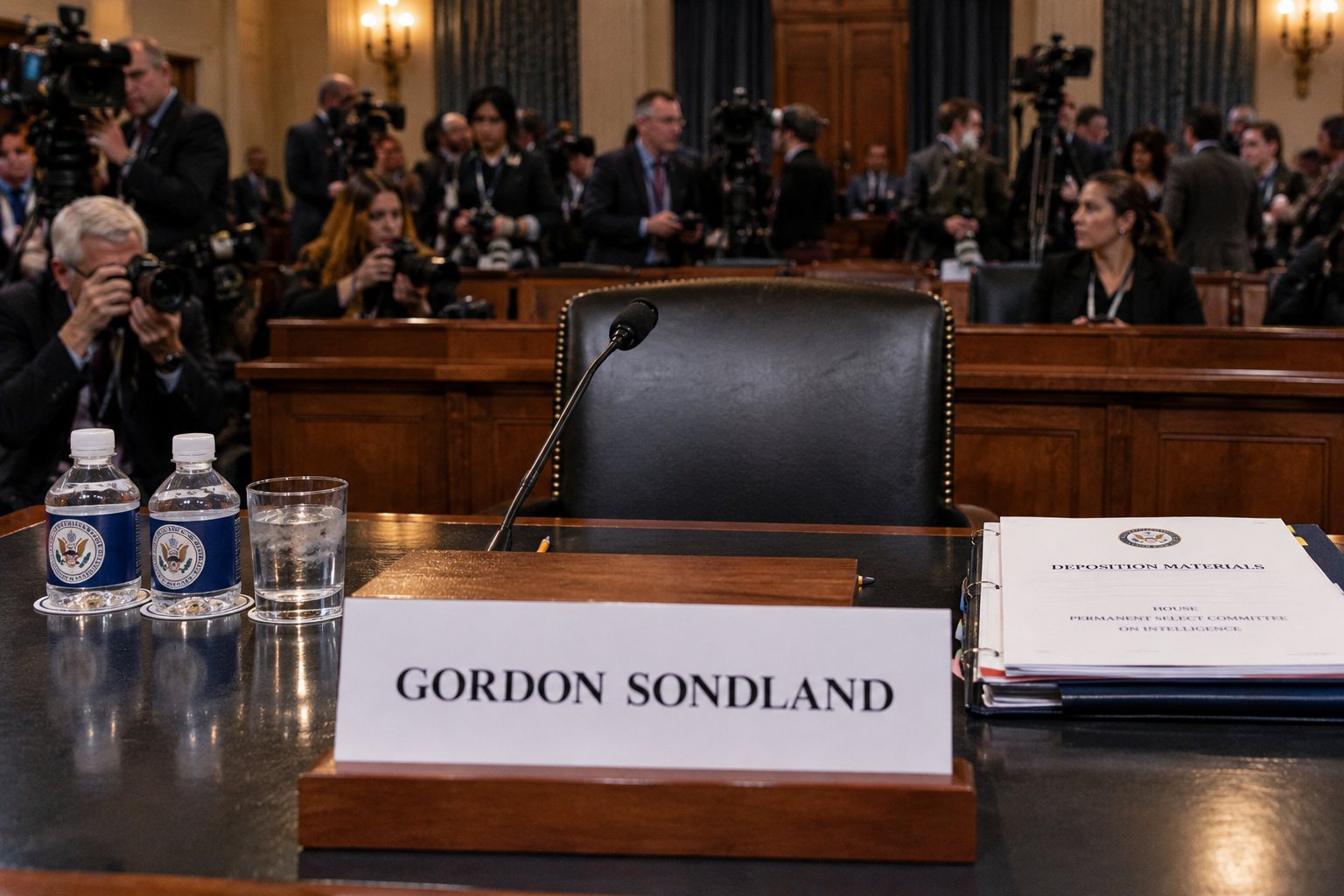
The previous day, the administration had blocked Gordon Sondland, the U.S. ambassador to the European Union and an important witness in the Ukraine affair, from appearing for a scheduled congressional deposition.
Hours later, White House Counsel Pat Cipollone sent House leaders an extraordinary eight-page letter announcing that the administration would not participate in the impeachment inquiry under the conditions established by House Democrats.
The White House's position was sweeping.
Administration officials would not simply contest particular subpoenas or invoke privilege over particular documents.
The administration was challenging the legitimacy of the inquiry itself.
On October 9, Washington was confronting the implications:
The House was investigating whether the president had abused his office.
The president's administration was declaring that it would not cooperate.
The Ukraine Scandal
The confrontation had begun with Trump's July 25 telephone call with Ukrainian President Volodymyr Zelensky.
During the call, Zelensky discussed Ukraine's desire to purchase additional American military equipment.
Trump responded:
“I would like you to do us a favor though.”
Trump asked Zelensky to investigate matters related to the 2016 election and later brought up former Vice President Joe Biden and Biden's son Hunter.
Joe Biden was seeking the Democratic presidential nomination and was a potential opponent for Trump in the 2020 election.
At roughly the same time, hundreds of millions of dollars in congressionally approved military assistance to Ukraine had been temporarily withheld.
That combination—the withheld aid, Trump's requests for investigations and the involvement of Trump's personal attorney Rudy Giuliani—became the central subject of the impeachment investigation.
Trump insisted there had been no improper quid pro quo and repeatedly described his conversation with Zelensky as appropriate.
Democrats suspected the president had used the power of his office to pressure a foreign government for political benefit.
The House began investigating.
Gordon Sondland Becomes a Key Witness
One of the people investigators wanted to question was Gordon Sondland.
Sondland wasn't a career diplomat.
A wealthy hotel executive and Trump donor, he had been appointed U.S. ambassador to the European Union.
Despite Ukraine not being a member of the European Union, Sondland had become deeply involved in the administration's dealings with the Ukrainian government.
Text messages involving Sondland, diplomat Kurt Volker and acting U.S. ambassador to Ukraine William Taylor had already raised significant questions.
In one exchange, Taylor wrote:
“I think it's crazy to withhold security assistance for help with a political campaign.”
Sondland responded that Trump had been “crystal clear” that there was no quid pro quo.
Congress wanted Sondland under oath.
His deposition was scheduled for October 8.
Then the administration stopped him from appearing.
Sondland Is Ordered Not to Testify
Sondland had traveled from Europe to Washington in preparation for his testimony.
He was ready to appear.
But hours before the deposition, the State Department instructed him not to testify.
Trump publicly defended the decision.
He said he would have liked Sondland to testify but argued that Sondland would have been appearing before what Trump called a “totally compromised kangaroo court.”
House investigators reacted immediately.
Intelligence Committee Chairman Adam Schiff said the decision to prevent Sondland from testifying constituted additional evidence of obstruction of Congress's constitutional functions.
The House committees then subpoenaed Sondland.
They demanded documents by October 14 and ordered him to appear for a deposition on October 16.
But blocking Sondland was only the beginning.
The White House Announces It Won't Cooperate
Later on October 8, White House Counsel Pat Cipollone sent a letter to House Speaker Nancy Pelosi and the Democratic chairmen leading the inquiry.
The message was unmistakable.
The administration rejected the legitimacy of the investigation.
Cipollone accused Democrats of attempting to overturn the 2016 election and influence the upcoming 2020 election.
He argued that Trump had been denied basic procedural protections and that the House had failed to hold a formal vote authorizing the impeachment inquiry.
The letter concluded that Trump and his administration could not participate in the inquiry under those circumstances.
The White House subsequently confirmed that the position extended to administration officials testifying and documents being provided.
It amounted to a broad strategy of noncooperation.
The Constitutional Argument
The administration presented its refusal as a defense of presidential authority and due process.
Cipollone argued that the House's procedures were unfair because Trump had not been given rights such as cross-examining witnesses, calling his own witnesses, accessing evidence and having counsel participate.
House Democrats rejected that reasoning.
An impeachment inquiry is a congressional investigation, not a criminal trial, and the Constitution gives the House the “sole Power of Impeachment.”
The Constitution does not explicitly require the full House to vote before committees begin an impeachment investigation.
Democrats therefore maintained that a formal authorization vote was unnecessary.
That didn't mean every congressional demand automatically overrode executive privilege or other constitutional protections.
Presidents and Congress have fought over subpoenas, executive privilege and confidential communications throughout American history.
What made the October confrontation remarkable was its breadth.
The White House wasn't merely asserting privilege over a particular conversation or document.
It was challenging the legitimacy of the inquiry itself.
Trump Goes on the Offensive
Trump didn't treat impeachment as a conventional legal dispute.
He treated it as political warfare.
He repeatedly called the investigation a “witch hunt.”
He attacked Schiff.
He attacked the whistleblower whose complaint had helped expose the Ukraine controversy.
He accused Democrats of attempting to overturn the results of the 2016 election.
He insisted that his conversation with Zelensky had been appropriate.
And instead of conceding that asking a foreign government to investigate a political opponent might be problematic, Trump publicly expanded the request.
On October 3, reporters asked what he wanted Zelensky to do.
Trump answered that Ukraine should investigate the Bidens.
Then he added another country.
“China should start an investigation into the Bidens,” Trump said.
The president was publicly requesting that two foreign governments investigate a domestic political rival.
Rudy Giuliani at the Center
Trump's personal attorney Rudy Giuliani was also becoming increasingly important to the investigation.
Career diplomats had grown concerned about Giuliani's unofficial role in American policy toward Ukraine.
Giuliani had pushed Ukrainian officials to investigate matters involving the Bidens and the 2016 election.
Investigators wanted to understand whether an unofficial diplomatic channel had been created to advance Trump's political interests.
That brought additional officials into the investigation.
Sondland.
Volker.
Taylor.
Energy Secretary Rick Perry.
State Department officials.
National Security Council personnel.
The inquiry was expanding.
The Evidence Would Eventually Come Out Anyway
The White House's noncooperation strategy did not prevent Congress from obtaining testimony.
Numerous current and former administration officials eventually appeared.
Sondland himself ultimately testified.
And his testimony became one of the most consequential moments of the impeachment investigation.
During public hearings in November, Sondland told lawmakers that there had been a quid pro quo involving a White House meeting sought by Zelensky.
He also testified that Giuliani's efforts regarding Ukraine were undertaken at Trump's direction.
Sondland famously told the committee:
“Everyone was in the loop.”
He identified senior administration officials who he said understood what was happening.
Other witnesses supplied additional details about the Ukraine pressure campaign and concerns within the government about Trump's July 25 call.
The administration's attempt to prevent testimony therefore did not keep the basic story from emerging.
The House Adds Obstruction of Congress
The standoff itself ultimately became part of Trump's impeachment.
On December 18, 2019, the House of Representatives approved two articles of impeachment.
The first charged Trump with abuse of power involving Ukraine.
The second charged him with obstruction of Congress.
That second article directly addressed the administration's refusal to cooperate with the investigation.
House Democrats accused Trump of directing executive branch agencies and officials not to comply with congressional subpoenas.
Trump rejected both charges and maintained that the impeachment effort was partisan and illegitimate.
The House impeached him largely along party lines.
The Senate subsequently acquitted him on both articles in February 2020.
October 9, 2019
That makes October 9 significant even though the Cipollone letter had technically been delivered the previous evening.
By October 9, its meaning was becoming clear.
The White House had chosen confrontation.
A diplomat considered important to the Ukraine investigation had been prevented from testifying.
Congress had responded with a subpoena.
The administration had declared the inquiry illegitimate.
The president was attacking the investigators.
And the White House was signaling that officials and documents would not simply be handed over to Congress.
The Ukraine scandal had therefore produced two separate questions.
The first was whether Trump had improperly used presidential power to seek investigations that could benefit him politically.
The second was whether a president could respond to an impeachment investigation by ordering his administration not to cooperate with it.
Within two months, the House would answer both questions by impeaching Donald Trump for abuse of power and obstruction of Congress.
The Senate would later acquit him.
But on October 9, 2019, that constitutional confrontation was only beginning.