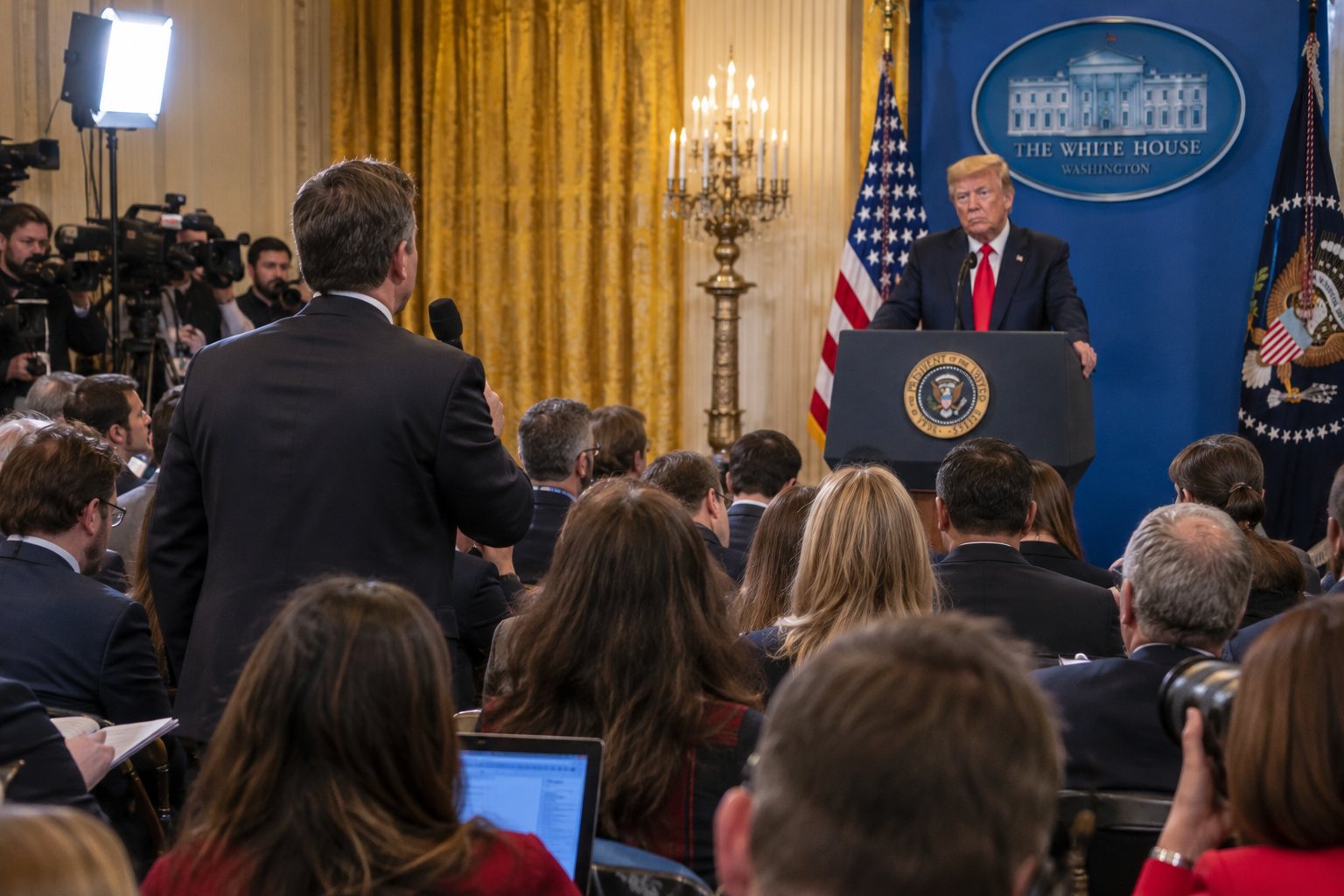
President Donald Trump's increasingly hostile relationship with the news media erupted into another controversy Wednesday when the White House suspended CNN correspondent Jim Acosta's press credentials following a contentious presidential news conference.
The decision, announced hours after Trump publicly berated Acosta for asking questions about immigration and the Russia investigation, has prompted criticism from journalists and press freedom advocates.
CNN and the White House Correspondents' Association are condemning the suspension, raising questions about whether the administration is using access to the president to punish reporters who challenge him.
Trump Confronts CNN Reporter
The confrontation unfolded during a White House news conference following Tuesday's midterm elections, in which Democrats secured control of the House of Representatives.
Acosta questioned Trump about his characterization of a caravan of Central American migrants traveling toward the United States.
Trump defended his immigration rhetoric and grew increasingly irritated as Acosta continued questioning him.
The president eventually ordered the reporter to stop speaking.
When Acosta attempted to ask about special counsel Robert Mueller's investigation into Russian election interference, Trump sharply criticized him.
Trump called Acosta a rude and terrible person and said CNN should be ashamed to employ him.
NBC correspondent Peter Alexander defended Acosta, prompting Trump to criticize Alexander as well.
The confrontation occurred in front of television cameras and assembled White House journalists.
White House Accuses Acosta of Misconduct
Later Wednesday, White House press secretary Sarah Huckabee Sanders announced that Acosta's security credentials were being suspended until further notice.
Sanders accused the reporter of placing his hands on a female White House intern who attempted to retrieve his microphone during the news conference.
Video footage shows the intern reaching for the microphone while Acosta continues speaking. Their arms briefly make contact as he holds onto it.
Acosta can be heard addressing the intern politely during the encounter.
The reporter disputes the White House's characterization of the incident.
The administration nevertheless maintains that his behavior was unacceptable.
That evening, Acosta reported that Secret Service personnel had confiscated his White House identification badge, preventing him from entering the grounds.
CNN Condemns the Decision
CNN immediately defended its correspondent and accused Sanders of misrepresenting what occurred.
The network described the suspension as an unprecedented action that threatens democratic principles.
The White House Correspondents' Association also strongly objected.
The organization argued that security credentials should not become a means of punishing journalists because the administration dislikes their questions or reporting.
It urged the White House to reverse its decision.
A Broader Conflict With the Press
The controversy comes amid Trump's repeated attacks on news organizations whose coverage he considers unfair.
Throughout his presidency, Trump has accused major media outlets of spreading false information and frequently used the phrase "enemy of the people" when discussing journalists.
His supporters often applaud these confrontations, arguing that reporters demonstrate hostility toward the administration.
Journalists counter that questioning government officials, including the president, is an essential responsibility of a free press.
The dispute over Acosta moves that disagreement beyond presidential rhetoric and into the practical question of who receives access to the White House.
Press Freedom Questions Intensify
The president is entitled to criticize journalists and challenge reporting he considers inaccurate.
However, press organizations argue that withdrawing credentials from a reporter following difficult questioning raises serious concerns about government retaliation.
For now, Acosta remains barred from the White House, and the administration has not announced when his access might be restored.
The confrontation leaves a significant question unresolved: Can the White House restrict a journalist's access because of a contentious exchange with the president, or does doing so threaten the independence of the American press?