By August 2015, Donald Trump was no longer the novelty candidate many political observers had expected to disappear.
He was leading Republican polls.
He was drawing enormous crowds.
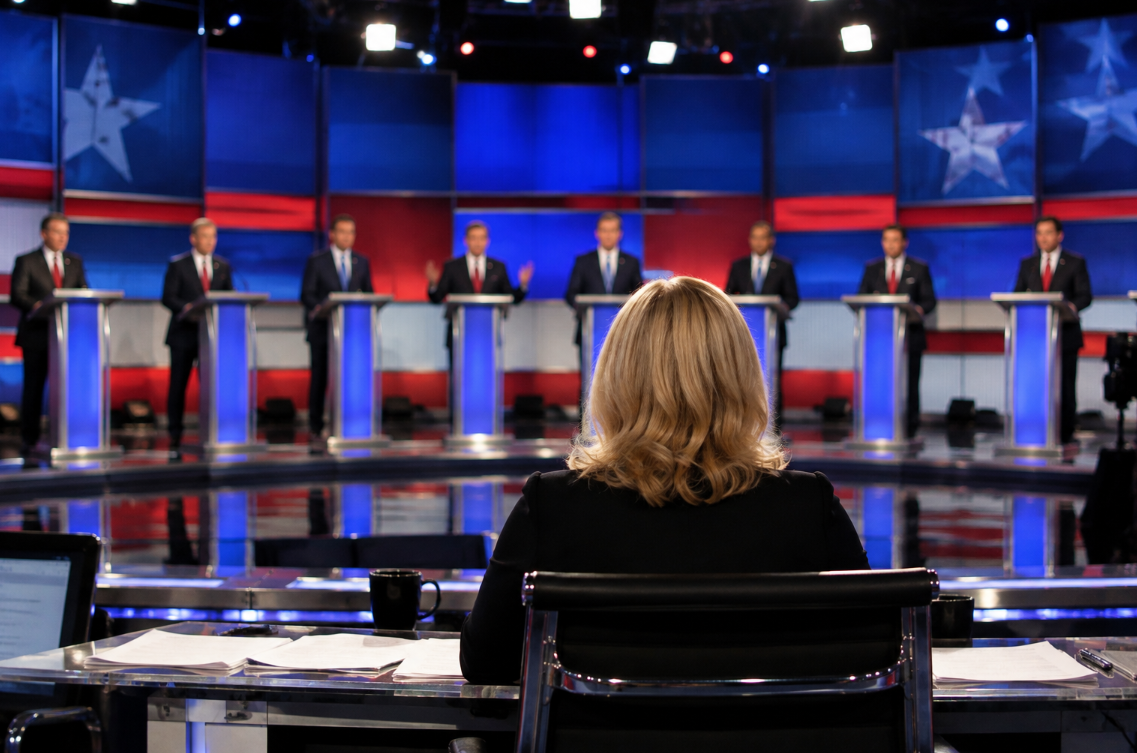
And on August 6, 2015, he walked onto the stage of the first Republican presidential debate in Cleveland as the candidate everyone was watching.
It didn't take long for the evening to become another Trump controversy.
This time, the confrontation was with Fox News moderator Megyn Kelly.
Kelly Confronts Trump About Women
During the debate, Kelly confronted Trump about derogatory language he had previously used to describe women.
She told him:
“You have called women you don't like ‘fat pigs,’ ‘dogs,’ ‘slobs,’ and ‘disgusting animals.’”
Trump interrupted.
“Only Rosie O'Donnell.”
The audience laughed.
Kelly continued, pointing out that the comments extended beyond O'Donnell and included disparaging remarks about women's appearances.
Then she asked Trump whether that language demonstrated the temperament Americans should expect from a president and whether it could become a liability if Hillary Clinton became the Democratic nominee.
Trump didn't apologize.
Instead, he turned the question into an argument about political correctness.
“I think the big problem this country has is being politically correct.”
Trump said he didn't have time for “total political correctness” and argued that the country didn't have time for it either.
Then he addressed Kelly directly.
“Honestly, Megyn, if you don't like it, I'm sorry.”
He added that he had been nice to her but suggested that could change because of the way she had treated him.
The debate moved on.
The fight didn't.
Trump Goes After Kelly
After the debate, Trump publicly complained about Kelly and the other Fox moderators.
He said Kelly's questions had been unfair and “ridiculous.”
He criticized her performance on social media and amplified criticism directed at her.
But the controversy became considerably larger the following night.
During an August 7 interview with CNN's Don Lemon, Trump again complained about Kelly's questioning.
Then he said:
“You could see there was blood coming out of her eyes. Blood coming out of her wherever.”
The remark immediately produced another political firestorm.
Critics interpreted Trump's unfinished phrase as a reference to menstruation and accused him of making a crude sexist attack against Kelly.
Trump denied that interpretation.
He later said he had been referring to blood coming from Kelly's nose or ears and argued that anyone interpreting the comment sexually was deliberately twisting his words.
But the controversy was already spreading.
Trump Gets Disinvited
The consequences came quickly.
Trump had been scheduled to appear at the RedState Gathering, a conservative political event in Atlanta.
Organizer Erick Erickson rescinded Trump's invitation after the Kelly remarks.
Erickson said he had his wife and daughter at the event and did not want Trump appearing unless he clarified what he meant.
Trump responded by attacking political correctness.
Once again, a controversy that might have forced another presidential candidate into damage-control mode instead became another fight.
Kelly Doesn't Apologize
Kelly defended the original debate question.
She said she had not attacked Trump and believed the question was fair.
Trump disagreed.
He maintained that Kelly had treated him unfairly and eventually argued that she should apologize to him.
Neither side backed down.
What began as a debate question about Trump's treatment of women had become a personal feud between the Republican front-runner and one of the most prominent personalities on Fox News.
That alone made the confrontation unusual.
Republican presidential candidates generally regarded Fox News as an important venue for reaching conservative voters.
Trump was openly fighting with one of the network's biggest stars.
Another Rule Trump Was Willing to Break
The confrontation revealed something increasingly important about Trump's campaign.
Trump was willing to attack institutions and personalities that Republican presidential candidates traditionally had strong incentives to keep on their side.
He had already attacked Republican Senator John McCain.
Now he was fighting publicly with Fox News.
And rather than attempting to end the controversy as quickly as possible, Trump kept it alive.
He attacked.
He responded to criticism.
He posted on social media.
He appeared on television.
The result was another cycle in which Donald Trump dominated the political conversation.
The First Debate Becomes the Trump Debate
There were ten Republican candidates standing on the main debate stage that night.
They included governors and senators.
Jeb Bush had been governor of Florida.
Scott Walker was governor of Wisconsin.
Marco Rubio and Ted Cruz were sitting United States senators.
John Kasich was governor of Ohio.
Trump had never held public office.
Yet much of the conversation following the debate centered on him.
Fox News later reported that approximately 24 million viewers watched the debate, making it an extraordinary television event for a presidential primary debate.
Trump's presence was an important part of the intense public interest surrounding it.
The celebrity businessman who had entered the presidential race less than two months earlier was now standing at the center of Republican politics.
A Controversy That Didn't End the Campaign
Once again, Trump's opponents had reason to believe he had created a serious political problem for himself.
His original debate question concerned his treatment of women.
His response produced another controversy concerning his treatment of a woman.
Republican rivals criticized him.
A conservative event disinvited him.
The story dominated political coverage.
Yet Trump remained in the race.
More importantly, he remained one of its leading candidates.
The pattern was becoming increasingly difficult to ignore.
Trump would say something controversial.
There would be outrage.
Republicans would condemn him.
Political commentators would debate whether he had finally damaged his campaign beyond repair.
And then the campaign would move forward.
The confrontation with Megyn Kelly wasn't the end of Donald Trump's presidential campaign.
It became another chapter in it.
And less than two months after Trump descended the escalator at Trump Tower, the Republican presidential race was increasingly revolving around one candidate:
Donald Trump.