President Donald Trump traveled to Miami ostensibly to speak about the political and humanitarian crisis consuming Venezuela.
But his February 18 address quickly became something larger.
Standing before a heavily Venezuelan-American audience at Florida International University, Trump used the collapse of Venezuela under Nicolás Maduro as the centerpiece of a sweeping argument against socialism — not simply in Latin America, but in the United States.
“Socialism is dying, and liberty, prosperity, and democracy are being reborn,” Trump declared.
Venezuela provided Trump with a powerful backdrop.
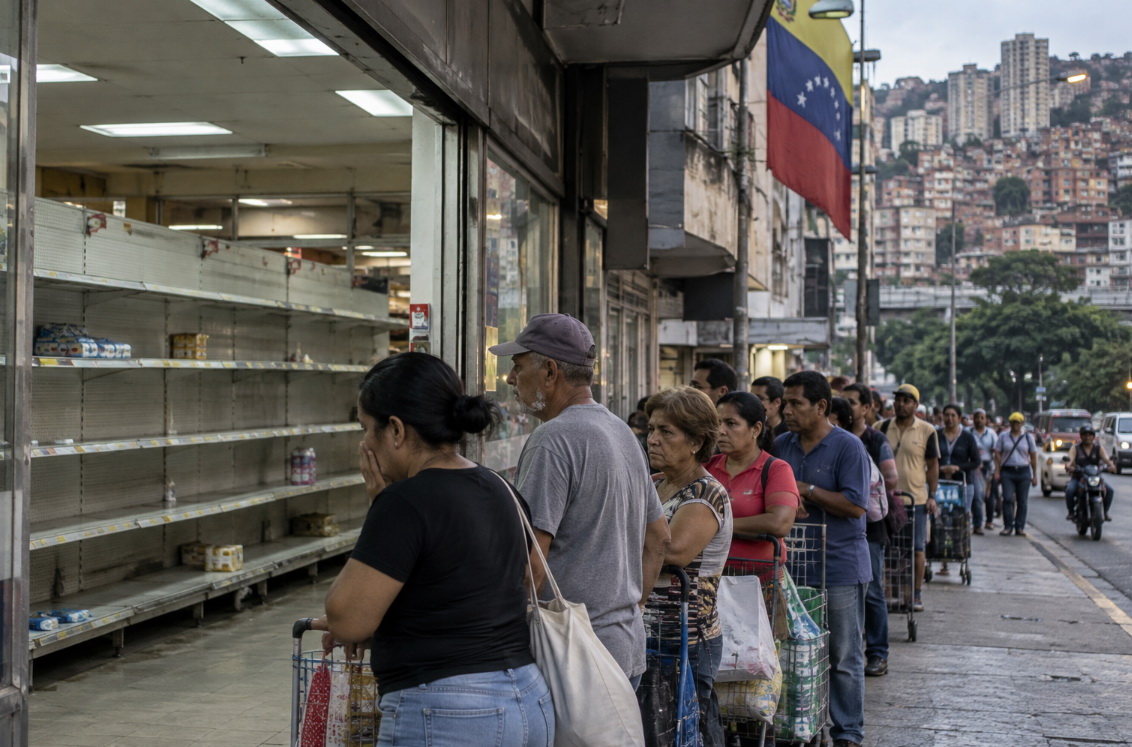
The country was experiencing a devastating economic and humanitarian crisis. Millions of Venezuelans had fled. Shortages of food and medicine were widespread. Hyperinflation had devastated the currency, while Maduro's government had increasingly suppressed political opposition and consolidated power.
The United States had recognized opposition leader Juan Guaidó as Venezuela's interim president, and Trump used the Miami speech to pressure members of Venezuela's military to abandon Maduro.
But Trump repeatedly expanded his argument beyond Maduro.
He portrayed Venezuela's catastrophe as the inevitable result of socialism itself.
“Socialism promises prosperity, but it delivers poverty,” Trump said. “Socialism promises unity, but it delivers hatred and it delivers division.”
Trump argued that socialist governments inevitably accumulate political power, suppress dissent and eventually produce tyranny.
It was an extraordinarily broad claim.
Venezuela's collapse had many causes, including years of economic mismanagement, corruption, dependence on petroleum revenues, declining oil production, political repression and policies implemented by the governments of Hugo Chávez and Nicolás Maduro.
Trump compressed that complicated history into a much simpler political message:
Socialism caused Venezuela's destruction.
And then he brought that message home.
Trump warned that socialists wanted control over healthcare, transportation, finance, energy and education.
The targets were no longer merely Maduro's Venezuela, communist Cuba or Daniel Ortega's Nicaragua.
Trump was clearly speaking to an American audience as well.
“To those who would try to impose socialism on the United States,” Trump declared, “America will never be a socialist country.”
That line revealed the larger political purpose of the speech.
Trump was beginning to transform “socialism” into a broad political weapon against his domestic opponents.
The timing mattered.
Democrats had recently regained control of the House of Representatives. Progressive lawmakers were advocating proposals including Medicare for All and the Green New Deal, while several Democrats were beginning campaigns for the 2020 presidential nomination.
Those proposals were not equivalent to Venezuela's political and economic system.
But Trump increasingly placed them under the same rhetorical label.
The strategy allowed him to connect Democratic policy proposals at home with some of the most dramatic economic and political failures in Latin America.
Instead of debating individual proposals solely on their specific costs, benefits and consequences, Trump could attach a much larger warning:
Look at Venezuela.
The approach would become increasingly familiar as the 2020 presidential campaign developed.
Trump repeatedly accused Democrats of embracing socialism and portrayed the election as a choice between American capitalism and a socialist transformation of the country.
The February 18 Miami speech was therefore about more than Venezuela.
It demonstrated how Trump could take a genuine international crisis, strip away much of its political and economic complexity, and turn it into a simple domestic campaign message.
Venezuela had become his warning.
Socialism had become his label.
And with the 2020 election approaching, Trump had found an argument he intended to use again and again.