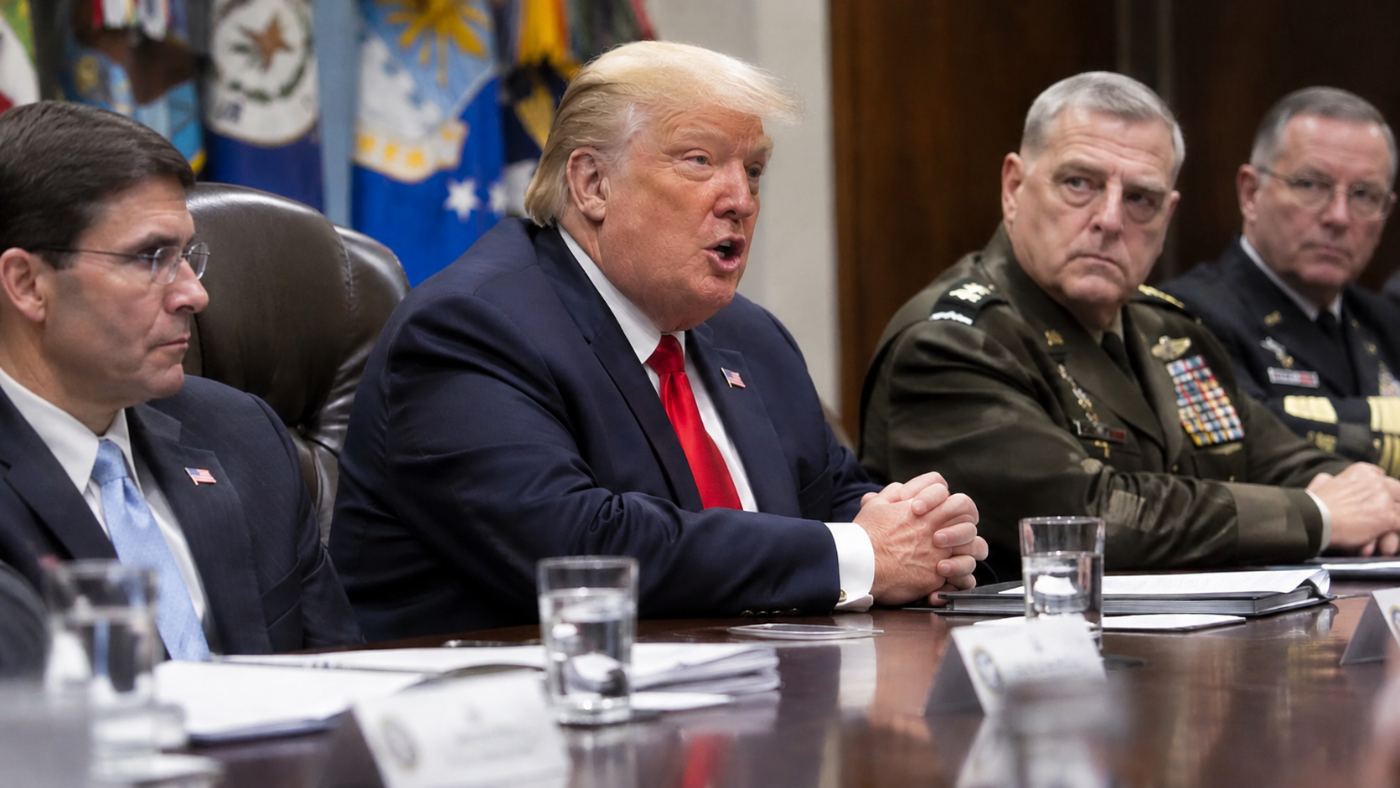
President Donald Trump's decision to intervene in a controversial Navy SEAL disciplinary case helped ignite a confrontation at the highest levels of American military leadership, culminating in the forced resignation of Navy Secretary Richard Spencer on November 24, 2019.
At the center of the dispute was Chief Petty Officer Edward Gallagher, a decorated Navy SEAL who had been convicted of posing with the corpse of an ISIS captive in Iraq.
Rather than allowing the Navy's established disciplinary process to proceed, Trump publicly intervened on Gallagher's behalf, restoring his rank and opposing efforts to revoke his coveted SEAL Trident.
The controversy raised serious questions about presidential interference in military accountability and whether political considerations were taking precedence over professional military judgment.
A Conviction and a Presidential Intervention
Gallagher had faced serious accusations arising from his 2017 deployment to Iraq, including the alleged murder of a wounded ISIS prisoner.
In July 2019, a military jury acquitted Gallagher of murder and most other charges but convicted him of wrongfully posing for a photograph with a dead captive.
The conviction resulted in a reduction in rank.
Trump subsequently intervened, ordering Gallagher's rank restored and allowing him to retire with the status and benefits associated with his former rank.
The decision effectively reversed a significant consequence of Gallagher's conviction.
For critics, the intervention sent a troubling message: a service member convicted of misconduct could receive exceptional treatment through presidential involvement.
Trump Challenges the Navy's Authority
The dispute intensified when Navy leaders considered whether Gallagher should retain his SEAL Trident, the insignia representing qualification and continued membership in the elite special warfare community.
Such reviews are an important part of maintaining professional standards.
They allow military leaders to determine whether personnel continue to meet the requirements expected of members of specialized units.
But Trump publicly opposed the review.
On November 21, he announced that the Navy would not take Gallagher's Trident away.
The declaration came before the Navy had completed its planned process.
Military leaders were now confronting an extraordinary situation: the commander in chief had publicly announced the outcome of a disciplinary matter that Navy officials were still preparing to examine.
The Navy Secretary Is Forced Out
On November 24, Defense Secretary Mark Esper announced that Navy Secretary Richard Spencer had been removed.
Esper said he had lost confidence in Spencer after learning that the secretary had privately approached White House officials with a proposal concerning Gallagher's disciplinary review without informing senior Defense Department leadership.
Spencer disputed aspects of the administration's handling of the controversy.
In his departure letter, he emphasized the importance of good order, discipline, and the rule of law.
He also stated that he no longer shared the president's understanding of the principles governing military service.
His departure exposed deep tensions between civilian political leadership and the Navy's professional command structure.
Although Spencer's undisclosed communications were the official reason for his removal, Trump's intervention in Gallagher's case had created the confrontation in which the leadership crisis unfolded.
A President Overrides Military Judgment
The president possesses broad constitutional authority as commander in chief.
But that authority carries responsibilities extending beyond the protection of individual service members.
Military discipline depends on consistent standards, confidence in leadership, and the expectation that misconduct will be addressed through established procedures.
Trump's actions raised concerns about whether those principles could be undermined when a disciplinary case became politically prominent.
Following Spencer's removal, Esper directed that Gallagher retain his SEAL Trident, ending the planned review.
The Navy's internal process never reached its intended conclusion.
Trump had publicly supported that outcome, and the Defense Department ultimately implemented it.
Political Loyalty and Military Accountability
Trump portrayed Gallagher as a warrior who had been treated unfairly.
Supporters viewed the president's intervention as an appropriate defense of a service member whose prosecution had been controversial.
But the dispute involved more than Gallagher's treatment.
It concerned the ability of military commanders to enforce professional standards without public interference from political leadership.
The president's decision to intervene before the Navy completed its review raised questions about the independence and credibility of military disciplinary proceedings.
Critics argued that protecting Gallagher risked sending a message that presidential favor could outweigh the judgment of experienced military commanders.
The Cost of Presidential Intervention
By November 24, the controversy had produced consequences far beyond Gallagher's individual case.
The Navy Secretary was out.
Senior defense officials had been drawn into a public confrontation.
A planned disciplinary review had been effectively stopped.
And questions about military accountability had become a national political controversy.
Trump had achieved the outcome he publicly supported: Gallagher retained his rank and SEAL status.
But that outcome came amid a breakdown in relations between the White House and senior Navy leadership.
November 24: A Crisis of Military Leadership
The removal of Richard Spencer marked the culmination of a confrontation that had escalated through presidential intervention, public statements, and disputes within the Defense Department.
Trump had the legal authority to intervene in military matters.
The larger question was whether exercising that authority in this case strengthened or weakened the military institution he commanded.
Gallagher's acquittal on the most serious charges did not erase his conviction for misconduct.
Nor did presidential support eliminate the Navy's legitimate interest in determining whether he should retain elite special warfare qualifications.
The episode demonstrated how quickly a disciplinary matter could become a leadership crisis when the president inserted himself into an unfinished military process.
On November 24, 2019, the Navy lost its civilian secretary, its planned review was halted, and the president's preferred outcome prevailed.
The controversy left a lasting question about military accountability: what happens when the commander in chief uses his authority to protect an individual service member from the professional standards his commanders are responsible for enforcing?