President Donald Trump spent months escalating America's economic confrontation with Canada.
Now, with American farmers facing high fertilizer costs, his administration is looking for another supplier.
Belarus.
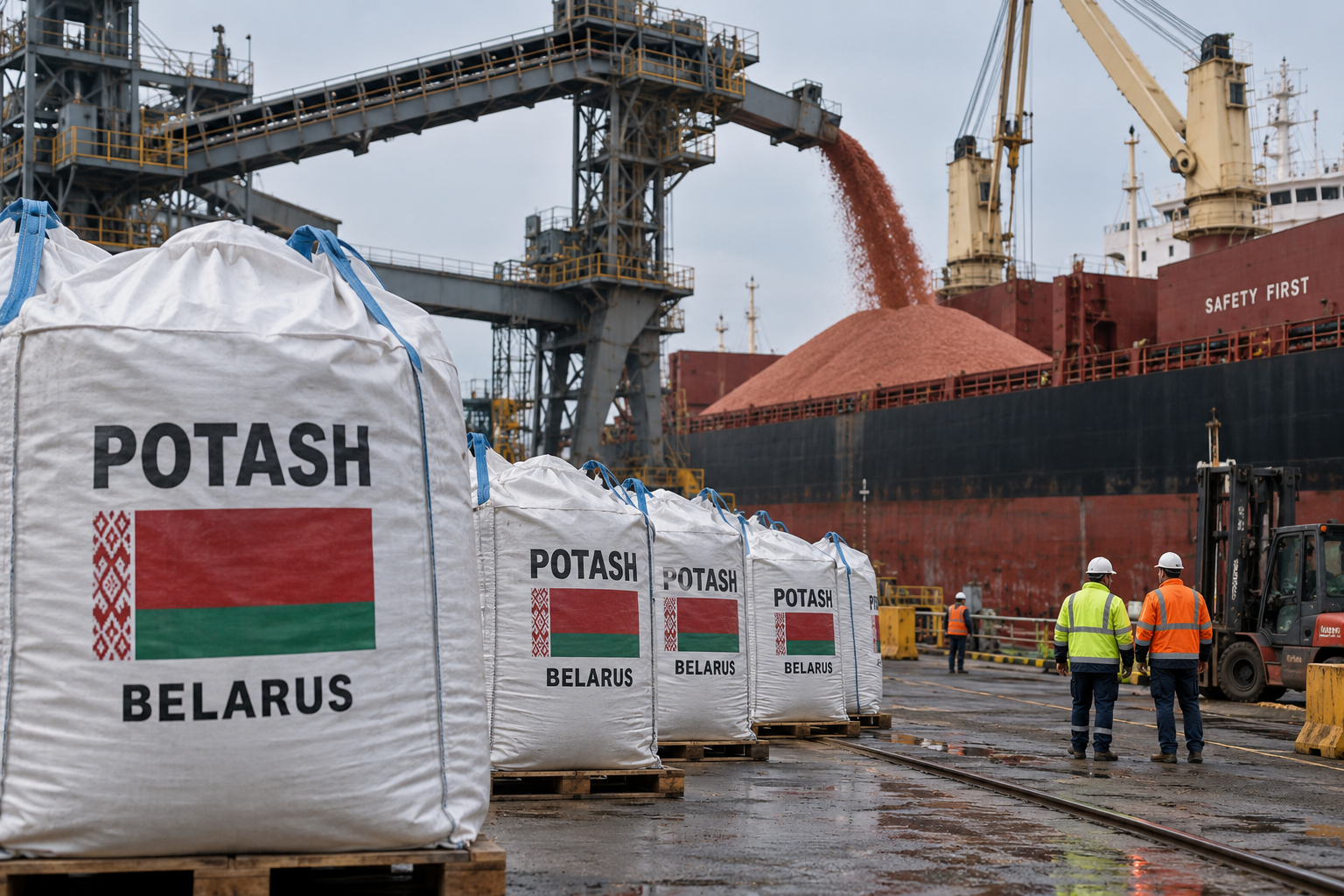
Trump announced Monday that the United States is working on what he called a “massive” agreement to purchase potash from Belarus, claiming the fertilizer would cost substantially less than supplies from Canada.
The proposal represents an extraordinary turn in American trade policy.
Canada isn't simply another fertilizer supplier. It is America's neighbor, a NATO ally and by far the dominant foreign source of potash used by U.S. farmers.
Belarus, meanwhile, is one of Russia's closest allies.
And suddenly Washington is looking toward Minsk for help.
From Canada to Belarus
Potash is a potassium-rich mineral used extensively in fertilizer. American agriculture depends heavily on imports because the United States doesn't produce enough domestically to satisfy demand.
Canada has traditionally filled that gap.
According to U.S. government data, Canada supplied roughly 80 percent of American potash imports between 2021 and 2024. More recent industry estimates put Canada's share even higher.
Geography helps explain why.
Canadian potash can move relatively efficiently by rail from Saskatchewan into the agricultural heartland of the United States.
Belarus presents a considerably more complicated proposition.
It is landlocked.
European sanctions have disrupted its traditional export routes.
And moving significant quantities of Belarusian potash to the United States could require shipping the product through Russia before transporting it across the Atlantic.
Yet Trump is presenting Belarus as an alternative to Canada.
And Belarus Is No Ordinary Trading Partner
The geopolitical implications are difficult to ignore.
Belarusian President Alexander Lukashenko is one of Vladimir Putin's closest international partners.
Belarus allowed Russian forces to use its territory during the 2022 invasion of Ukraine. Russian troops entered Ukraine from Belarusian territory, while Moscow was also permitted to launch missile strikes and operate military aircraft from Belarus.
The two countries remain closely connected politically, militarily and economically.
A Congressional Research Service report published this year said roughly two-thirds of Belarusian trade was with Russia in 2024, up from approximately half before the invasion.
Belarus also belongs to a formal “Union State” with Russia and participates in the Russia-led Collective Security Treaty Organization.
This isn't a country merely maintaining diplomatic relations with Moscow.
Belarus is deeply integrated with Russia.
America's Ally Gets Pushed Aside
That makes the contrast with Canada even more remarkable.
Instead of relying primarily on a neighboring democratic ally with an established North American supply chain, Trump is publicly proposing shifting some American fertilizer purchases toward an authoritarian government closely aligned with Russia.
The announcement comes as relations between Washington and Ottawa remain strained by Trump's trade policies.
Trump has repeatedly argued that the United States doesn't need Canadian products.
Potash demonstrates the difficulty with that argument.
American farmers need fertilizer.
Canada has enormous quantities of it.
And after months of confrontation with Ottawa, the administration is now looking thousands of miles away for an alternative.
The optics are difficult to escape: Washington is feuding with Canada while attempting to deepen trade with Belarus.
But There's Another Problem
Belarus may not be able to deliver what Trump is promising.
Fertilizer analysts have questioned whether Belarusian potash could significantly reduce costs for American farmers.
Belarusian President Alexander Lukashenko himself said Monday that his country doesn't have large quantities of potash sitting around waiting for American buyers.
Much of its production is already committed.
Transportation presents another obstacle.
Belarus previously exported substantial quantities through Lithuania's Baltic port of Klaipėda, but sanctions and restrictions have disrupted that route.
That potentially leaves Russian ports as an alternative.
In other words, replacing Canadian potash could mean moving fertilizer out of Belarus, through Russia, onto ships, across an ocean and eventually into the American agricultural supply chain.
Compare that with Canada, where fertilizer can simply move south by rail.
And Potash Isn't Even the Biggest Problem
There is another complication.
According to fertilizer analyst Josh Linville of StoneX, the United States isn't experiencing a serious shortage of potash.
“We have more than enough to go around,” Linville told Reuters.
The more serious problems involve nitrogen and phosphate fertilizers.
Those markets have been disrupted by the war with Iran, which has interfered with shipments of nitrogen fertilizer, natural gas and sulfur from the Gulf.
So even if Trump successfully negotiates his Belarusian potash agreement, analysts question whether it addresses the fertilizer problem American farmers actually face.
A Foreign-Policy Contradiction
The proposed deal also comes as European governments maintain sanctions against Belarus.
Lithuania's foreign minister said Monday that Europe sees no justification for easing pressure on Lukashenko's government, citing political repression, human-rights violations and Belarus's continuing support for Russia's war against Ukraine.
The Trump administration has moved in a different direction.
Washington recently eased some sanctions following negotiations that resulted in Belarus releasing political prisoners.
Now Trump wants a major fertilizer agreement.
The result is an unusual realignment.
America is fighting economically with Canada while pursuing commerce with a government that helped Russia launch its invasion of Ukraine.
A Problem Partly of Washington's Own Making
Trump says the proposed Belarus agreement would save American farmers money.
If it ultimately does, farmers struggling with fertilizer costs would certainly welcome the relief.
But the broader circumstances raise an uncomfortable question.
How did the United States reach a point where its president is looking to Alexander Lukashenko's Belarus as an alternative to Canada?
The administration has spent months disrupting one of America's most important trading relationships while simultaneously dealing with the economic consequences of a prolonged Middle Eastern war.
Now American farmers are feeling the pressure.
Turning to Belarus can therefore be viewed less as evidence of newfound strength than as an attempt to find another option amid mounting economic and geopolitical constraints.
And even that option may not work.
Trump says Belarus can sell America cheaper fertilizer.
Industry analysts question whether Belarus can supply enough of it.
Belarus's own president says much of the country's production is already spoken for.
Meanwhile, enormous quantities of potash remain just across America's northern border.
In Canada.