Thanksgiving is traditionally a moment when American presidents set aside political differences to recognize the sacrifices of military personnel serving far from home.
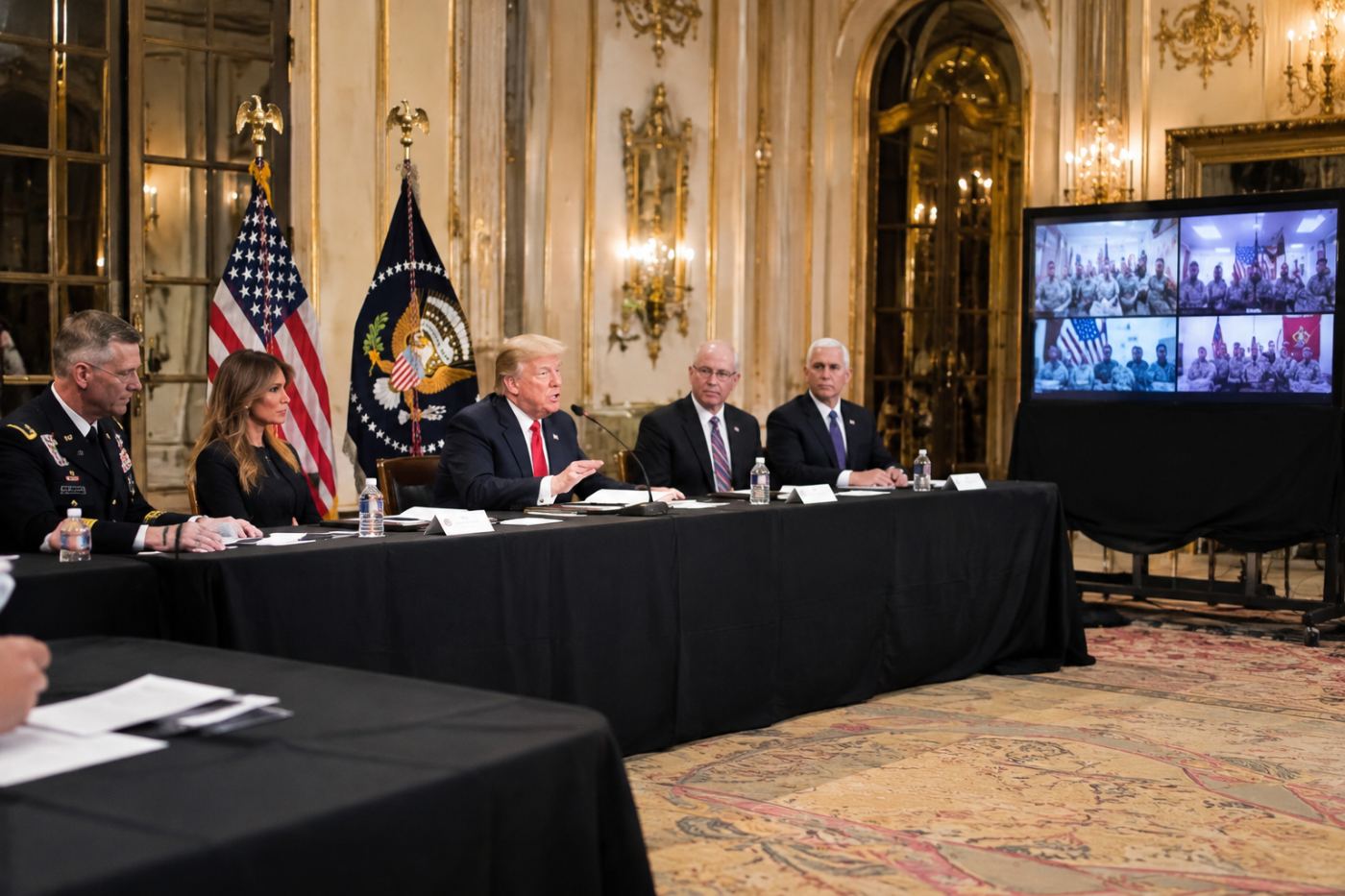
On November 23, 2017, President Donald Trump participated in that tradition, speaking by video conference with American service members deployed around the world.
But alongside his expressions of gratitude, Trump delivered an extended account of his administration's accomplishments, promoting the economy, stock-market records, military policy, and his proposed tax cuts.
The result was a Thanksgiving message that mixed appreciation for America's armed forces with the president's political priorities.
A Thanksgiving Call From Mar-a-Lago
Trump conducted the video conference from his Mar-a-Lago resort in Palm Beach, Florida.
The call connected him with five deployed military units representing every branch of the armed forces.
Among them were Army soldiers from the 82nd Airborne Division in Afghanistan, Marines from the 2nd Marine Raider Battalion in Iraq, Navy personnel aboard the USS Monterey, Air Force personnel in Turkey, and Coast Guard members stationed in Kuwait.
Trump thanked the service members for defending the country and acknowledged the difficulties of spending Thanksgiving away from their families.
He also praised their courage and dedication.
But the conversation soon expanded beyond military service.
From Military Sacrifice to Stock-Market Records
During the call, Trump repeatedly highlighted what he described as America's improving economic performance.
He pointed to record stock-market levels, declining unemployment, and companies bringing jobs back to the United States.
Trump told service members that the economy was performing exceptionally well and suggested that they were defending a country experiencing renewed prosperity.
The economic claims were not entirely without foundation.
The stock market had reached record levels, and unemployment was near a 17-year low.
However, the economic expansion had begun years before Trump entered office.
The president's remarks largely presented those developments as achievements of his administration rather than discussing the longer economic trends behind them.
Tax Cuts Become Part of the Thanksgiving Message
Perhaps the most striking departure from the traditional holiday message came when Trump promoted his administration's proposed tax legislation.
Republicans in Congress were working to pass a major overhaul of the federal tax code.
Trump used the military video conference to express enthusiasm for the proposal, describing the anticipated reductions as substantial and beneficial.
The legislation had not yet passed Congress.
Nevertheless, Trump presented the tax plan as another reason Americans should be optimistic about his presidency.
The moment illustrated how the president incorporated a pending domestic political initiative into a conversation intended to recognize deployed military personnel.
Trump Takes Credit for Military Progress
Trump also discussed American military operations in Afghanistan, Iraq, and the campaign against the Islamic State.
He praised the service members for their accomplishments and argued that his administration had given military commanders greater freedom to conduct operations.
Trump suggested that the changes were producing significant improvements on the battlefield.
He contrasted his approach with previous military policies, portraying his administration as more willing to allow troops to accomplish their missions.
The military had achieved important successes against ISIS during 2017.
But those developments followed years of operations involving American forces, coalition partners, and local military organizations.
Trump's account emphasized his administration's role without giving comparable attention to the earlier operations that contributed to those results.
The Troops Were Still the Guests of Honor
Despite the political content, Trump's remarks also contained genuine expressions of appreciation for service members and their families.
He acknowledged the difficulties of deployment and repeatedly thanked personnel for their service.
The president spoke directly with representatives of the participating units and expressed pride in their accomplishments.
Presidents frequently use military holiday messages to discuss national conditions and defense policy.
Trump's remarks were therefore not unprecedented simply because they included references to government achievements.
What distinguished the conversation was the prominence of his administration's economic and political agenda, particularly the proposed tax legislation.
A Thanksgiving Message Filled With Political Accomplishments
Earlier that morning, Trump had also posted a Thanksgiving message on social media highlighting his administration's record.
He cited the stock market, employment, military spending, veterans' services, deregulation, and his proposed border wall.
The message reflected the same themes that appeared during his conversation with deployed troops.
For Trump, Thanksgiving became another opportunity to present an optimistic account of his presidency.
Supporters could view the remarks as reassurance that the country the troops were defending was prospering.
Critics could reasonably question whether a holiday call with deployed personnel was an appropriate setting for promoting a domestic legislative agenda.
A Holiday Conversation That Reflected Trump's Presidency
The November 23 video conference demonstrated Trump's distinctive approach to presidential communication.
He thanked American troops and acknowledged their sacrifices.
He also used the occasion to discuss his political achievements, economic claims, and legislative priorities.
The official transcript preserves both elements.
The controversy was not whether presidents should recognize military accomplishments or discuss national progress.
It concerned how much attention a Thanksgiving message to deployed service members should devote to the president's own political agenda.
On November 23, 2017, Trump offered gratitude to America's armed forces while repeatedly returning to the accomplishments and ambitions of his administration.
The holiday message became both a tribute to military service and a presentation of the president's political record.