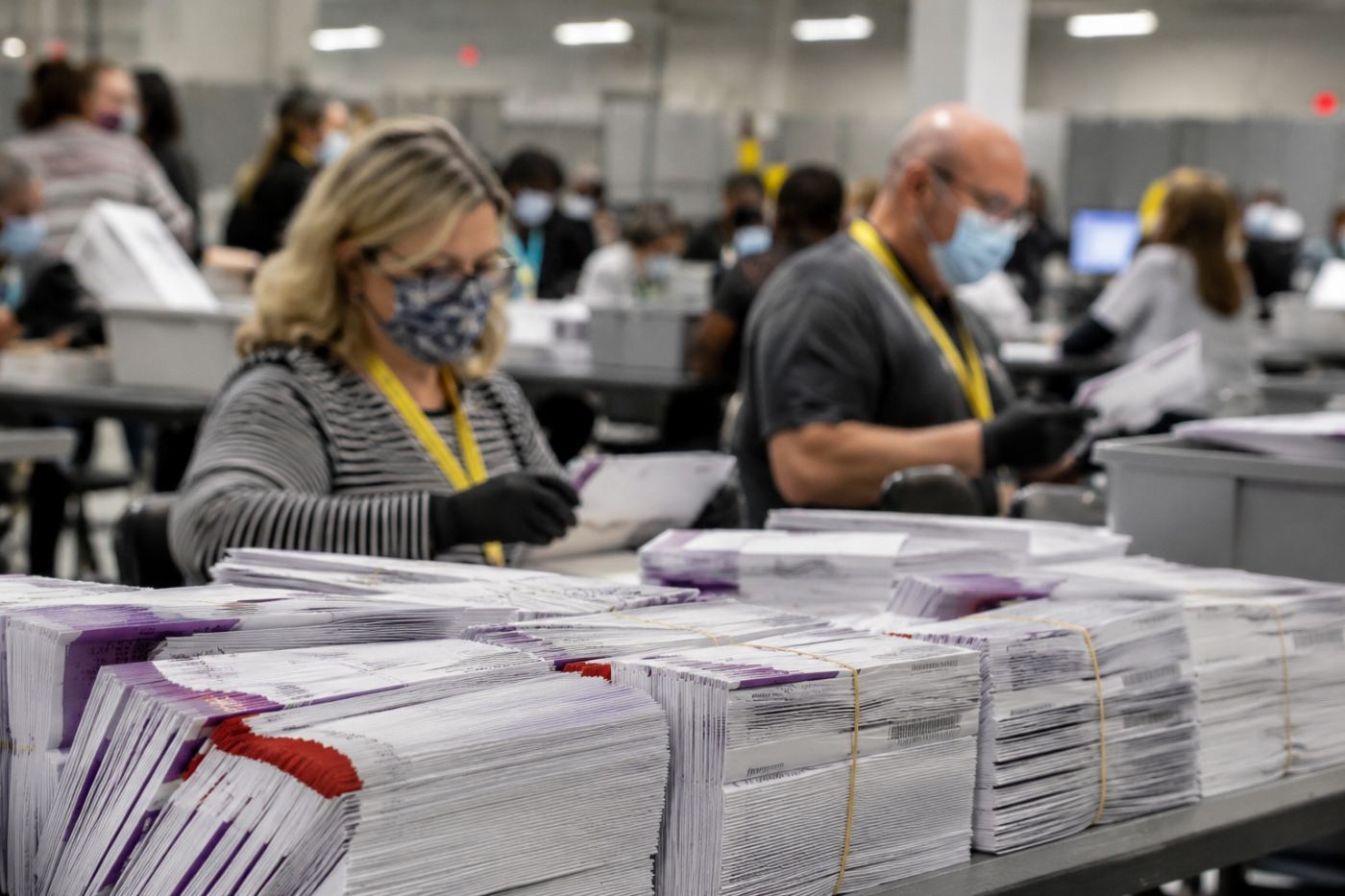
Donald Trump had lost Pennsylvania, but his campaign was still searching for ways to eliminate votes from the election results.
On November 23, 2020, the Pennsylvania Supreme Court delivered another defeat to Trump's efforts to challenge Joe Biden's victory, rejecting attempts to disqualify thousands of mail-in ballots over minor technical omissions.
The most remarkable detail was not simply that Trump's campaign lost.
It was that the campaign was attempting to discard votes without alleging that the affected voters were ineligible, that their ballots arrived late, or that fraud had occurred.
The ballots were legitimate. The voters were qualified. But Trump's lawyers wanted thousands of their votes excluded anyway.
Thousands of Votes Targeted Over Technicalities
The case involved 8,329 absentee and mail-in ballots in Philadelphia.
Trump's campaign challenged ballots because voters had failed to handwrite certain information on their return envelopes, including their names, addresses, or dates.
The campaign did not dispute that the ballots had arrived before Pennsylvania's Election Day deadline.
It did not dispute that the ballots had been signed by qualified voters.
And it did not present evidence that the ballots were fraudulent.
Instead, Trump's attorneys argued that technical omissions on the envelopes required election officials to reject them.
The practical consequence would have been to discard thousands of votes that otherwise met the essential requirements for participation in the election.
The Supreme Court Rejects Trump's Argument
Pennsylvania's highest court disagreed.
In its November 23 decision, the court concluded that the state's Election Code did not require disqualification of ballots solely because voters omitted certain handwritten information from otherwise valid return envelopes.
The justices distinguished between requirements essential to election integrity and technical instructions whose violation did not justify disenfranchising voters.
The court emphasized Pennsylvania's longstanding legal principle that election laws should protect the right to vote whenever reasonably possible.
Minor technical mistakes should not automatically invalidate ballots when no fraud or other substantial irregularity has been established.
The ruling upheld Philadelphia's decision to count the disputed ballots.
Another 2,349 Ballots Saved
The decision also addressed a separate dispute involving 2,349 mail-in ballots in Allegheny County.
Those ballots had been signed and returned on time, but the voters had not handwritten dates on their outer envelopes.
Republican state Senate candidate Nicole Ziccarelli challenged the ballots in a closely contested legislative race.
The dispute was consolidated with the Philadelphia cases before the Pennsylvania Supreme Court.
The justices concluded that the missing handwritten dates did not justify rejecting those ballots.
The ruling restored the county's decision to count them.
Together, the cases concerned 10,678 ballots that election challengers sought to exclude over technical envelope deficiencies.
Trump's Campaign Was Not Proving Fraud
The distinction between challenging election procedures and proving election fraud was central to the case.
Trump repeatedly claimed that the 2020 presidential election had been stolen.
But this particular litigation did not establish that anyone had voted illegally.
It did not identify thousands of fraudulent ballots.
It did not demonstrate that election officials had manipulated the results.
Instead, the campaign sought to invalidate votes because certain information had not been handwritten on ballot envelopes.
The court found that the Election Code did not require such a sweeping remedy.
The ruling exposed the weakness of treating every alleged procedural defect as grounds for discarding a legitimate vote.
A Different Defeat From Trump's Federal Lawsuit
The November 23 ruling was separate from another major Pennsylvania election case.
On November 21, federal Judge Matthew Brann had dismissed a Trump campaign lawsuit challenging election procedures and seeking extraordinary relief that could interfere with certification.
Trump's lawyers appealed that decision on November 22.
The Pennsylvania Supreme Court case concerned a different legal question: whether specific mail-in ballots could be rejected because of technical omissions on their envelopes.
Both cases represented setbacks for efforts to challenge Biden's victory, but they involved different courts, arguments, and remedies.
The Bigger Picture: Biden Had Won Pennsylvania
Biden's lead in Pennsylvania exceeded 80,000 votes in the final certified results.
The ballots challenged in the November 23 cases were far fewer than that margin.
Even if Trump's campaign had succeeded in excluding all 8,329 Philadelphia ballots, that alone would not have reversed the statewide presidential result.
Nevertheless, the litigation was significant because it concerned the fundamental right of qualified voters to have their ballots counted.
Election officials must enforce voting laws, including requirements intended to prevent fraud.
But the court determined that the omissions at issue did not justify invalidating ballots cast by eligible voters.
Another Courtroom Defeat for Trump's Election Challenge
By November 23, Trump's attempts to contest the election were encountering repeated legal setbacks.
Michigan certified Biden's victory that same day.
Pennsylvania's highest court rejected efforts to discard thousands of mail-in ballots.
And the federal litigation challenging Pennsylvania's results was continuing after a major defeat two days earlier.
Trump remained unwilling to concede.
But his campaign had not produced evidence establishing widespread fraud sufficient to reverse Biden's victory.
When the Right to Vote Prevailed
November 23, 2020, became another important date in the legal history of Trump's effort to challenge the presidential election.
His campaign had asked Pennsylvania courts to exclude thousands of ballots despite acknowledging that the voters were qualified and that the ballots had been received on time.
The Pennsylvania Supreme Court refused.
The ruling did not eliminate every possible dispute over election procedures. Nor did it establish that technical requirements could never justify rejecting a ballot.
It established that the particular omissions in these cases were insufficient to disenfranchise thousands of voters.
Trump's campaign wanted those ballots thrown out.
Pennsylvania's highest court determined they should count.
And once again, an attempt to challenge Biden's election victory ended in defeat.