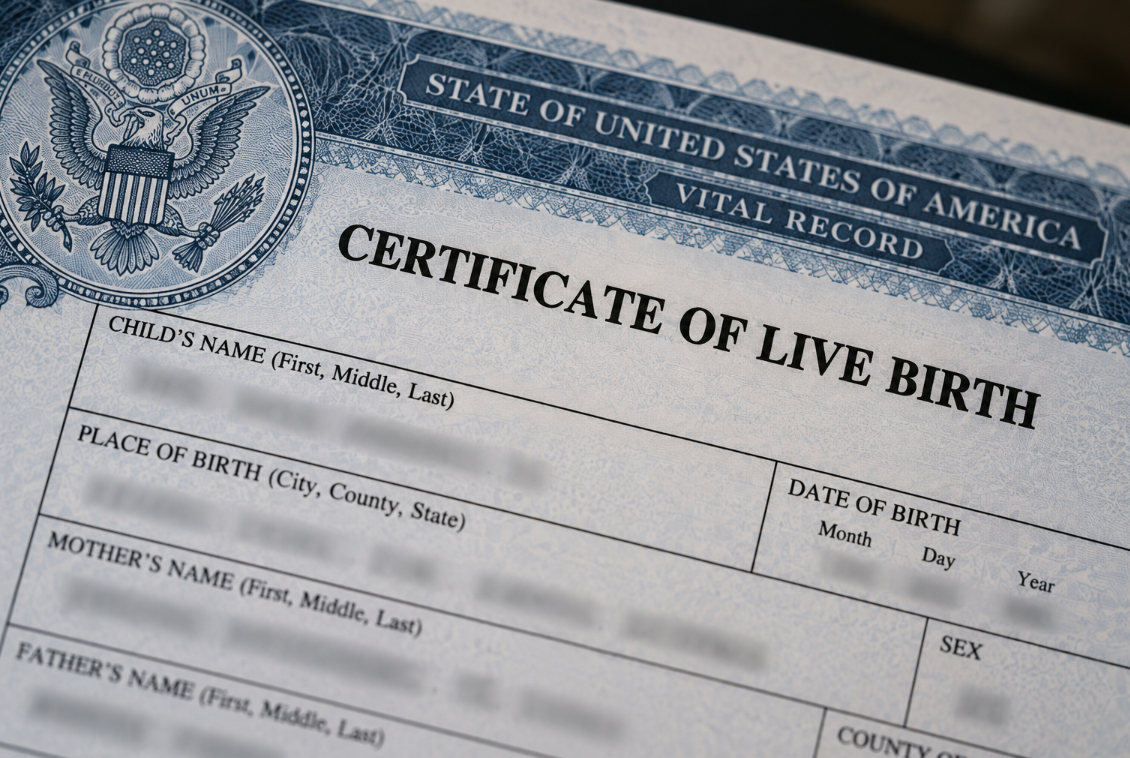
President Donald Trump made another attempt to restrict birthright citizenship on August 6, signing two executive orders designed to narrow who automatically becomes an American citizen when born in the United States.
The new effort came just weeks after the Supreme Court rejected Trump's much broader attempt to restrict birthright citizenship for children born to undocumented immigrants and people temporarily living in the United States.
This time, Trump took a narrower approach.
Rather than again attempting to exclude broad categories of children based primarily on their parents' immigration status, the new orders target specific circumstances that the administration argues fall outside the protections of the Fourteenth Amendment.
Those include children of certain foreign government employees, people classified as alien enemies, and cases in which parents allegedly arranged to come to the United States specifically to obtain citizenship for a child.
A second executive order directly targets what the administration calls “birth tourism.”
The result is a new constitutional confrontation over one of the oldest and most consequential guarantees of American citizenship.
The Fourteenth Amendment Is at the Center of the Fight
The Citizenship Clause of the Fourteenth Amendment was ratified in 1868 following the Civil War.
Its language is remarkably direct:
“All persons born or naturalized in the United States, and subject to the jurisdiction thereof, are citizens of the United States.”
For generations, that provision has meant that nearly everyone born on American soil automatically becomes an American citizen.
There have always been narrow exceptions.
Children born to foreign diplomats, for example, traditionally have not received automatic citizenship because their parents are not considered fully subject to American jurisdiction.
Trump has repeatedly argued that the phrase “subject to the jurisdiction thereof” should permit the government to exclude additional categories of people.
The Supreme Court rejected his broader interpretation in June.
Trump's First Attempt Went Much Further
Trump's original birthright-citizenship order was signed immediately after he returned to office in January 2025.
That order sought to deny automatic citizenship to children born in the United States when their mothers were unlawfully present and the fathers were neither citizens nor lawful permanent residents.
It also targeted children whose mothers were legally but temporarily present in the United States, including some people on student, work or tourist visas.
The proposal immediately generated lawsuits.
Federal courts blocked the policy before it could take effect, setting up a major constitutional battle that eventually reached the Supreme Court.
On June 30, 2026, the Supreme Court upheld the lower-court judgment against Trump's policy and concluded that children born in the United States to parents who are unlawfully or temporarily present are protected by the Citizenship Clause.
That ruling effectively destroyed the central premise of Trump's original order.
But it did not end the administration's effort.
Trump Comes Back With a Narrower Order
Executive Order 14418 represents Trump's second approach.
Under the new policy, federal agencies are directed not to recognize citizenship in several specific situations when neither parent is already an American citizen.
One category involves children whose parent is classified as an “alien enemy,” including members of designated foreign terrorist organizations or individuals designated as global terrorists.
Another involves children of certain foreign government employees.
That category includes ambassadors, some embassy and consulate employees, foreign government officials and certain employees of international organizations who possess immunity.
The administration argues that these cases fall within historically recognized exceptions to birthright citizenship.
But the order goes further.
The New Order Targets Alleged Citizenship Schemes
Trump's order also attempts to deny citizenship when officials determine that parents participated in a commercial transaction designed to obtain American citizenship for their child.
That includes situations in which parents allegedly arrange for a pregnant woman to travel to the United States specifically to give birth.
The order also covers certain arrangements involving surrogates located in the United States.
This is where the administration's renewed citizenship effort becomes closely connected to its second August 6 executive order.
That order is aimed specifically at ending “birth tourism.”
Trump Targets Birth Tourism
Birth tourism generally refers to foreign nationals traveling to another country while pregnant with the intention of giving birth there so their child receives citizenship.
Trump's second order directs the Departments of State and Homeland Security to take additional action against such arrangements.
That could include denying or revoking visas when officials conclude that someone intends to travel to the United States primarily to give birth and obtain American citizenship for a child.
The administration portrays organized birth-tourism operations as an abuse of the immigration system.
The constitutional question becomes more complicated, however, when immigration enforcement is combined with an attempt to deny citizenship to a child who is ultimately born on American soil.
Preventing someone from entering the country is one legal question.
Determining whether a child born inside the United States is an American citizen is another.
Trump Is Testing the Boundaries of the Supreme Court's Decision
The administration's new strategy appears designed around the exceptions left intact by the Supreme Court.
Instead of once again arguing that children of millions of undocumented or temporary immigrants can be excluded from citizenship, Trump is attempting to identify smaller categories that he believes fall outside the constitutional rule.
That makes the August order significantly narrower than his original policy.
It also makes the legal battle more complicated.
Some of the categories identified by Trump resemble exceptions that have long been recognized under American citizenship law, particularly children of foreign diplomats.
Others are likely to generate new disputes over whether a president can expand those exceptions through executive action.
The ultimate question remains the same:
How much authority does a president have to decide who qualifies for citizenship under the Fourteenth Amendment?
The Courts Are Already Being Asked to Answer Again
The new approach did not escape judicial scrutiny for long.
On September 3, a federal judge in Maryland issued a preliminary injunction blocking enforcement of Trump's latest citizenship order.
The judge concluded that the Supreme Court had already resolved the central constitutional question and said the administration was once again attempting to strip citizenship rights through executive action.
That ruling means Trump's second attempt is now following a path remarkably similar to his first.
A presidential order was issued.
Opponents sued.
A federal court blocked it.
And another battle over birthright citizenship is underway.
A Constitutional Question Trump Refuses to Abandon
Trump's persistence has transformed birthright citizenship from a long-established constitutional principle into one of the defining legal battles of his immigration agenda.
His first attempt sought a sweeping reinterpretation of the Fourteenth Amendment.
The Supreme Court rejected it.
His second attempt is more carefully targeted, focusing on foreign officials, alien enemies, alleged citizenship fraud and birth tourism.
The narrower scope may change the legal arguments, but it does not eliminate them.
The administration maintains that it is enforcing historically recognized limits on birthright citizenship and protecting the immigration system from abuse.
Opponents argue that the president is attempting through executive orders to redefine a constitutional guarantee that neither the president nor federal agencies have the authority to rewrite.
The next round will again be decided in court.
And less than six weeks after losing one of the most important citizenship cases in generations, Trump has made clear that he intends to keep testing exactly where the constitutional line is drawn.