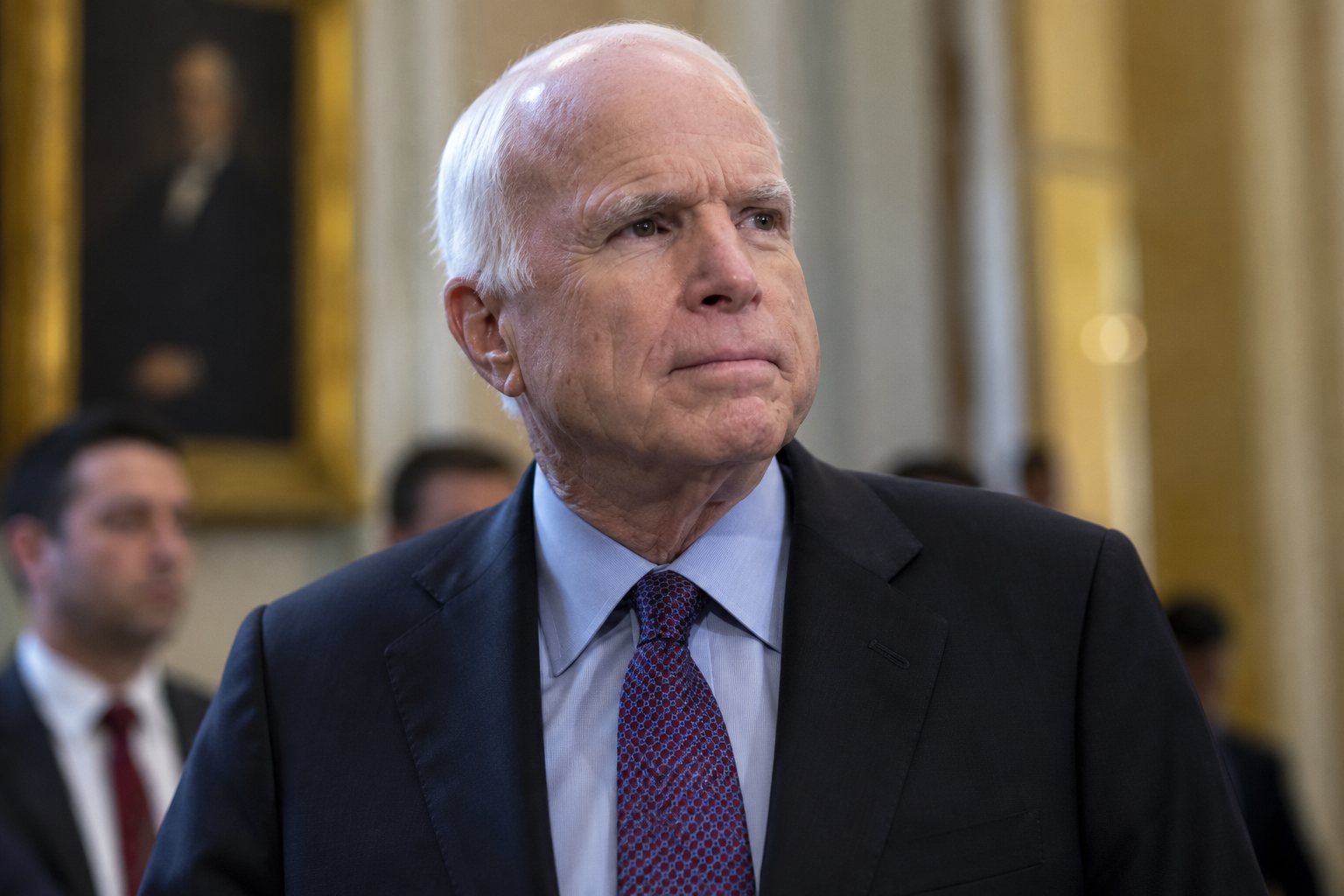
President Donald Trump issued a public warning to Republican Senator John McCain on October 17, 2017, threatening to retaliate against the decorated Vietnam War veteran after McCain delivered a speech condemning nationalism, isolationism, and the abandonment of American democratic ideals.
The confrontation placed two prominent Republicans on opposite sides of a growing ideological divide within their own party.
McCain, a former prisoner of war who had endured more than five years of captivity in North Vietnam, had warned against political movements that sought scapegoats rather than solutions.
Trump's response was not a detailed rebuttal of McCain's arguments about American leadership. Instead, the president warned the senator that continued criticism could provoke retaliation.
The exchange was especially striking because McCain, then 81 years old, was battling an aggressive form of brain cancer.
McCain Delivers a Warning About America's Future
The controversy began on October 16, when McCain received the Liberty Medal from the National Constitution Center in Philadelphia.
Former Vice President Joe Biden, a longtime friend despite their political differences, presented the award in recognition of McCain's military service and decades in public office.
During his acceptance speech, McCain delivered an impassioned defense of America's international responsibilities and the democratic values that had shaped its role in the world.
He warned against what he called:
"Half-baked, spurious nationalism."
McCain criticized political movements that preferred blaming outsiders to solving national problems.
Although he did not mention Trump by name, his remarks were widely interpreted as a rejection of the president's America First political philosophy.
McCain argued that abandoning international leadership, rejecting longstanding alliances, and retreating into narrow nationalism would undermine the principles that had helped make the United States a global power.
He also rejected political identities rooted primarily in ancestry or ethnicity, declaring:
"We live in a land made of ideals, not blood and soil."
The reference to blood and soil carried particular historical significance. The phrase had been associated with Nazi ideology and had also been used by white nationalist demonstrators during the violent August 2017 rally in Charlottesville, Virginia.
McCain's message was that American patriotism should be grounded in constitutional ideals, democratic institutions, and international responsibility rather than ethnic nationalism.
Trump Responds With a Threat
The following morning, Trump was asked about McCain's speech during an interview with Washington radio station WMAL.
Rather than engage with the senator's arguments, Trump delivered a warning.
"People have to be careful because at some point I fight back."
He continued:
"I'm being very nice. I'm being very, very nice. But at some point I fight back and it won't be pretty."
The remarks immediately attracted national attention.
The president of the United States was publicly warning a senator from his own party over criticism of his political philosophy.
Trump did not explain what form his retaliation might take.
The exchange also occurred while the White House was seeking Republican support for its legislative agenda, including budget and health-care measures.
McCain had already demonstrated his willingness to break with the administration, making his independence a significant political complication for Trump.
A President Who Had Already Mocked McCain's Military Service
The confrontation revived memories of Trump's earlier attacks on McCain's record as a prisoner of war.
During the 2016 Republican presidential campaign, Trump had dismissed McCain's reputation as a war hero.
Speaking at a political event in Iowa in July 2015, Trump declared:
"He's not a war hero."
When challenged, Trump added:
"I like people who weren't captured."
The comments provoked criticism from veterans, military families, and Republicans who regarded McCain's service and captivity as deserving of respect regardless of political disagreements.
McCain had been a Navy aviator during the Vietnam War.
On October 26, 1967, his aircraft was shot down during a bombing mission over Hanoi. He suffered serious injuries, was captured by North Vietnamese forces, and endured years of imprisonment and abuse.
His captors eventually offered him early release, partly because his father was a senior American naval commander.
McCain refused to accept preferential release while other American prisoners captured before him remained imprisoned.
He was finally released in March 1973 after approximately five and a half years in captivity.
His military decorations included the Silver Star, Bronze Star, Purple Heart, and Distinguished Flying Cross.
Trump, by contrast, had not served in the military. He received multiple draft deferments during the Vietnam War, including a medical deferment for bone spurs.
The contrast between the two men's military histories made Trump's attacks on McCain especially controversial.
McCain Refuses to Be Drawn Into a Personal Fight
Despite Trump's warning, McCain declined to escalate the confrontation.
Asked about the president's comments, McCain said:
"I don't comment on what the president says. I comment on what he does."
He also observed that he had faced formidable adversaries before.
The senator emphasized that he was more interested in working with the president on issues of national importance than engaging in a personal dispute.
His response reflected a broader disagreement between the two Republicans.
McCain believed American leadership required maintaining alliances, defending democratic institutions, and accepting responsibilities beyond the country's borders.
Trump promoted an America First approach that emphasized national sovereignty, renegotiating international agreements, and challenging institutions he believed had disadvantaged the United States.
The disagreement was substantive, but Trump's warning turned it into a highly public personal confrontation.
The Health-Care Vote That Deepened Their Feud
Relations between the two men had deteriorated significantly months earlier.
In July 2017, McCain returned to Washington shortly after undergoing surgery and receiving a diagnosis of glioblastoma, an aggressive form of brain cancer.
Republicans were attempting to repeal major provisions of the Affordable Care Act, commonly known as Obamacare.
McCain ultimately cast a decisive vote against the Senate's so-called skinny repeal proposal.
His dramatic thumbs-down gesture on the Senate floor became one of the defining political images of Trump's first year in office.
The legislation failed by a vote of 49–51.
Trump repeatedly criticized Republicans who opposed his health-care agenda, and McCain's vote became a lasting source of frustration for the administration.
McCain defended his decision by arguing that major health-care legislation should be developed through a more open and bipartisan process.
The October confrontation therefore reflected more than a single speech. It was the latest episode in an increasingly bitter struggle between a Republican president and a senior Republican senator unwilling to support every administration priority.
A Warning Against the Politics of the 1930s
Following the Liberty Medal speech, McCain elaborated on his concerns about nationalism.
Speaking with reporters on October 17, he said he feared a return to the isolationist attitudes that had characterized parts of American politics during the 1930s.
McCain believed that retreating from international leadership could repeat historical mistakes made before World War II.
His warning reflected a foreign-policy tradition that viewed American alliances and international institutions as essential to maintaining global stability.
Trump and his supporters offered a different perspective, arguing that previous administrations had committed the United States to costly foreign obligations and agreements that did not adequately protect American interests.
McCain's criticism was not that Americans should abandon patriotism or national interests.
It was that patriotism should not become an excuse for rejecting democratic ideals, international cooperation, or America's responsibilities to its allies.
Two Republicans, Two Very Different Visions
The confrontation illustrated the changing identity of the Republican Party during Trump's first year in office.
McCain represented a longstanding Republican tradition emphasizing military alliances, international engagement, and bipartisan cooperation on national-security issues.
Trump had built his political movement around opposition to established political institutions, skepticism of international agreements, and promises to prioritize American interests above traditional diplomatic arrangements.
Both claimed to be defending the country, but they disagreed sharply about what American leadership required.
McCain's willingness to criticize Trump also reflected his independence from the administration.
He was not a Democratic opponent seeking to defeat the president. He was a Republican senator, a former presidential nominee, and a veteran whose public career had included decades of service in Congress.
That made the dispute particularly revealing.
The criticism came from inside Trump's own party, yet the president responded with a warning of retaliation rather than a substantive discussion of the senator's concerns.
A Dispute That Outlived McCain
John McCain died on August 25, 2018, less than a year after the confrontation.
His death prompted tributes from political leaders across party lines, many of whom praised his military service, independence, and commitment to American institutions.
The tensions between McCain and Trump, however, continued to shape discussion of the Republican Party even after the senator's death.
McCain's family and political allies repeatedly defended his legacy against subsequent criticism.
The October 17 confrontation became part of a larger historical record of Trump's relationship with Republican officials who publicly challenged him.
It also illustrated the difficulties faced by members of his own party who disagreed with the president on fundamental questions of national identity and American leadership.
The Significance of October 17, 2017
The dispute was more than another exchange of insults between two prominent politicians.
A decorated Navy veteran and former prisoner of war had delivered a warning about nationalism, democratic values, and the responsibilities of American leadership.
The president responded by cautioning that he might retaliate against the senator if the criticism continued.
McCain, already confronting a life-threatening illness, refused to turn the disagreement into a personal contest.
Instead, he maintained his position that American political leaders should be judged by their actions and their commitment to the country's institutions.
The lasting contrast was between McCain's warning about the direction of American politics and Trump's warning to the man who delivered it.
On October 17, 2017, that disagreement exposed a fundamental divide over patriotism, presidential leadership, and the future direction of the Republican Party.