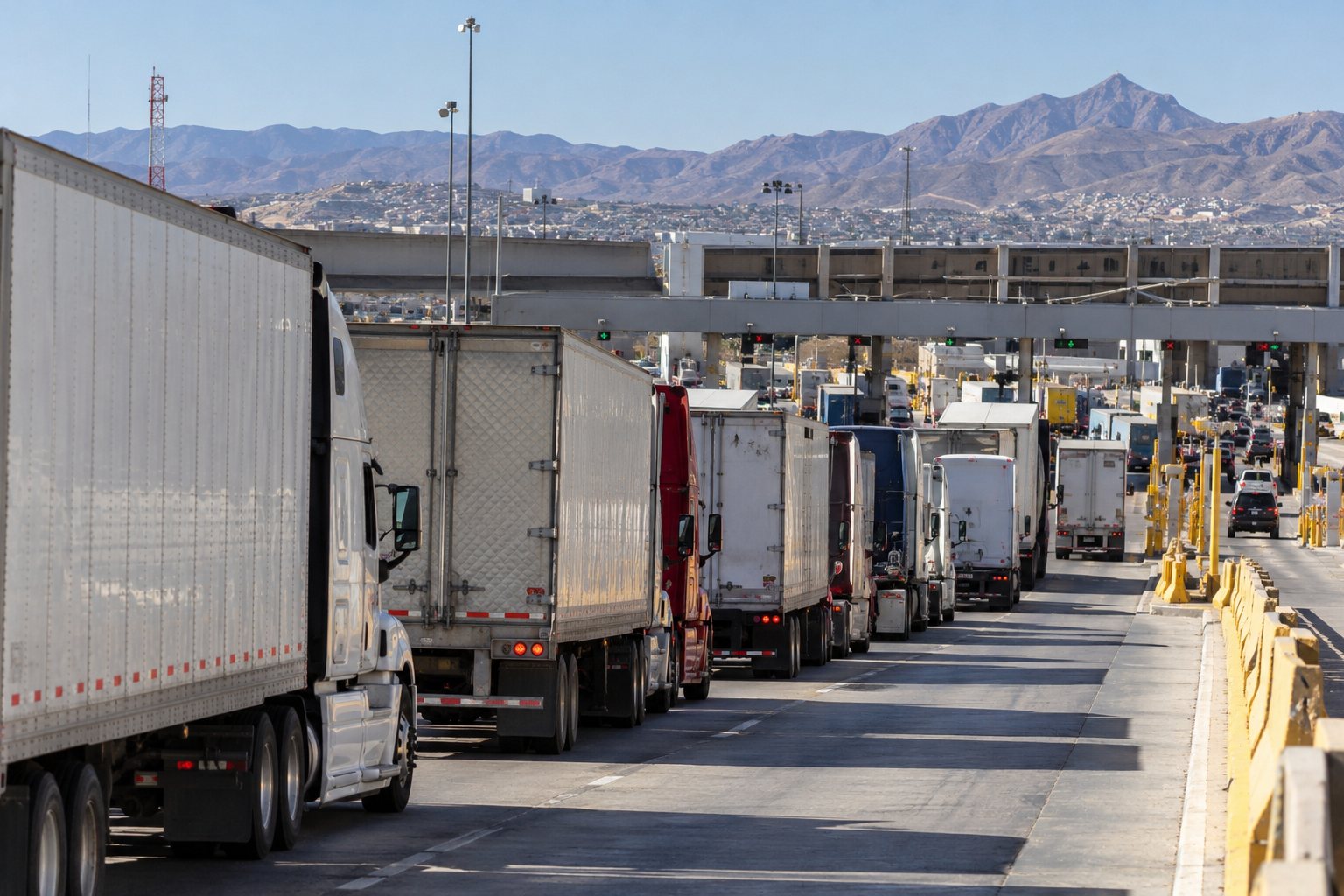
With just one day remaining before the presidential election, Donald Trump threatened Monday to impose sweeping 25 percent tariffs on all Mexican imports unless the country takes stronger action to stop illegal immigration and drug trafficking into the United States.
Speaking at a campaign rally in Raleigh, North Carolina, the former president announced that he would deliver the ultimatum to Mexican President Claudia Sheinbaum immediately upon returning to the White House if elected.
Trump warned that the tariffs could increase to 50 percent, 75 percent, or even 100 percent if Mexico failed to meet his demands.
The announcement introduces another potentially significant trade confrontation into the final hours of an already contentious presidential campaign.
Trump Threatens Economic Punishment
Trump told supporters that Mexico must take immediate steps to prevent migrants and illegal drugs from crossing the southern border.
He promised to impose a 25 percent tariff on everything Mexico exports to the United States if its government refuses to cooperate.
Trump insisted that the strategy would succeed, arguing that Mexico's economic dependence on American consumers would force its leaders to act.
The proposed tariffs would affect one of America's largest trading partners, potentially disrupting billions of dollars in commerce involving automobiles, agricultural products, electronics, and manufactured goods.
American Consumers Could Face Higher Prices
Economists warn that Trump's proposal could increase costs for American businesses and consumers.
Tariffs are collected from American companies importing foreign goods, not directly from the foreign governments producing them. Businesses frequently pass those additional expenses along to customers through higher prices.
Mexico supplies American consumers with substantial quantities of fresh produce, vehicles, auto parts, and household products.
A blanket 25 percent tariff could therefore affect everything from grocery bills to automobile prices.
The proposal also raises questions about the United States-Mexico-Canada Agreement, the trade agreement negotiated and signed during Trump's first administration.
That agreement eliminated many trade barriers among the three countries, making Trump's proposed tariffs a potential challenge to one of his own signature economic accomplishments.
Immigration Dominates Final Campaign Message
Trump has made immigration and border security central themes of his campaign against Vice President Kamala Harris.
Throughout the election, he has accused the Biden-Harris administration of failing to control illegal immigration and prevent dangerous drugs from entering the country.
Harris has defended the administration's record while advocating additional border security measures and changes to immigration law.
Trump's latest tariff threat combines his longstanding immigration message with an increasingly aggressive trade agenda.
He has already proposed broad tariffs on imported goods from countries around the world, arguing that such measures would protect American manufacturing and strengthen the economy.
Critics counter that sweeping import taxes could fuel inflation, disrupt international supply chains, and provoke retaliation against American exports.
Election Day Approaches
The announcement comes as Trump and Harris make their final appeals to voters ahead of Tuesday's election.
North Carolina remains a closely contested battleground, with both campaigns investing considerable time and resources in the state.
Trump's proposal leaves important questions unanswered, including precisely what actions Mexico would need to take to avoid the tariffs and how the policy would be implemented under existing trade agreements.
For American businesses dependent on Mexican imports, the possibility of tariffs reaching 100 percent introduces considerable economic uncertainty.
As voters prepare to cast their ballots, Trump's final campaign message makes clear that aggressive tariffs and immigration enforcement would remain central priorities of another Trump administration.