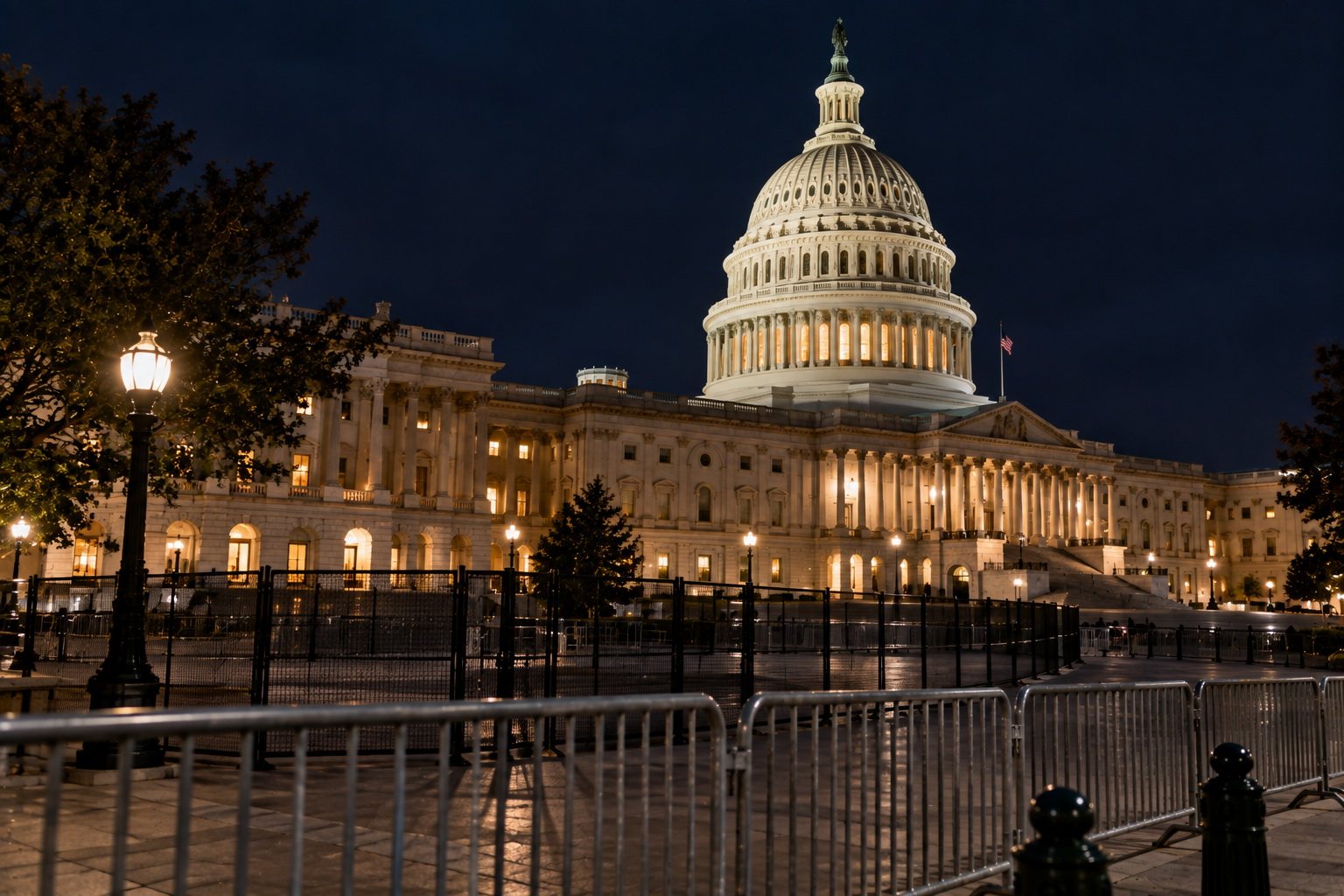
Nine months after a mob attacked the United States Capitol in an attempt to stop Congress from certifying Joe Biden's presidential victory, congressional investigators were trying to determine exactly what Donald Trump and the people around him had done before, during and after the attack.
Trump responded by telling some of the people closest to him not to cooperate.
On October 7, 2021, it was reported that an attorney representing former President Trump had instructed former aides and advisers — including Mark Meadows, Dan Scavino, Kash Patel and Steve Bannon — not to comply with subpoenas issued by the House Select Committee investigating January 6.
Trump's legal team argued that information sought by the committee was protected by executive privilege and other legal privileges.
But there was an extraordinary complication.
Trump was no longer president.
Joe Biden was.
And Congress was investigating events involving Trump's efforts to remain in power after losing the 2020 election and the violent attack on the Capitol that followed.
Congress Wanted Answers About January 6
The House Select Committee had issued subpoenas to Meadows, Scavino, Patel and Bannon on September 23.
These weren't peripheral figures.
Mark Meadows had been Trump's White House chief of staff.
Dan Scavino had been White House deputy chief of staff for communications and one of Trump's closest longtime aides.
Kash Patel had served as chief of staff to acting Defense Secretary Christopher Miller during the final weeks of the Trump administration.
Steve Bannon had been Trump's former White House chief strategist and remained in communication with Trump and his allies as January 6 approached.
Investigators believed all four could possess important information about events surrounding the attack.
The committee wanted documents.
It wanted communications.
And it wanted testimony.
Investigators were attempting to reconstruct what happened inside Trump's circle as his supporters attempted to prevent Congress from certifying the legitimate results of the 2020 presidential election.
Trump's Attorney Tells Them Not to Cooperate
Instead of encouraging his former aides to answer questions about what had happened, Trump's attorney instructed them not to comply.
Trump's legal team argued that records and testimony involving presidential communications and decision-making were protected from disclosure by executive privilege and other privileges.
Trump's spokesperson defended the position, arguing that executive privilege needed to be protected not simply for Trump but for the presidency itself.
Executive privilege is a genuine constitutional principle.
Presidents need some ability to receive confidential advice from senior aides without assuming every internal conversation will eventually become public.
But Trump's situation raised a much more complicated question:
How much power does a former president have to prevent Congress from investigating his former administration when the sitting president does not support that claim of privilege?
That question would eventually reach the courts.
What Was Trump Trying to Keep From Congress?
The committee's subpoenas reveal why investigators wanted these witnesses.
Meadows was particularly important.
As White House chief of staff, he had been physically and politically close to Trump throughout the period surrounding the election and January 6.
The committee cited evidence that Meadows had communicated with Justice Department officials about allegations of election fraud and had contacted state officials concerning the election results.
Scavino was believed to have been with or near Trump on January 6 and potentially had information about Trump's activities and communications that day.
Patel occupied a senior position at the Pentagon during a period when investigators had questions about the federal government's preparation for and response to the attack.
Bannon was outside the government by then, but he had remained connected to Trump and his political operation.
The committee wanted to know what these men knew.
Trump wanted them to resist.
This Was an Investigation Into an Attack on Congress
The context matters.
Congress wasn't investigating an ordinary policy disagreement.
On January 6, lawmakers had gathered at the Capitol to perform the constitutional process of counting electoral votes.
A mob breached the building.
Members of Congress fled or sheltered in secure locations.
Police officers were assaulted.
The certification was interrupted for hours.
The committee was created to investigate how that happened, who was involved in the events leading to it, what government officials knew beforehand and what Trump and his advisers were doing while the Capitol was under attack.
Trump had also spent the weeks following the election falsely claiming that widespread fraud had cost him victory.
Courts repeatedly rejected challenges to the election results, and election officials — including Republicans in contested states — found no fraud remotely sufficient to overturn Biden's victory.
Congress therefore had enormous unanswered questions.
And several of the people it believed could help answer them were now being told by the former president not to cooperate.
Biden Rejects Trump's Position
Trump's attempt to invoke executive privilege also created an unusual confrontation between a former president and the current one.
The Biden administration concluded that the extraordinary circumstances surrounding January 6 outweighed Trump's attempt to keep certain presidential records from Congress.
The White House declined to support Trump's assertion of executive privilege over an initial group of records requested from the National Archives.
That meant Trump faced a difficult legal reality.
The former president was claiming that presidential confidentiality prevented disclosure.
The sitting president was saying that, under these circumstances, the records should be released.
Trump would ultimately go to court attempting to stop the National Archives from turning records over to the committee.
He lost.
The Supreme Court eventually declined to block the release of the records.
Bannon Refuses
The confrontation quickly became more than a theoretical argument over privilege.
Steve Bannon refused to comply with the committee's subpoena.
That refusal eventually led the House of Representatives to hold him in contempt of Congress.
The Justice Department prosecuted him.
In July 2022, a federal jury convicted Bannon on two counts of contempt of Congress for refusing to provide documents and refusing to testify.
He was sentenced to four months in prison and ultimately served that sentence in 2024.
Mark Meadows also eventually refused to fully cooperate and was held in contempt of Congress by the House, although the Justice Department declined to prosecute him.
The fight that began over subpoenas in the fall of 2021 therefore produced real legal consequences.
Executive Privilege Versus Congressional Oversight
There was a legitimate constitutional issue underneath the confrontation.
Presidents require confidential advice.
Congress also possesses broad investigative authority, particularly when examining matters relevant to legislation and its own constitutional functions.
Former presidents retain some ability to assert interests in the confidentiality of presidential communications.
But those interests are not absolute.
January 6 presented an extraordinary test because Congress was investigating an attack directed at Congress itself and efforts surrounding the peaceful transfer of presidential power.
The question was not simply whether private presidential conversations deserved protection.
It was whether a former president could use that protection to prevent Congress from obtaining evidence about events connected to an attempt to overturn an election and interrupt the constitutional transfer of power.
The Investigation Eventually Obtained an Enormous Record
Despite Trump's efforts to resist the investigation, the January 6 Committee ultimately interviewed more than 1,000 people and obtained an enormous collection of documents, emails, text messages, phone records and other evidence.
Many of the witnesses who provided some of the most significant testimony were Republicans and former members of Trump's own administration.
The committee's final report concluded that Trump had pursued a multi-part effort to overturn the lawful results of the 2020 presidential election.
Trump rejected the committee's conclusions and repeatedly attacked the investigation as politically motivated.
But the historical record produced by the investigation revealed events that had previously occurred largely behind closed doors.
That was precisely the information Congress had been seeking in October 2021.
A Former President Trying to Stop an Investigation of His Own Conduct
October 7 therefore marked an important moment in the January 6 investigation.
Congress had subpoenaed people who had occupied some of the most important positions around Donald Trump.
Investigators wanted to know what happened before January 6.
They wanted to know what happened while the Capitol was being attacked.
They wanted to know what Trump was doing.
They wanted to know what his advisers were telling him.
And they wanted to know what happened inside the government as efforts to overturn the election failed.
Trump's response was to invoke executive privilege and tell former aides not to cooperate.
The result was another unprecedented confrontation born from January 6:
A former president attempting to prevent former members of his administration from providing information to Congress about events surrounding an attack on Congress itself.