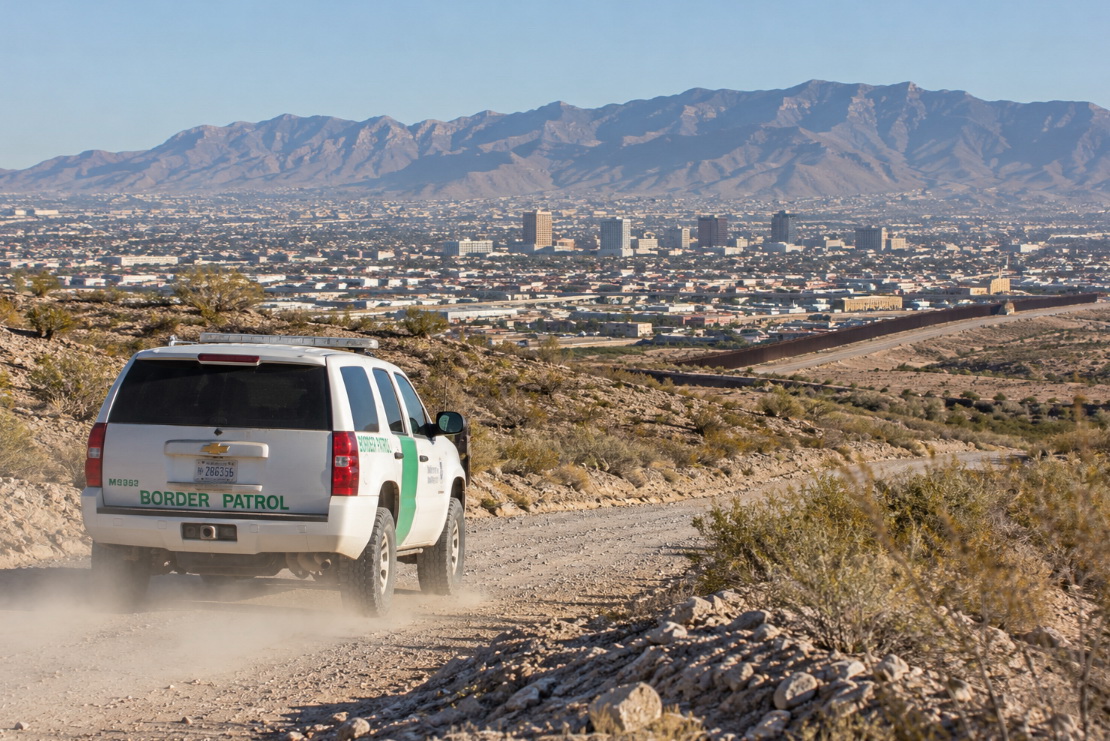
Six days after using the State of the Union to demand a border wall, President Donald Trump traveled to El Paso, Texas, to make his case directly from the border.
The location was no accident.
Trump had increasingly begun using El Paso as one of his favorite examples of what he said a border wall could accomplish.
His argument was simple: El Paso had once been dangerous, a border barrier was constructed, and the city became safe.
There was one major problem.
That wasn't what happened.
Speaking to supporters at the El Paso County Coliseum, Trump again pointed across the border toward Ciudad Juárez, Mexico, and contrasted the violence there with the relatively low murder rate in El Paso.
“Walls work,” Trump declared.
Trump noted that Juárez had recorded roughly 1,200 murders during the previous year while El Paso had recorded 23.
Those numbers were roughly accurate.
But his explanation for them wasn't.
El Paso had been a relatively safe large American city long before construction of the border fencing Trump was crediting for its safety.
FBI crime statistics showed that in 2005, 2006 and 2007 — before construction of approximately 57 miles of fencing in the El Paso sector began in 2008 — El Paso had the third-lowest violent-crime rate among 35 American cities with populations greater than 500,000.
Nor did crime suddenly collapse after the fencing appeared.
Between 2007 and 2010, covering the period immediately before and after construction, El Paso's violent-crime rate actually increased approximately 5.5 percent.
The city's relatively low murder rate also predated the barrier.
In 2007, before construction began, Juárez recorded 336 homicides while El Paso recorded just 17.
The dramatic difference between the neighboring cities therefore already existed before the fencing Trump was crediting for creating it.
Trump had made essentially the same claim during his State of the Union address six days earlier, and fact-checkers had already challenged it.
Rather than retreat from the claim, Trump attacked the underlying crime statistics.
During the El Paso rally, he suggested that past crimes had somehow been recorded differently and accused critics of trying to “pull the wool over everybody's eyes.”
He provided no evidence that El Paso's crime statistics had been manipulated.
The rally showed how the border wall was evolving from a policy proposal into one of the central political messages of Trump's presidency.
The longest government shutdown in American history had ended just weeks earlier after Trump failed to obtain the $5.7 billion in wall funding he had demanded.
Congress was now negotiating another spending agreement.
Trump, meanwhile, was taking the fight directly to the public.
And El Paso provided the backdrop.
There was an unmistakable political advantage to the imagery: an American city sitting directly across the Rio Grande from Juárez, one of Mexico's most violence-plagued cities, separated in places by a substantial physical barrier.
But the historical record complicated the story Trump wanted that landscape to tell.
El Paso didn't become safe because a border fence suddenly rescued it from extraordinary violence.
It had already been relatively safe.
That distinction didn't stop Trump from turning the city into one of the most frequently repeated arguments for his wall.
And four days later, the political fight would escalate dramatically.
On February 15, after Congress again refused to provide all the money Trump wanted, the president would declare a national emergency and attempt to obtain billions of dollars for border construction through another route.