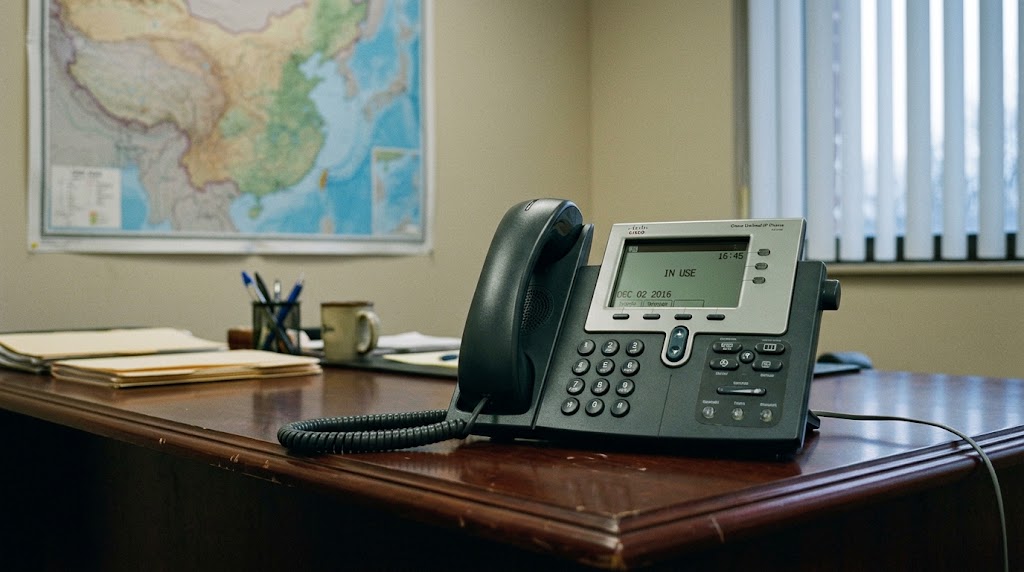
Donald Trump was still more than six weeks away from taking the oath of office when a telephone call demonstrated just how differently the incoming president might approach American foreign policy.
On December 2, President-elect Trump spoke directly with Taiwanese President Tsai Ing-wen.
The conversation lasted only about ten minutes.
But diplomatically, it was anything but routine.
No sitting U.S. president or president-elect was known to have spoken directly with Taiwan's president since the United States shifted diplomatic recognition from Taipei to Beijing in 1979.
Nearly four decades of carefully managed diplomatic practice had just been disrupted by a phone call.
Why the Call Mattered
The United States formally recognizes the government in Beijing while maintaining extensive unofficial relations with Taiwan.
That arrangement is part of Washington's longstanding "One China" policy — a deliberately careful framework developed over decades to maintain relations with China while preserving substantial economic, cultural and security ties with Taiwan.
For Beijing, Taiwan is among the most sensitive issues in its relationship with the United States. China considers Taiwan part of its territory, while Taiwan operates as a self-governing democracy with its own government, military and elections.
That made direct contact between an incoming American president and Taiwan's president diplomatically significant.
According to Taiwan's presidential office, Tsai congratulated Trump on his election victory. The two discussed economic development, national defense, conditions in Asia and the future relationship between Taiwan and the United States.
In another context, it might have sounded like an ordinary congratulatory conversation.
This wasn't another context.
Washington Scrambles to Reassure Beijing
The reaction was immediate enough that the outgoing Obama administration found itself explaining American policy to China while preparing to hand power to Trump.
White House Press Secretary Josh Earnest later confirmed that senior National Security Council officials contacted their Chinese counterparts and reiterated that the United States remained committed to its longstanding One China policy.
In other words, while one administration was preparing to leave office, it was reassuring Beijing that the actions of the administration preparing to replace it did not yet represent a change in American policy.
The episode offered an early preview of what would become a recurring feature of the Trump era: established diplomatic conventions could suddenly become uncertain.
Trump Wasn't Finished
Initially, Trump's advisers played down the significance of the conversation.
Trump himself publicly defended taking the call, pointing out that Tsai had called to congratulate him on winning the election.
But just over a week later, Trump made the implications considerably larger.
During an interview with Fox News, he questioned why the United States should necessarily remain bound by the One China policy unless China was willing to make concessions on issues including trade.
That transformed the controversy.
The question was no longer simply whether an inexperienced president-elect had unknowingly violated diplomatic protocol.
Trump was openly suggesting that one of the foundations of the U.S.-China relationship might be negotiable.
Foreign Policy by Disruption
Supporters of Trump's approach saw something very different.
To them, the phone call demonstrated that the incoming president was willing to challenge diplomatic conventions that had gone unquestioned for decades. Taiwan was a democratic partner of the United States, they argued, and an American president-elect shouldn't allow Beijing to determine whom he could speak with.
There was a legitimate policy debate buried underneath the controversy.
But changing a decades-old geopolitical arrangement involving two heavily armed powers requires more than simply breaking precedent. It requires understanding what the precedent was designed to accomplish — and what could happen after it is discarded.
Trump had campaigned as a president who would overturn Washington's conventional wisdom.
On December 2, 2016, the world received one of its first glimpses of what that promise could mean in practice.
A ten-minute telephone call had managed to raise questions about nearly forty years of American policy toward China and Taiwan.
Donald Trump hadn't even taken office yet.