Trump Takes Aim at Obama-Era Clean Water Protections
February 28, 2017
Just weeks into his presidency, Donald Trump began dismantling another major Obama-era environmental policy — this time targeting federal protections for America's streams and wetlands.
On February 28, Trump signed Executive Order 13778 directing the Environmental Protection Agency and U.S. Army Corps of Engineers to review the 2015 Clean Water Rule, commonly known as the Waters of the United States, or WOTUS, rule.
The order did not immediately repeal the rule.
But there was little mystery about where the administration intended to go.
EPA announced that same day that it intended to begin the process of rescinding or revising the 2015 rule.
At stake was a deceptively simple question with enormous consequences:
Which American waters are protected from pollution under the federal Clean Water Act?
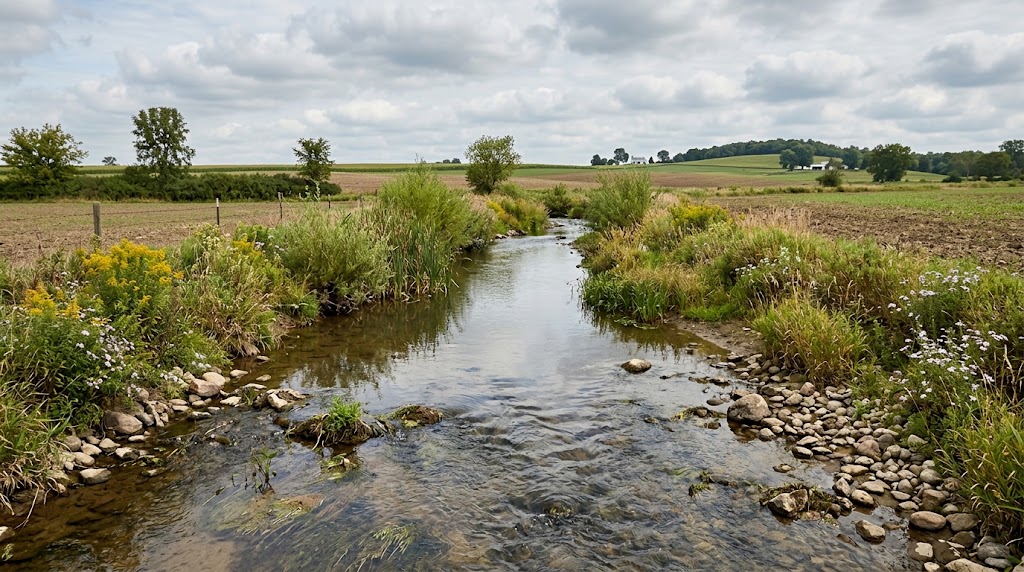
Why Small Streams and Wetlands Matter
The controversy wasn't simply about large rivers and lakes.
The 2015 Clean Water Rule clarified federal protection for certain streams, tributaries and wetlands connected to larger bodies of water.
That matters because water does not recognize property lines or political boundaries.
Pollution entering a small upstream waterway can eventually move into larger rivers and lakes downstream.
Wetlands can also perform an important natural filtering function, trapping pollutants and sediments before they reach larger waterways.
Before adopting the 2015 rule, EPA examined more than 1,200 peer-reviewed scientific publications concerning the connections between streams, wetlands and downstream waters.
The agency concluded that streams — including small and sometimes intermittent streams — can significantly influence the physical, chemical and biological condition of downstream waters.
That scientific connection made the stakes much larger than an argument over obscure federal regulations.
Weakening protections upstream can have consequences downstream.
And downstream is where Americans live, swim, fish, farm and obtain water.
Trump Orders the Government to Reconsider the Rule
Trump's executive order directed EPA and the Army Corps to review the Clean Water Rule and determine whether it should be rescinded or revised.
The administration said its goal was to protect navigable waters while promoting economic growth, reducing regulatory uncertainty and respecting the authority of states.
Trump also directed regulators to consider a narrower interpretation of federal jurisdiction associated with Justice Antonin Scalia's opinion in the Supreme Court's 2006 Rapanos v. United States decision.
EPA Administrator Scott Pruitt quickly announced that the agency would begin implementing Trump's order.
For environmental advocates, the concern was straightforward.
A narrower definition of federally protected waters could mean that fewer streams and wetlands would receive Clean Water Act protection.
The Argument Against the Rule
The Obama-era rule had powerful opponents.
Farm organizations, developers, businesses and Republican lawmakers argued that the federal government had stretched the Clean Water Act too far.
They worried that an expansive definition of protected waters could subject ordinary land-use decisions to federal regulation and permitting requirements.
The Trump administration adopted many of those concerns.
It portrayed reconsideration of WOTUS as a way to return authority to states, reduce regulatory burdens and provide greater certainty to farmers and businesses.
Those arguments formed the central case for changing the rule.
But there was another side to the equation:
Removing federal jurisdiction does not make the water disappear.
Pollution Upstream Doesn't Stay Upstream
The environmental concern surrounding Trump's decision was grounded in the physical connections between waterways.
EPA's scientific review found extensive evidence that streams and wetlands influence larger downstream waters.
Wetlands can retain floodwater, trap sediment and pollutants and contribute to groundwater supplies.
Streams carry water into larger rivers and lakes.
That means deciding whether a small stream receives federal protection isn't merely a question about that particular stream.
It can become a question about everything downstream from it.
Reducing federal protections can therefore increase the possibility that pollution or degradation occurs in waters that ultimately affect larger waterways and communities.
That doesn't mean Trump's February 28 order instantly contaminated anyone's drinking water.
It means his administration was beginning a regulatory process that could reduce the number of waters receiving federal protection from pollution.
For Americans concerned about clean water, that distinction mattered enormously.
Clean Water Protection Becomes Deregulation
The Clean Water Act was enacted because water pollution rarely confines itself neatly to one piece of property.
A polluted tributary can feed a river.
A damaged wetland can lose its ability to capture pollutants.
Contamination originating upstream can eventually become someone else's problem downstream.
The 2015 rule attempted to clarify which of those interconnected waters fell under federal protection.
Trump's administration believed that definition went too far.
Environmental advocates believed retreating from it could leave important waterways vulnerable.
On February 28, Trump put the federal government firmly on the path toward reconsidering those protections.
EPA and the Army Corps would formally propose rescinding the 2015 rule several months later.
The debate was presented in Washington as a fight over federal regulation, states' rights and economic growth.
But beyond Washington, the underlying issue was considerably more tangible.
It was about how far the federal government should go to keep pollution out of the streams, wetlands, rivers and lakes upon which American communities ultimately depend.