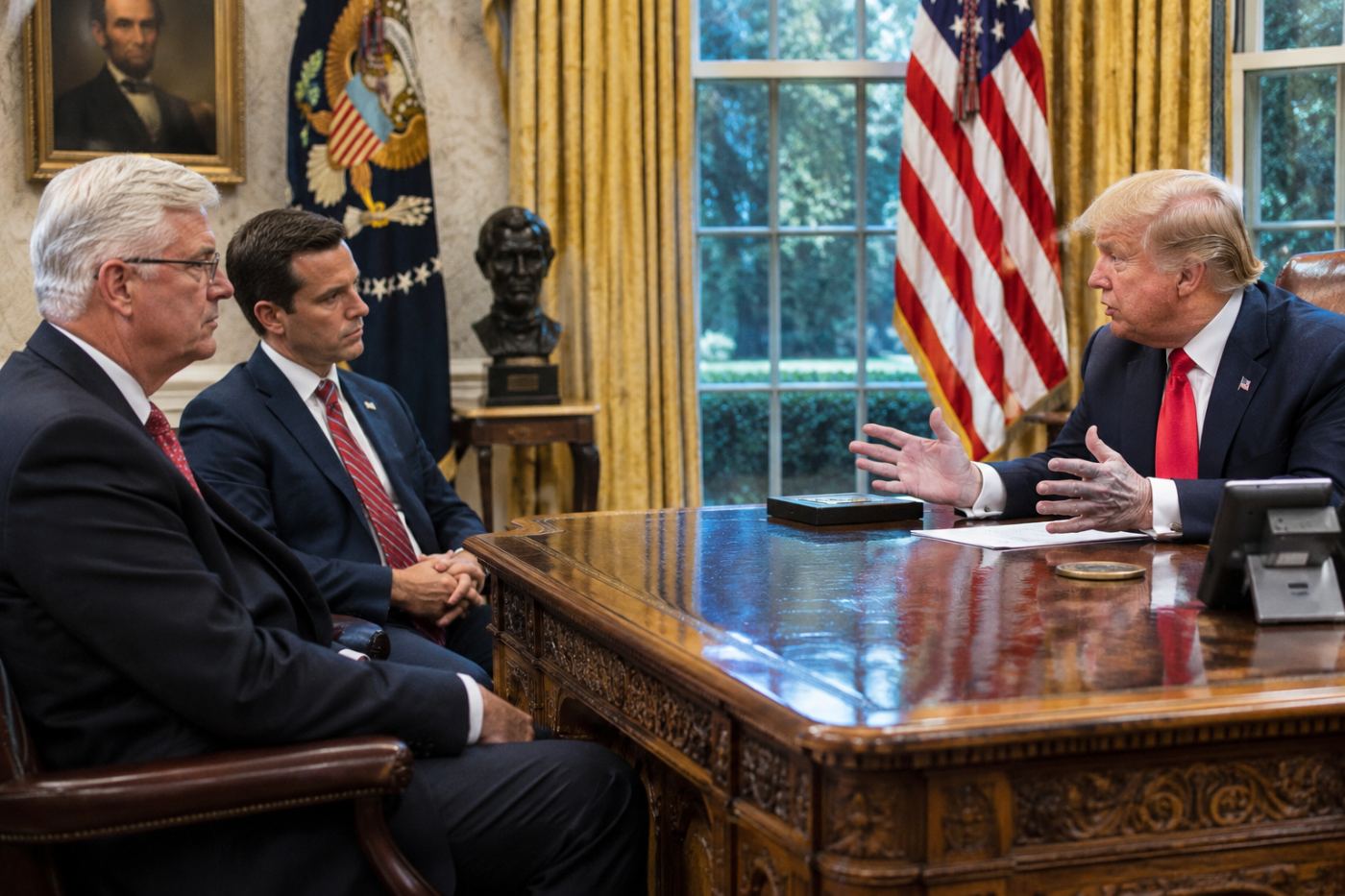
Donald Trump had lost the presidential election. Joe Biden had defeated him in Michigan by more than 154,000 votes, and the state's election officials were preparing to certify the results.
But Trump was not preparing to accept defeat.
On November 20, 2020, the president summoned two of Michigan's most powerful Republican lawmakers to the White House as part of his broader effort to overturn the election results and remain in office.
His objective was to find a way around the voters' decision.
A Plan to Change the Election Outcome
Michigan Senate Majority Leader Mike Shirkey and House Speaker Lee Chatfield accepted invitations to meet with Trump in Washington.
The meeting came as Trump's legal challenges were failing and his attorneys continued promoting unsupported allegations of widespread election fraud.
With Biden's victory becoming increasingly difficult to challenge through the courts, Trump and his allies were exploring another possibility.
They wanted Republican-controlled state legislatures to intervene in the Electoral College process, potentially replacing electors pledged to Biden with electors supporting Trump.
Such a maneuver would have attempted to change the presidential election outcome despite the certified popular vote.
Michigan's 16 electoral votes were particularly important to Trump's efforts.
Behind Closed Doors at the White House
The meeting took place in the Oval Office.
According to testimony later gathered by the House January 6 committee, Trump discussed allegations of election fraud and brought his attorney Rudy Giuliani into the conversation by telephone.
Giuliani repeated accusations about supposed voting irregularities but offered little substantive evidence.
Shirkey questioned why Giuliani had not pursued the allegations through a Michigan lawsuit.
Chatfield later recalled Trump encouraging the lawmakers to demonstrate greater backbone and do the right thing.
Chatfield understood those remarks as encouragement to overturn the election by appointing electors favorable to Trump.
Shirkey, meanwhile, told the president he would not violate Michigan law.
The meeting ended without the commitment Trump was seeking.
Michigan Republicans Refuse to Change the Results
After leaving the White House, Shirkey and Chatfield released a joint statement.
They said they had received no information that would justify changing Michigan's election outcome.
The lawmakers also emphasized that the candidates receiving the most votes were entitled to win the state's electoral votes.
Their statement represented a setback for Trump's effort to use Republican legislative power to reverse Biden's victory.
They said they had also used the meeting to advocate for additional federal coronavirus relief funding.
The central issue, however, remained whether Michigan's Republican leadership would intervene to change the presidential election results.
They publicly declined to do so.
The Pressure Did Not Stop
The White House meeting was not an isolated incident.
The January 6 committee later documented additional telephone conversations between Trump and Michigan Republican lawmakers.
Shirkey received calls from Trump after the November 20 meeting, while Chatfield described multiple conversations in which the president continued raising allegations of election fraud.
Chatfield testified that he investigated the claims but never encountered evidence sufficient to change Michigan's election outcome.
Meanwhile, Trump's campaign continued pursuing challenges in other battleground states.
On November 23, Michigan's bipartisan Board of State Canvassers voted to certify Biden's victory.
The state's electoral votes ultimately went to Biden.
A President Trying to Reverse the Voters' Decision
The significance of November 20, 2020, extends beyond an unusual White House meeting.
A sitting American president was attempting to change the outcome of an election he had lost by encouraging state officials to consider actions that could replace the voters' chosen electors.
The meeting illustrated how Trump's post-election strategy had expanded beyond recounts and lawsuits into direct engagement with officials responsible for the electoral process.
The Michigan lawmakers did not agree to overturn the results.
But the episode became an important part of the historical record examined by the January 6 committee.
On November 20, 2020, Trump was not simply questioning the election.
He was actively pursuing ways to reverse its outcome.