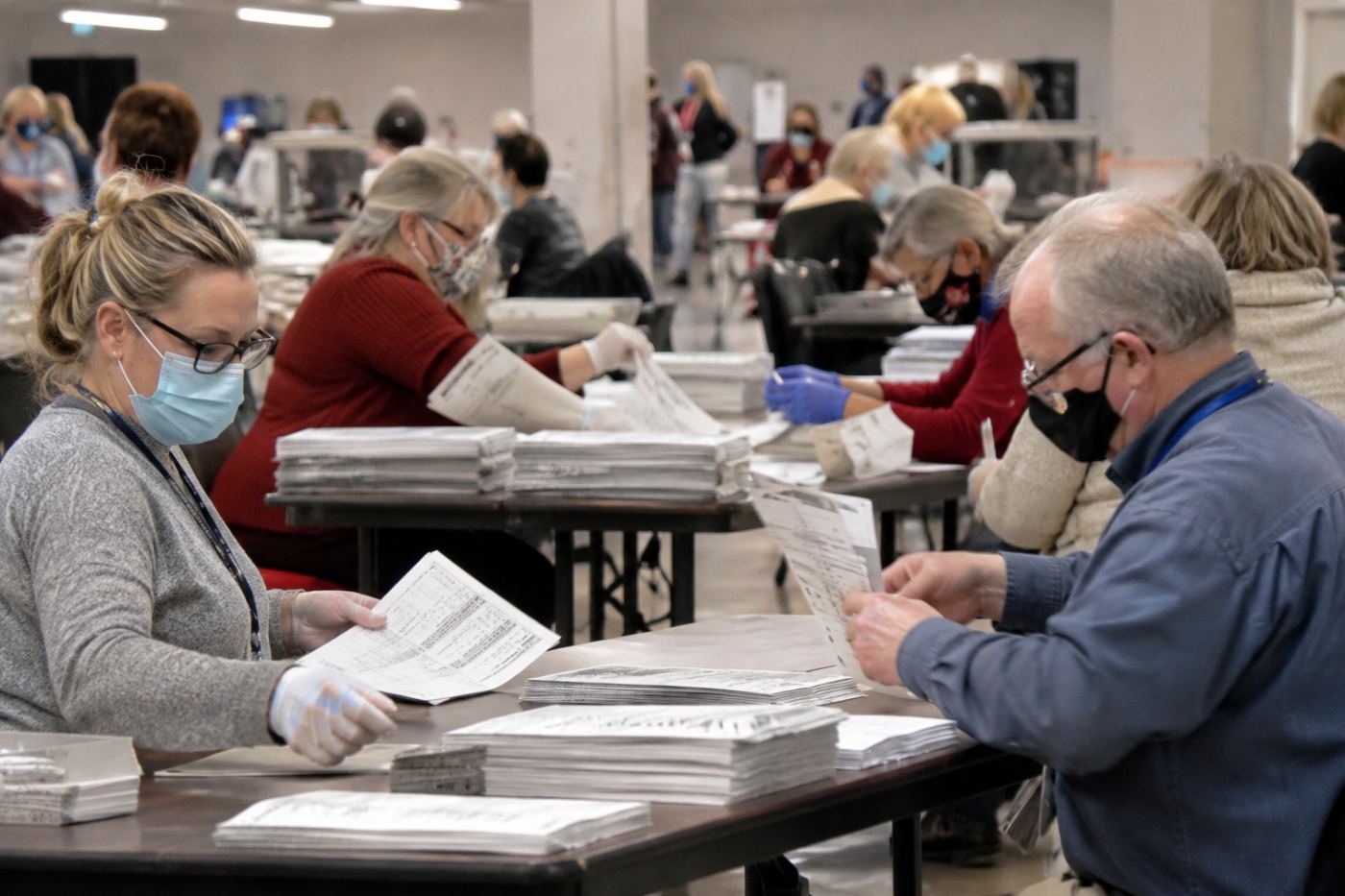
President Donald Trump is spending $3 million on another attempt to challenge his election defeat, this time targeting two of Wisconsin's most heavily Democratic counties.
On Wednesday, Trump's campaign formally requested recounts in Milwaukee and Dane counties, where voters overwhelmingly supported President-elect Joe Biden.
The president trails Biden statewide by approximately 20,600 votes. Yet rather than request a recount across Wisconsin, his campaign has selected just two counties that delivered some of Biden's largest margins.
The decision underscores the increasingly aggressive efforts of a president who refuses to acknowledge the election results, even as his legal challenges struggle to produce evidence capable of reversing them.
Three Million Dollars to Challenge Two Counties
The Wisconsin Elections Commission confirmed receiving the Trump campaign's $3 million payment and recount petition.
A statewide recount would have cost approximately $8 million.
Instead, Trump is concentrating his resources on Milwaukee County, home to Wisconsin's largest city, and Dane County, which includes Madison.
Both counties voted overwhelmingly Democratic.
The campaign alleges that election officials improperly altered absentee ballot certifications, issued ballots unlawfully, and provided guidance that allowed voters to circumvent identification requirements.
Trump's attorneys contend that these alleged irregularities justify recounting the ballots.
But allegations are not proof.
As of Wednesday, the campaign has not publicly established widespread illegal voting sufficient to overturn Biden's statewide lead.
Why Milwaukee and Madison?
The choice of counties is significant.
Milwaukee County voted approximately 69% for Biden, while Dane County supported him by roughly 75%.
Both are major sources of Democratic votes.
Milwaukee is also home to Wisconsin's largest Black population, making the campaign's focus on that county particularly sensitive.
The Trump campaign maintains that it selected the counties because of alleged irregularities, not their political demographics.
Nevertheless, the decision raises an important question: Why challenge only heavily Democratic counties if the stated objective is to verify the integrity of Wisconsin's entire election?
A legitimate recount can identify tabulation errors. But election officials must apply the law consistently, regardless of which candidate benefits.
A Difficult Numerical Challenge
Trump's deficit presents a substantial obstacle.
Biden leads Wisconsin by 20,608 votes according to the county canvasses.
Recounts generally produce relatively small changes in vote totals, not reversals involving tens of thousands of ballots.
Even former Republican Governor Scott Walker has publicly acknowledged the difficulty of overcoming such a margin.
Trump's campaign is therefore pursuing a recount that faces a significant mathematical challenge before the first ballot is examined.
The president's continued efforts to contest the result suggest a campaign unwilling to abandon its legal options despite the size of the deficit.
Election Workers Face Another Scrutiny Test
Wisconsin election officials must now prepare for an intensive recount under extraordinary political attention.
Workers will review ballots, examine disputed procedures, and respond to objections from campaign representatives.
The recount must begin no later than Saturday, November 21, and conclude in time for the state's December 1 certification deadline.
Wisconsin's chief election official, Meagan Wolfe, has emphasized the state's commitment to transparency and accurate information.
Milwaukee County election officials have also defended their procedures against the campaign's allegations.
The recount will impose additional demands on election administrators already managing an unusually contentious presidential election.
Recounts Are Legal. The Allegations Still Require Evidence.
Wisconsin law permits candidates to request recounts when the election margin falls within specified limits.
Trump is exercising that legal option and paying the required costs.
His campaign is entitled to challenge particular ballots or procedures through the established process.
But those rights do not establish that fraud occurred, nor do they justify invalidating legally cast votes.
The burden remains on the campaign to demonstrate actual errors or violations that warrant changing the results.
A President Who Will Not Concede
Nearly two weeks after Election Day, Trump continues disputing Biden's victory in Wisconsin and other battleground states.
His campaign is pursuing litigation, recounts, and challenges to election procedures while the incoming Biden administration prepares for the presidential transition.
The Wisconsin recount represents another effort to find a path to reversing a result that has so far resisted the president's challenges.
Trump has committed $3 million to scrutinizing two Democratic counties, but money cannot substitute for evidence, and a recount cannot legitimately discard votes simply because they favored his opponent.
Wisconsin's election officials must now determine whether the campaign's allegations withstand examination.
Until then, the state's voters have delivered a result that the president continues to contest.