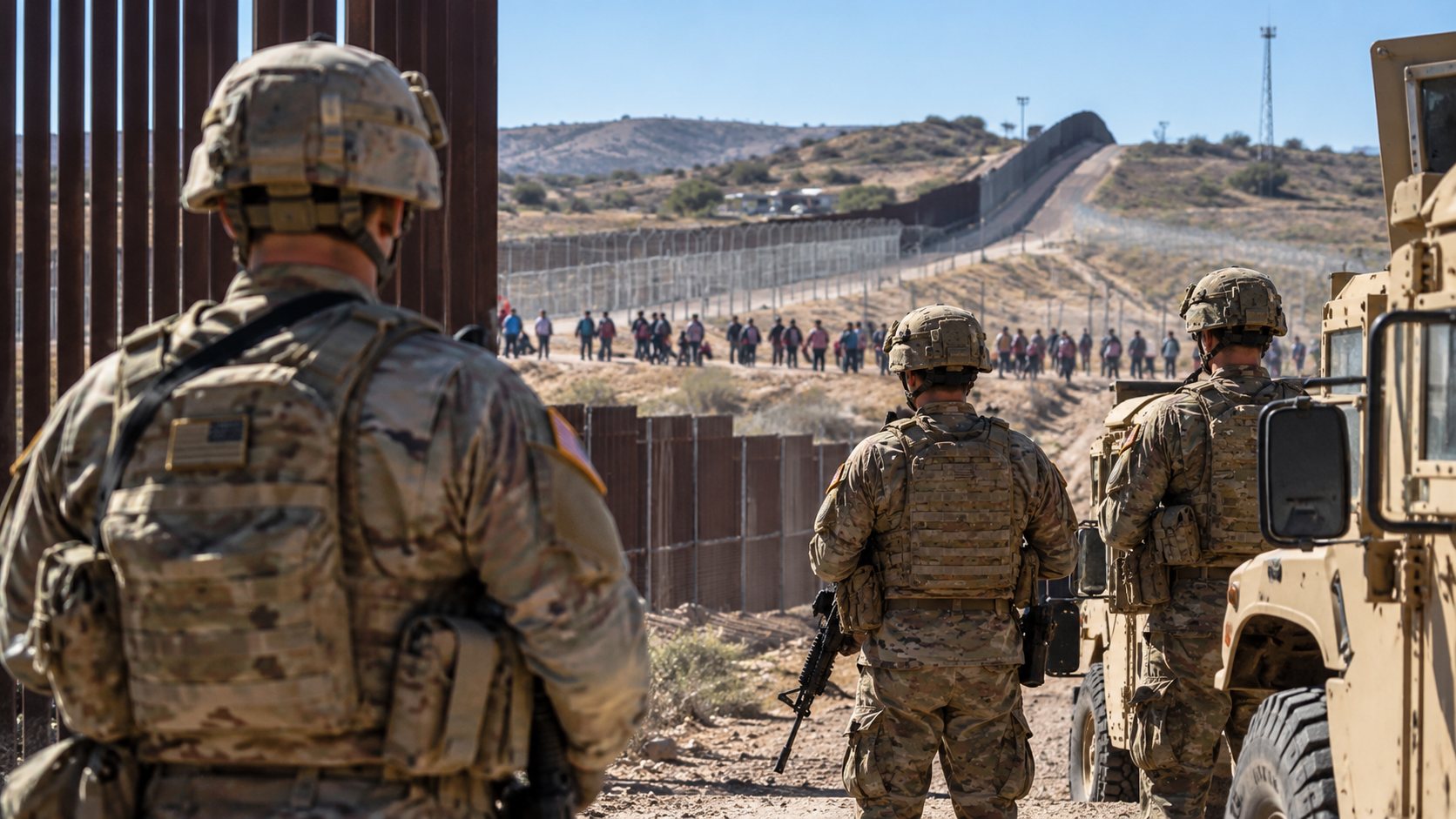
President Donald Trump suggested Thursday that American troops deployed to the southern border should treat rocks thrown by migrants as firearms, raising serious questions about the potential use of deadly military force against people seeking to enter the United States.
Speaking during a White House address on immigration, Trump defended his decision to deploy thousands of active-duty troops to the Mexican border as a caravan of Central American migrants continued traveling north.
Asked whether American soldiers might fire on migrants, Trump initially responded, "I hope not."
But he quickly suggested that rocks thrown at troops should be considered equivalent to firearms.
"Anybody throwing stones, rocks ... we will consider that a firearm," Trump declared.
When pressed further, the president said he had instructed military personnel to treat rocks as rifles.
"We're going to consider — and I told them, consider it a rifle," Trump said.
The remarks immediately raised concerns about the administration's approach to military force and the legal restrictions governing American troops operating on U.S. soil.
Military personnel are subject to strict rules governing the use of force. The presence of a thrown rock does not automatically authorize lethal force; soldiers must evaluate the actual threat and respond according to applicable rules.
The Pentagon has emphasized that troops deployed to the border are intended to support Customs and Border Protection, rather than directly enforce immigration laws.
Trump's comments came as he intensified his warnings about immigration ahead of the November 6 midterm elections, repeatedly characterizing the approaching migrant caravan as an invasion.
Many of those traveling north are fleeing poverty and violence in Central America, with some intending to request asylum in the United States.
During Thursday's address, Trump also outlined plans to restrict asylum applications and expand detention facilities for migrants.
Critics argue that the president's rhetoric risks turning a humanitarian and immigration challenge into a military confrontation.
The central question remains whether the commander in chief's public statements will influence how American troops respond if tensions escalate at the border.
With thousands of soldiers being positioned along the southern border, the distinction between legitimate self-defense and the unnecessary use of deadly force has become an urgent concern.