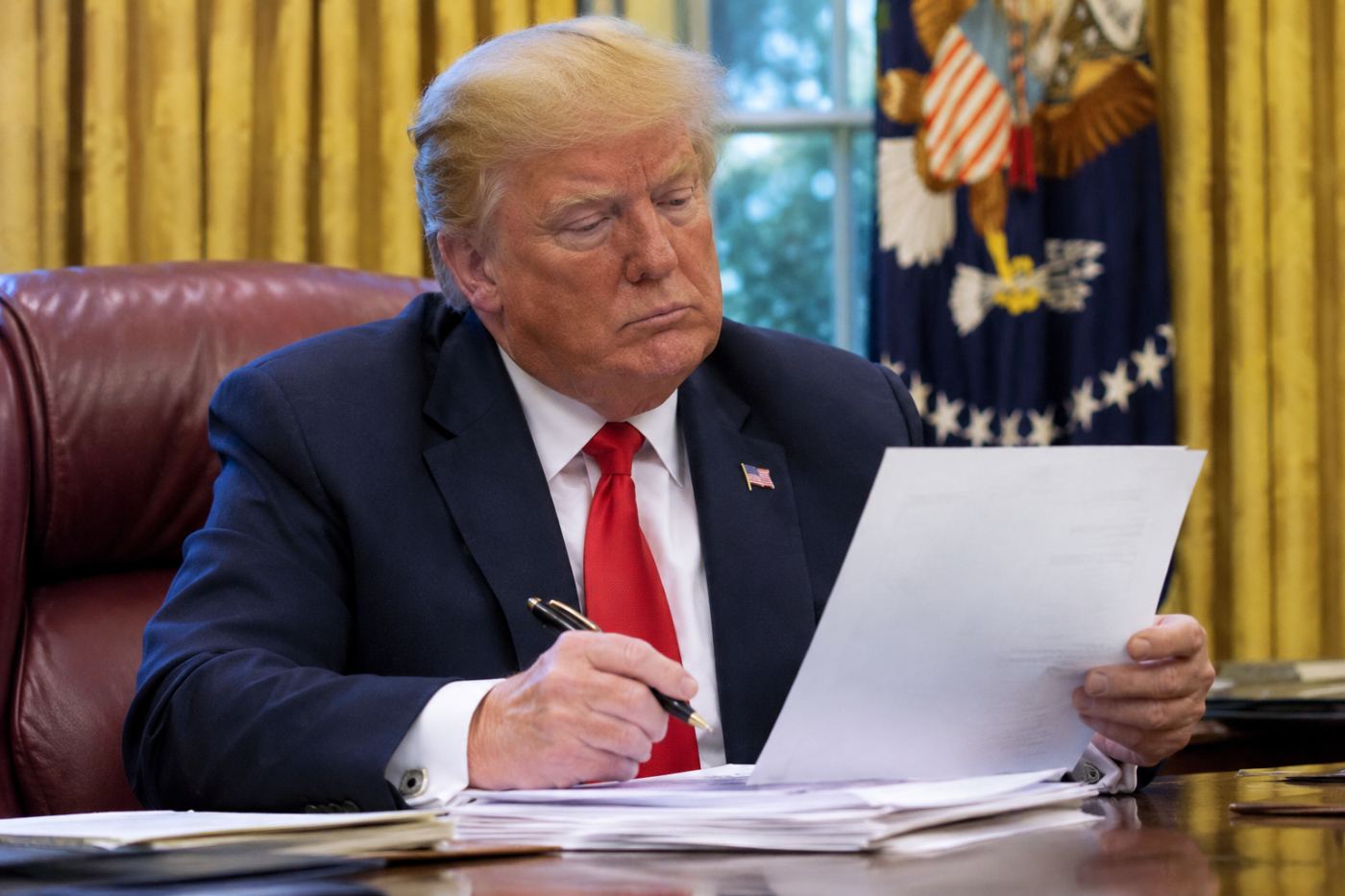
President Donald Trump announced Friday that he has completed written answers to questions from Special Counsel Robert Mueller, but acknowledged that he has not yet submitted them to federal investigators examining Russian interference in the 2016 presidential election.
Speaking to reporters in the Oval Office, Trump insisted that he personally prepared the responses, dismissed the questions as relatively simple, and accused investigators of potentially attempting to trap him into making false statements.
The announcement comes as Mueller's investigation continues to examine possible coordination between Trump's presidential campaign and Russia, along with potential obstruction of justice.
Trump Says the Questions Were Easy
Trump appeared confident when discussing his responses.
He told reporters that he had answered the questions without difficulty and emphasized that his attorneys had not written the answers for him.
However, he acknowledged that lawyers would review the responses before their submission.
The president offered no specific date for delivering the documents to Mueller's office.
Despite describing the questions as straightforward, Trump suggested that investigators might be deliberately constructing questions designed to produce accusations of perjury.
He illustrated his concern with a hypothetical example involving someone incorrectly remembering whether the weather had been sunny or rainy.
The president's argument appeared to be that even an innocent mistake could expose him to legal jeopardy.
Accusing Investigators of Bad Intentions
Trump's comments followed an extraordinary series of attacks against Mueller's investigation on Thursday.
In messages posted on Twitter, the president accused investigators of misconduct, claimed the inquiry was in disarray, and suggested that prosecutors were pressuring witnesses to provide damaging information.
He offered no evidence supporting those allegations.
On Friday, Trump again characterized the investigation as a politically motivated witch hunt and insisted there had been no collusion between his campaign and Russia.
He also denied being agitated by the investigation.
Nevertheless, the president's repeated public attacks demonstrate the increasingly contentious relationship between the White House and the special counsel's office.
An Investigation Already Producing Guilty Pleas
Mueller's investigation has already resulted in criminal charges and guilty pleas involving several individuals connected to Trump's presidential campaign.
Former national security adviser Michael Flynn pleaded guilty to lying to the FBI about conversations with the Russian ambassador.
Former campaign adviser George Papadopoulos also pleaded guilty to making false statements to federal investigators.
Former campaign chairman Paul Manafort pleaded guilty to conspiracy charges in September and agreed to cooperate with prosecutors.
These cases do not establish that Trump personally committed a crime, but they demonstrate that the investigation has uncovered criminal conduct involving individuals within his political orbit.
Why Written Answers Matter
Trump's legal team has spent months negotiating the terms under which the president would respond to Mueller's questions.
His attorneys have expressed concern about exposing him to an in-person interview, particularly concerning potential obstruction of justice.
Mueller has indicated a willingness to accept written responses addressing Russian election interference, although questions remain about whether investigators will seek additional testimony.
Written answers allow the president to consult documents and attorneys before responding.
They also provide investigators with statements that can be compared against evidence already collected.
A New Attorney General, New Questions
The announcement comes just over a week after Trump forced Attorney General Jeff Sessions from office and appointed Matthew Whitaker as acting attorney general.
Whitaker has previously criticized the scope of Mueller's investigation, raising concerns among lawmakers about whether the inquiry will remain independent.
The president maintains that the investigation should never have begun.
But the special counsel's work continues, and the White House has not announced when Trump's responses will be submitted.
The Questions Remain Unanswered
Trump insists that he has nothing to hide and that Mueller's questions were easy to answer.
Yet the president's written responses remain in his possession, while his attorneys continue managing the legal implications of submitting them.
The investigation has already produced convictions, guilty pleas, and extensive evidence concerning Russian election interference.
What investigators will make of the president's answers remains unknown.
Donald Trump says he has answered Mueller's questions. Until those answers reach investigators, however, his public assurances remain just that: assurances.