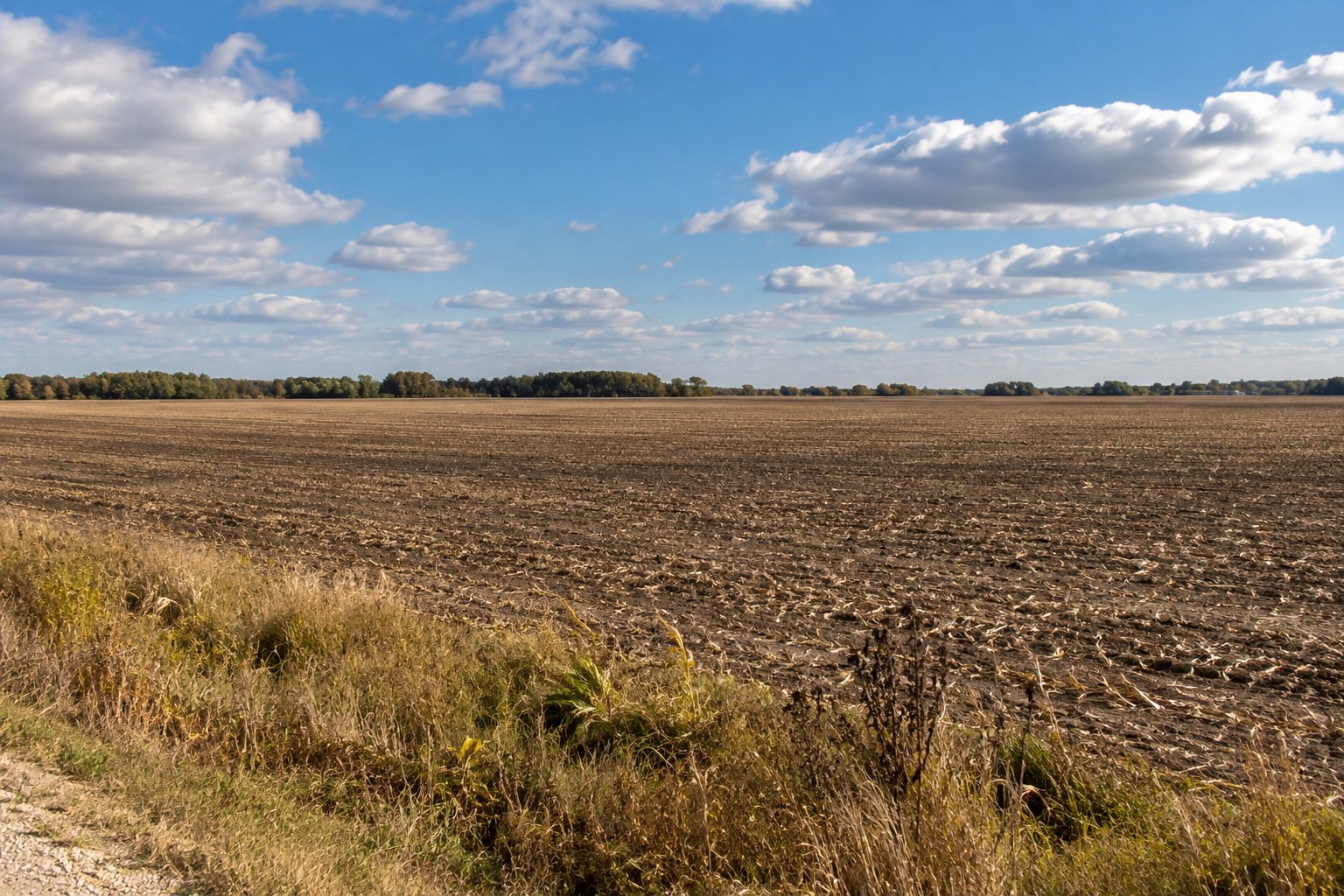
Donald Trump announced what he described as the largest steel plant ever built in the United States with the confidence of a president unveiling a project already underway.
There was just one problem.
The $15 billion Iowa steel plant apparently wasn't being built yet.
During a September 28 Oval Office event announcing the proposed Mesabi Metallics steel plant in Lee County, Iowa, Trump portrayed the massive project as effectively a done deal.
“They’ve already started building,” Trump said.
Commerce Secretary Howard Lutnick sounded equally certain.
“This deal is done,” Lutnick said. “They’ve already worked it out.”
But subsequent reporting from Iowa painted a very different picture.
Local records and officials indicated that the project still faced major steps before construction could begin — including one particularly fundamental question:
Exactly where was the plant going to be built?
No Final Site, No Local Permits
An investigation by Iowa television station KWQC found no major property purchases associated with the project in Lee County during the year.
County officials also said no permits for the massive development had been submitted to the county supervisors.
Even more significantly, Lee County Board of Supervisors Chairwoman Denise Fraise said the company had not yet committed to a specific project site.
That is difficult to reconcile with Trump's declaration that construction had already started.
Mesabi itself used considerably more cautious language than the president.
The company said it looked forward to “breaking ground in the near future.”
In other words, Trump said they had already started building.
The company said it was looking forward to starting.
Iowa Hadn't Finished the Deal Either
There was another problem with the claim that everything was settled.
Just days after Trump's announcement, Iowa Gov. Kim Reynolds called state lawmakers into a special legislative session to expand economic incentives designed to secure the project.
Lawmakers ultimately approved a package providing more than $1.3 billion in public funding and tax savings over approximately a decade.
If the project were already completely finalized, why was Iowa still changing state law to make the deal happen?
Debi Durham, director of the Iowa Economic Development Authority, acknowledged that the special session would not have been necessary if Mesabi had agreed to build under Iowa's existing incentive program.
The company's complete application must also still receive approval from the Iowa Economic Development Authority before Iowa enters into a contract with the company.
Even some Republicans questioned whether taxpayers were getting a good deal.
“Do I believe the Iowa taxpayer received the best deal in this proposition? Absolutely not,” Republican state Sen. Dan Dawson said.
Thousands of Jobs — Eventually
If the plant is ultimately constructed as proposed, it could become an enormous industrial development.
Mesabi says the facility could create approximately 1,750 permanent jobs along with thousands of temporary construction positions.
Production is expected to begin around 2030.
The Trump White House has promoted the project aggressively, describing it as the largest steel plant ever constructed in the United States and touting its potential economic impact.
Those benefits could eventually become real.
But announcing a proposed plant and actually constructing one are two very different things.
And Mesabi's history provides another reason for caution.
We've Heard Big Promises Before
Mesabi and its corporate predecessor Essar have previously been associated with ambitious industrial projects that failed to materialize as originally promised.
Essar announced plans in 2008 for a roughly $1.6 billion iron mine and steel mill in Minnesota that was expected to create hundreds of permanent jobs.
The steel mill was never built.
There is another curious detail surrounding the new Iowa project.
As recently as July, Mesabi job advertisements reportedly identified the location of its proposed steel operation as Kentucky — not Iowa.
Now the company is proposing an enormous facility in Iowa, supported by more than $1 billion in state incentives.
The project may eventually happen.
Thousands of workers may eventually be employed there.
And Iowa may eventually become one of America's major steel-producing states.
But none of those possibilities changes what was actually happening when Trump stood inside the Oval Office and told Americans the company had “already started building.”
Local officials didn't have the permits.
The state hadn't completed the incentive agreement.
The company hadn't committed to a final site.
And Mesabi itself was still talking about breaking ground sometime in the future.
Trump wasn't standing beside a completed steel mill.
He wasn't standing beside a construction site.
He was standing in the Oval Office announcing a project that still had significant hurdles ahead of it — while describing it as though the bulldozers were already moving dirt.