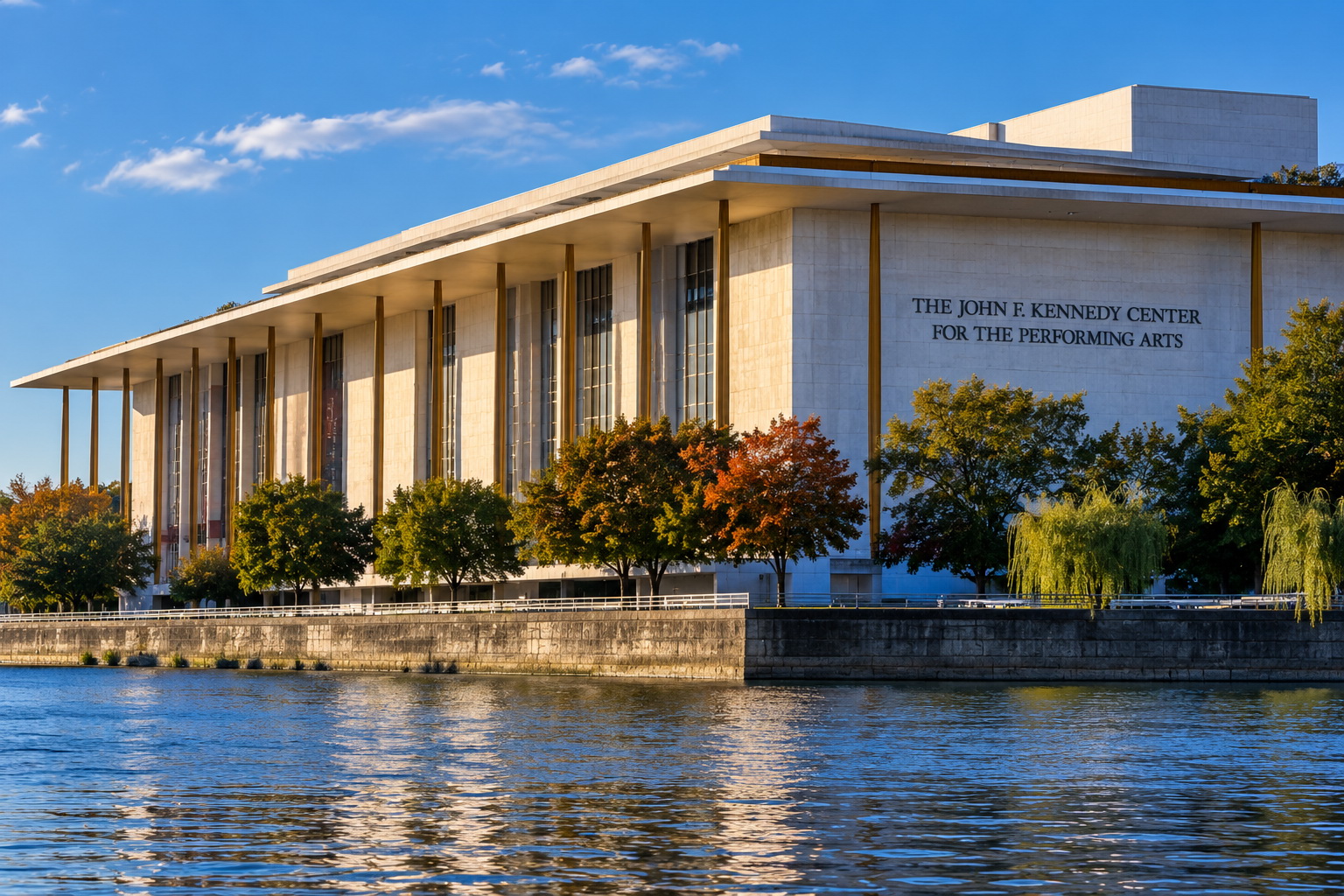
Trump Said He Would Save the Kennedy Center. Nineteen Months Later, It Is in Financial Crisis.
When Donald Trump seized control of the Kennedy Center in February 2025, he didn't describe himself as the caretaker of a healthy American cultural institution.
He described himself as its rescuer.
Trump and the new leadership he installed repeatedly portrayed the John F. Kennedy Center for the Performing Arts as a failing organization that had been financially mismanaged, neglected and driven into trouble by supposedly “woke” programming.
Trump promised to fix it.
Nineteen months later, the Kennedy Center is facing what its own leadership has described as the possibility of “fiscal collapse.”
And 15 years of financial records examined by The Washington Post make one fact particularly difficult to ignore:
The Kennedy Center wasn't financially collapsing when Trump took it over.
It is now.
Trump Inherited a Solvent Institution
The Kennedy Center certainly wasn't perfect when Trump arrived.
Like performing arts organizations across the country, it had endured the enormous disruption of the COVID-19 pandemic and was still dealing with its aftermath.
The building itself also had substantial maintenance and renovation needs.
But its finances tell a very different story from the institution Trump claimed to have inherited.
For the fiscal year ending in September 2024, the Kennedy Center reported approximately $307 million in revenue and $266 million in expenses.
That's roughly $41 million more revenue than expenses.
The organization reported approximately $558 million in net assets.
Whatever criticisms could legitimately be made about the Kennedy Center's programming, management or aging building, those aren't the numbers of an institution experiencing imminent financial collapse.
Then Trump took control.
Ticket Sales Collapsed
One of Trump's central complaints was that the Kennedy Center needed programming that people actually wanted to see.
The market delivered its verdict.
By the fall of 2025, ticket sales in the Kennedy Center's three largest venues had fallen to their worst levels since the pandemic.
A Washington Post analysis found that approximately 43% of tickets remained unsold for the typical production during a period between September and October.
The previous fall, only about 7% had remained unsold or uncomped.
More than 50,000 seats were vacant out of approximately 143,000 that could have been sold during the period analyzed.
Consumer credit and debit card data showed that spending on Kennedy Center tickets during September and the first half of October 2025 was less than half the amount spent during the same period in 2024.
Even major productions struggled.
And then the cancellations began.
Artists Walked Away
Trump's takeover didn't simply change management.
It transformed the Kennedy Center into a political battleground.
Trump removed members of the existing board and was elected chairman by a newly constituted board filled with his allies.
Programming changed.
Executives departed.
Artists canceled appearances.
And one of the biggest productions scheduled for 2026 disappeared entirely.
The producers of Hamilton canceled a planned Kennedy Center engagement, saying the decision was a response to what producer Jeffrey Seller called a new “spirit of partisanship” at the institution.
The financial significance was enormous.
Hamilton's previous Kennedy Center engagement in 2022 generated approximately $26 million in ticket sales, according to tax filings.
Trump's new leadership dismissed cancellations like that as political intolerance.
But canceled shows don't generate ticket revenue.
Empty seats don't either.
Then the Donors Started Leaving
The damage wasn't limited to the box office.
Donors began walking away too.
Internal financial documents obtained by CNN show an especially dramatic decline after the Kennedy Center's Trump-controlled board voted in December 2025 to put Trump's name on the building.
During the following months, gifts fell 42% compared with the previous three-month period.
Donation pledges fell by more than 100%, meaning cancellations and reductions exceeded the value of new commitments.
For an institution dependent on philanthropy as well as ticket revenue, that is devastating.
And it happened while Trump and his allies continued publicly portraying their takeover as a financial rescue.
The National Symphony Orchestra Was Hit Too
The crisis spread to one of America's most prestigious orchestras.
The National Symphony Orchestra, which operates under the Kennedy Center umbrella, lost audience members and donors as the controversy surrounding Trump's takeover intensified.
Ticket sales declined.
Fundraising fell short.
The resulting losses left the Kennedy Center responsible for covering millions of dollars in additional expenses.
An institution Trump promised to revitalize was instead watching both audiences and donors head for the exits.
The Credit Line Is Gone
By 2026, the problem had become considerably more serious than empty theater seats.
Internal Kennedy Center documents obtained by congressional investigators showed dwindling cash reserves.
The institution had fully drawn its available line of credit.
Capital repairs were being postponed.
And according to documents obtained by The Washington Post, the Center was on pace to miss its fiscal-year revenue target by nearly $100 million.
That is no longer a disagreement over artistic programming.
That's a financial crisis.
A $257 Million Federal Lifeline Complicates the Numbers
There is one enormous number that can make the Kennedy Center's recent finances look dramatically better on paper:
$257 million.
Congress provided that money for renovation of the Kennedy Center as part of legislation backed by Trump.
The funding helped produce an enormous increase in reported federal support.
The Center's subsequent tax filing showed more than $516 million in total revenue.
But that number is misleading if interpreted as evidence that the underlying operation suddenly became financially healthier.
Much of the increase came from that one-time federal renovation appropriation rather than ticket sales, ordinary fundraising or operating revenue.
Program-service revenue — which includes ticket sales and other programming income — fell from nearly $105 million to approximately $89 million.
Experts caution that nonprofit tax returns combine operating and capital finances in ways that make simple deficit calculations difficult.
But the broader trend is difficult to miss.
The Kennedy Center became increasingly dependent on extraordinary government assistance while its ordinary sources of revenue deteriorated.
Trump's Name Became Part of the Financial Crisis
Then the story became even stranger.
The Trump-controlled board attempted to add Trump's name to the Kennedy Center.
Federal courts blocked the move, ruling that such a change required congressional authorization.
Kennedy Center leadership subsequently argued that Trump's continued financial assistance was connected to recognition of him at the institution.
Draft board resolutions warned that the Center had exhausted its fiscal resources and faced “certain fiscal collapse.”
In September, the board voted to close most of the building for renovations.
Trump said the congressionally funded repairs would proceed only if the effort to put his name on the building could move forward.
The Justice Department appealed the court ruling.
So an institution created by Congress as a living memorial to President John F. Kennedy had arrived at an extraordinary place:
Its leadership was warning of financial collapse while simultaneously arguing that another sitting president needed to be memorialized there to help rescue it.
The Before-and-After Numbers Matter
Politics makes almost everything surrounding the Kennedy Center more complicated.
Supporters of Trump's takeover argue that the building had serious physical problems, that the institution needed different programming and that decades of deferred maintenance created problems the current leadership inherited.
Those issues shouldn't be dismissed.
The Kennedy Center building genuinely requires major repairs.
But maintenance problems don't explain away what happened to the organization's operating finances after February 2025.
Before Trump took control, the Kennedy Center reported hundreds of millions of dollars in net assets and revenue exceeding expenses.
After the takeover:
Ticket sales plunged.
Tens of thousands of seats went empty.
Subscriptions declined.
Major performers and productions canceled.
Donations fell.
Pledges disappeared.
The National Symphony Orchestra entered a financial crisis.
The Center exhausted its available line of credit.
And its own leadership began warning about possible fiscal collapse.
The Rescue That Became a Crisis
Trump didn't inherit an institution with no problems.
But the evidence does not support the simple story he told Americans — that he arrived to rescue a Kennedy Center already financially ruined by the people who came before him.
Fifteen years of financial records provide a much more complicated picture.
The Kennedy Center survived the Great Recession.
It survived years of political change.
It survived the COVID shutdown that temporarily closed its theaters altogether.
By 2024, it was again reporting revenue comfortably above expenses.
Then came Trump's takeover.
Nineteen months later, the institution's leadership was warning that it could collapse financially.
That doesn't establish that every dollar of the deterioration was caused personally by Donald Trump. Performing arts finances depend on programming, philanthropy, economic conditions, building costs and numerous other variables.
But presidents who claim credit for rescuing institutions also invite scrutiny of what happens after they take control.
And in the case of the Kennedy Center, the before-and-after numbers are becoming increasingly difficult to explain away.