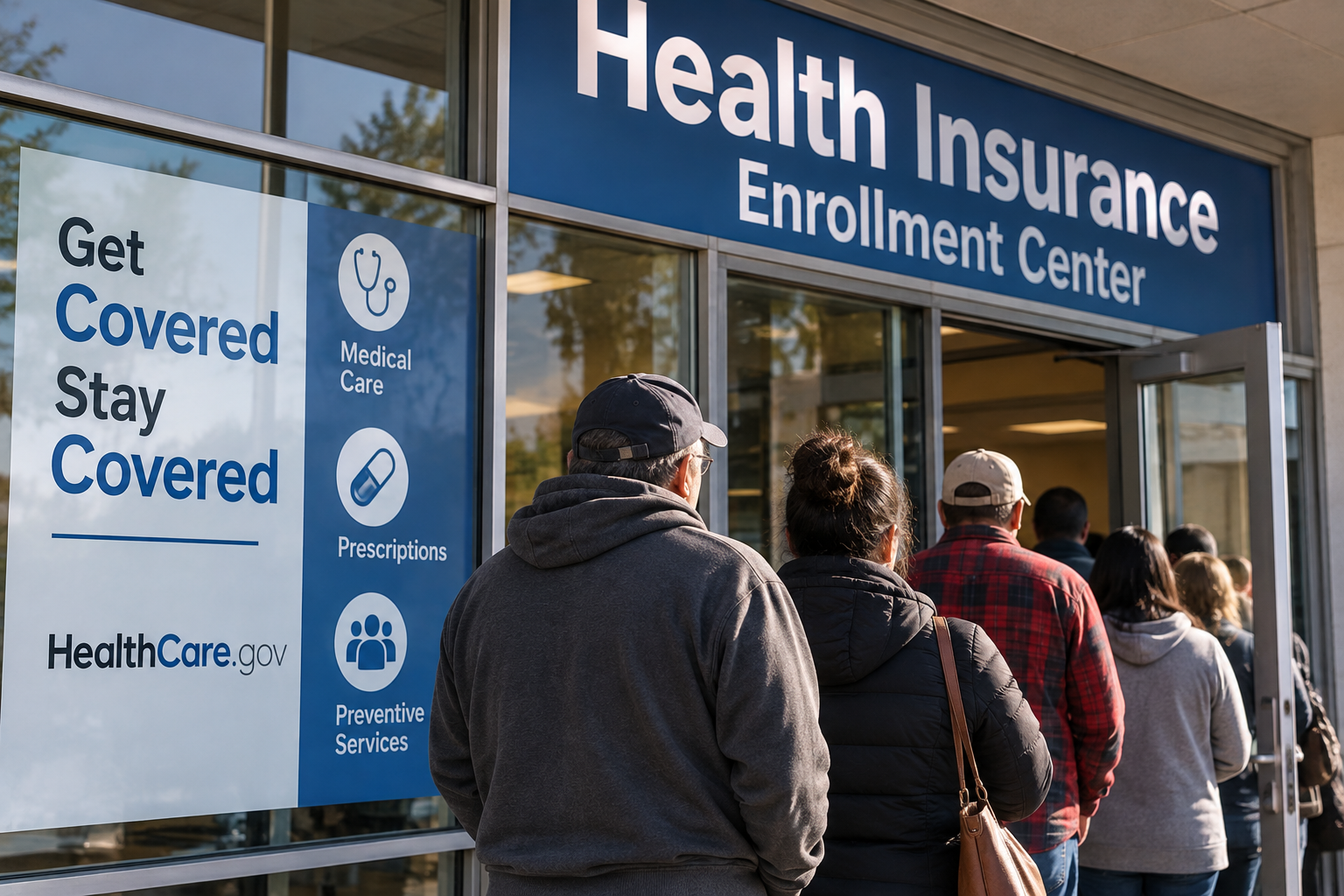
The Trump administration is removing approximately 760,000 people from Affordable Care Act health insurance plans, the latest development in a year that has already made health coverage considerably more expensive for millions of Americans.
Administration officials say the people being removed are connected to fraud, improper enrollment or eligibility problems.
Vice President JD Vance said the government is ensuring that people receiving Obamacare subsidies are actually entitled to them.
Centers for Medicare and Medicaid Services Administrator Mehmet Oz went further, describing some of the enrollments as “phantoms” and “ghosts” and saying the crackdown would save taxpayers approximately $2.2 billion.
Fraud in federal health programs is a legitimate concern.
But the administration has not publicly provided a detailed accounting showing how many of those 760,000 enrollments belong to nonexistent people, how many resulted from fraudulent brokers enrolling people without their knowledge, and how many involve actual Americans losing coverage because the government determined they were no longer eligible.
That distinction matters.
Because this isn't happening in isolation.
It comes during a year in which Affordable Care Act coverage has already become significantly more expensive and millions of Americans are dropping their insurance.
Obamacare Got Much More Expensive in 2026
At the end of 2025, enhanced Affordable Care Act premium tax credits were allowed to expire.
Those subsidies had been created under the American Rescue Plan in 2021 and later extended through 2025 by the Inflation Reduction Act.
They substantially reduced what millions of Americans purchasing their own insurance actually paid every month.
When the additional assistance disappeared, the effect was immediate.
According to KFF analysis of federal Marketplace data, the average monthly premium actually paid by ACA consumers increased from approximately:
$113 per month in 2025
to
$178 per month in 2026.
That's an increase of roughly 58 percent in a single year.
And premiums weren't the only problem.
Deductibles Exploded
Faced with higher monthly premiums, millions of Americans responded by purchasing cheaper insurance plans.
But cheaper premiums often come with a catch:
Much higher deductibles.
The average ACA Marketplace deductible increased from approximately $2,759 in 2025 to $3,786 in 2026.
That's an increase of more than $1,000 per person in one year — and the largest increase recorded since the ACA Marketplace began.
Americans increasingly moved into bronze plans, which generally offer lower monthly premiums but require patients to pay substantially more of their medical expenses before insurance begins covering many services.
Bronze plans represented about 30 percent of Marketplace selections in 2025.
In 2026, that increased to approximately 40 percent.
Meanwhile, enrollment in silver plans — which generally provide better cost-sharing protections for qualifying lower-income consumers — fell sharply.
The result is an uncomfortable contradiction.
Millions of Americans technically still have health insurance.
But increasingly, they have insurance they may struggle to afford to actually use.
Millions Are Leaving the Marketplace
The affordability problem is already showing up in enrollment.
ACA Marketplace enrollment reached approximately 22.3 million people in 2025.
KFF estimates average enrollment during 2026 could fall to roughly 17.5 million — and potentially as low as 16.5 million.
That would represent the disappearance of millions of insured Americans from the Marketplace in a single year.
Some are finding other coverage.
Others are simply becoming uninsured.
The decline has been especially pronounced among middle-income Americans who earn too much to qualify for traditional ACA subsidies but don't earn enough to comfortably absorb thousands of dollars in additional insurance costs.
The expiration of the enhanced subsidies restored what health-policy analysts call the “subsidy cliff.”
For some families, earning slightly more money can now mean losing thousands of dollars in federal assistance.
Now Trump Is Removing Another 760,000 Enrollees
Against that backdrop, the Trump administration announced another major ACA crackdown.
Approximately 760,000 enrollees are being removed.
Another 420,000 people are reportedly being investigated for possible fraud.
The administration is also imposing a six-month moratorium on new insurance agents and brokers entering the ACA Marketplace.
The administration portrays the moves as basic program integrity.
If people don't exist, aren't eligible for subsidies or were improperly enrolled, taxpayers shouldn't be paying insurance companies on their behalf.
That's reasonable.
But critics are raising a different concern:
How many legitimate ACA customers are being caught in the process?
The administration has not released enough information to answer that question.
And when hundreds of thousands of people are losing health coverage, the answer matters.
This Is About More Than Obamacare
The Affordable Care Act has survived Republican attempts to repeal it for more than 15 years.
Trump himself famously tried to repeal Obamacare during his first presidency, only to see the effort collapse in the Senate in 2017.
The ACA survived.
But a health insurance program doesn't have to be formally repealed to become less effective.
Subsidies can disappear.
Eligibility requirements can become harder to satisfy.
Enrollment procedures can become more complicated.
Outreach can be reduced.
Premiums can rise.
Deductibles can increase.
And people can gradually disappear from the insurance rolls.
The law remains on the books.
The insurance cards still exist.
But fewer people can afford them.
The Consequences Don't Stop With the Uninsured
When people lose health insurance, their medical problems don't disappear.
They often delay preventive care.
They postpone doctor's appointments.
They skip medications.
Eventually, some become much sicker.
And when uninsured patients finally require emergency treatment, hospitals generally still treat them.
Someone ultimately absorbs those costs.
Hospitals absorb some.
State and federal programs absorb some.
Privately insured patients can indirectly absorb some through higher prices.
And financially vulnerable hospitals — particularly rural facilities already operating on narrow margins — can face additional uncompensated care.
That's why a large increase in America's uninsured population isn't simply a problem for the people who lose their coverage.
It can become a problem for the entire healthcare system.
Obamacare Isn't Being Repealed. It's Being Squeezed.
Trump and Republicans never succeeded in repealing the Affordable Care Act.
But 2026 demonstrates that there are other ways to weaken it.
Enhanced subsidies disappeared.
Average premiums paid by consumers jumped 58 percent.
Average deductibles increased by more than $1,000.
Millions of Americans are expected to leave Marketplace coverage.
And now the administration is removing another 760,000 enrollments while investigating hundreds of thousands more.
The Trump administration says its latest action is about fraud.
It may ultimately demonstrate substantial fraud.
But without a detailed accounting of who is being removed and why, Americans cannot yet determine how much of this crackdown involves nonexistent beneficiaries — and how much involves real people losing their health insurance.
What we already know is much clearer.
In 2026, obtaining health insurance through the Affordable Care Act became substantially more expensive.
Millions fewer Americans are expected to remain covered.
And the direction of the numbers is unmistakable:
More Americans are finding health insurance harder to afford — and more Americans are going without it.