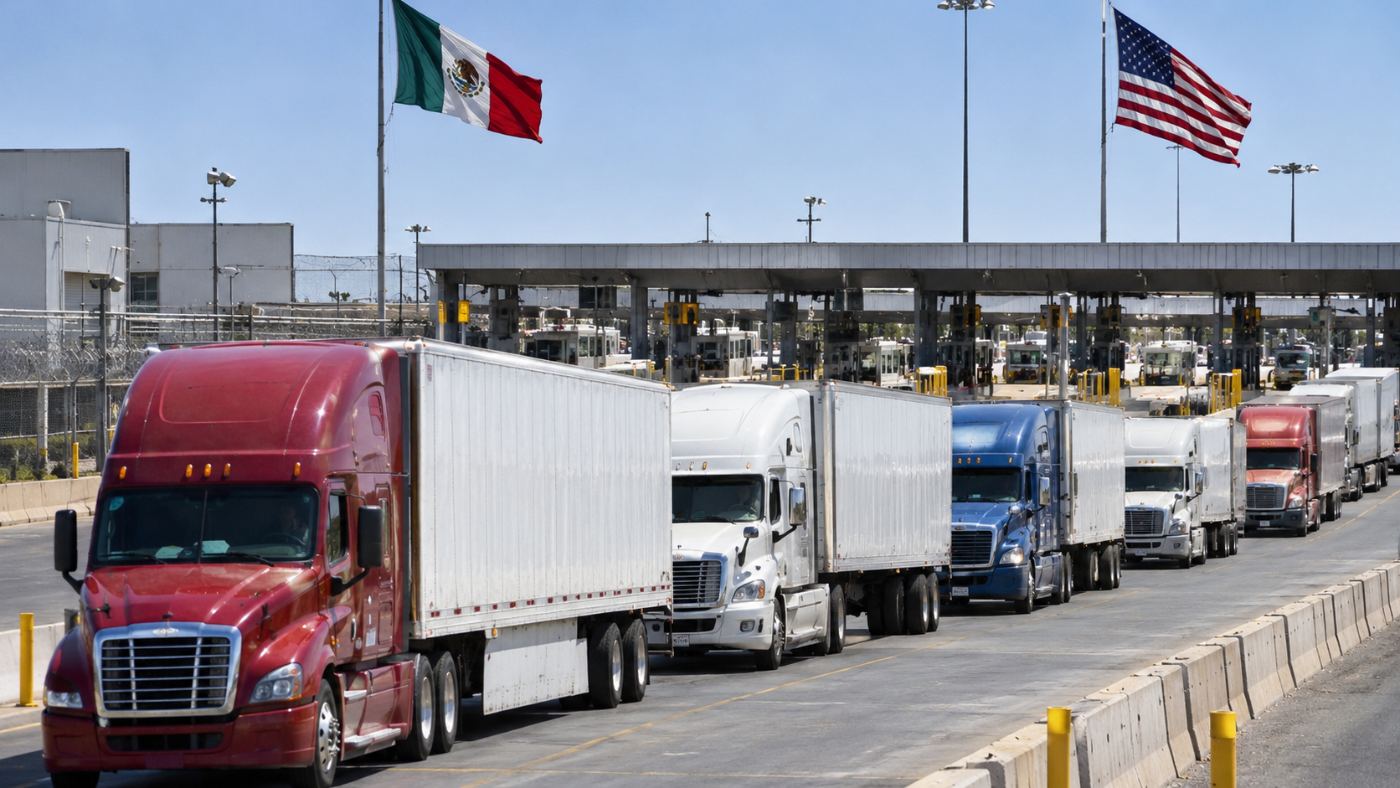
Less than three weeks after winning the 2024 presidential election, Donald Trump was already creating economic uncertainty across North America. On November 26, leaders in Mexico and Canada responded to his threat to impose sweeping tariffs on America's largest trading partners, warning that the consequences could include higher consumer prices, lost jobs, and a damaging trade conflict.
The controversy began the previous evening when Trump announced plans to impose a 25 percent tariff on all goods imported from Mexico and Canada immediately upon taking office in January. He also threatened an additional 10 percent tariff on Chinese imports.
Trump claimed the measures were necessary to pressure neighboring countries into stopping illegal immigration and fentanyl trafficking into the United States.
But the announcement immediately raised questions about the economic consequences for American businesses and consumers.
Mexican President Claudia Sheinbaum responded forcefully on November 26, warning that her government would consider retaliatory tariffs if Trump followed through.
Sheinbaum argued that economic threats would not resolve the complicated challenges of migration and drug trafficking. Instead, she called for cooperation between the neighboring countries.
She also warned that a trade conflict could threaten businesses operating on both sides of the border, particularly American automobile manufacturers.
Companies including General Motors, Ford, and Stellantis depend on deeply integrated North American supply chains. Vehicles and components frequently cross international borders during production, making tariffs particularly disruptive to manufacturing operations.
Canada also moved quickly to address the threat.
Prime Minister Justin Trudeau spoke with Trump by telephone and emphasized the importance of maintaining the close economic relationship between the two countries.
Canadian provincial leaders expressed concern about the potential damage to industries dependent on American trade. Officials began discussing possible responses as businesses faced uncertainty about the future of cross-border commerce.
Perhaps the most striking aspect of Trump's announcement was that it threatened a trade agreement negotiated during his own first administration.
The United States-Mexico-Canada Agreement, commonly known as USMCA, took effect in July 2020 after Trump promoted it as a major achievement of his economic agenda.
The agreement preserved largely tariff-free trade among the three countries, replacing the earlier North American Free Trade Agreement.
Now, just four years later, Trump was threatening tariffs that trade experts warned could violate the agreement he had championed.
The economic implications extended far beyond international diplomacy.
Mexico supplies the United States with automobiles, electronics, machinery, and agricultural products. Canada provides substantial quantities of oil, natural gas, automotive components, and industrial materials.
American manufacturers rely on these imports to produce finished products, while retailers depend on imported goods to supply consumers.
Contrary to Trump's repeated suggestions that foreign countries pay American tariffs, import duties are collected from the American businesses bringing goods into the country.
Those businesses must then decide whether to absorb the additional costs, reduce their profits, negotiate lower supplier prices, or pass the expense along to customers.
Economists warned that sweeping tariffs could increase prices on everyday purchases, including groceries, automobiles, and household products.
The threats also raised the possibility of retaliation against American exports.
If Mexico and Canada imposed tariffs of their own, American farmers, manufacturers, and other exporters could face reduced demand and more expensive access to foreign markets.
Financial markets reflected some of the uncertainty. The Mexican peso and Canadian dollar weakened against the U.S. dollar, while shares of several companies with significant North American manufacturing operations came under pressure.
Supporters of Trump's approach argued that tariffs could provide leverage in negotiations over immigration, drug trafficking, and trade policy. Critics countered that using broad import taxes to address those issues risked imposing substantial economic costs on businesses and consumers.
The November 26 reaction also highlighted a longer-term concern: America's trading partners could begin reconsidering their dependence on the United States.
Repeated threats of tariffs and unpredictable trade restrictions create incentives for governments and businesses to diversify their markets, develop alternative supply chains, and strengthen commercial relationships elsewhere.
Such changes would not happen overnight. The American, Canadian, and Mexican economies are deeply interconnected. Nevertheless, uncertainty over access to the American market can influence investment decisions that shape trade relationships for years.
The events of November 26, 2024, demonstrated how quickly presidential trade threats could affect international relationships, even before Trump returned to office.
Mexico warned of retaliation. Canada sought urgent discussions. Businesses evaluated their exposure, and economists raised concerns about the potential consequences for American households.
The episode also exposed a central tension in Trump's economic strategy: tariffs intended to pressure foreign governments could simultaneously impose costs on the American companies and consumers his administration promised to protect.
What began as a social media announcement became an international economic dispute, raising questions about the future of North American trade and the reliability of the United States as a commercial partner.