Donald Trump's polling problem is getting harder to dismiss.
For months, national surveys have shown the president deeply underwater with the American public.
But the latest numbers reveal something potentially more consequential:
Trump is losing support among some of the voters — and in some of the states — that formed the foundation of his political coalition.
White working-class voters who overwhelmingly supported Trump are increasingly telling pollsters they disapprove of his performance.
States Trump won comfortably in 2024 now give him negative approval ratings.
And even in some of America's most reliably Republican territory, Trump's margins have deteriorated dramatically since he returned to the White House.
This isn't Trump becoming unpopular in California or Massachusetts.
It's Trump struggling in Iowa.
Ohio.
Texas.
Florida.
And among the white voters without college degrees who helped build the MAGA movement.
The Working-Class White Vote Is Cracking
Few groups have been more important to Trump's political rise than white Americans without college degrees.
Trump overwhelmingly carried these voters in all three of his presidential campaigns.
They helped transform states such as Ohio and Iowa from presidential battlegrounds into Republican strongholds.
They helped Trump break through the old Democratic “Blue Wall” in the Midwest.
And they became central to the Republican Party's claim that it had replaced Democrats as the political home of America's working class.
But recent polling shows something remarkable happening.
Multiple national surveys now find a majority of white Americans without college degrees disapprove of Trump's job performance.
Recent CNN and Fox News polling each measured disapproval among non-college white Americans at approximately 51 percent.
NPR/PBS/Marist and Pew Research Center found roughly 52 percent disapproval.
CBS News/YouGov measured it at approximately 54 percent.
Different pollsters.
Different methodologies.
The same basic result.
A demographic group Trump once dominated is no longer giving his presidency majority approval.
These Are Trump's Voters
That distinction matters.
Trump has never depended heavily upon Democrats, Black voters, urban liberals or college-educated progressives for political support.
Negative ratings among those groups aren't surprising.
White voters without college degrees are different.
They are one of the central pillars of Trump's coalition.
Roughly two-thirds of them supported Trump in each of his three presidential campaigns.
Trump's political transformation of the Republican Party was built in substantial part around these voters.
They responded to his promises to rebuild American manufacturing.
They responded to his attacks on trade agreements.
They responded to his immigration policies.
They responded to his argument that Washington's political establishment had abandoned working Americans.
Now a majority of these voters are telling multiple pollsters they disapprove of the job he's doing.
That doesn't mean they have all become Democrats.
It doesn't mean they will necessarily vote Democratic in November.
But it does mean dissatisfaction has reached deeply into territory Trump once considered his own.
Then Look at the Map
The state numbers tell a similar story.
Polling from Civiqs has tracked Trump's approval across the country throughout his second presidency.
Trump remains popular in some of America's most heavily Republican states.
But his support has deteriorated dramatically elsewhere.
Earlier Civiqs measurements showed Trump underwater in states he carried comfortably in 2024.
Among them:
Florida: 42% approve, 54% disapprove
Texas: 40% approve, 54% disapprove
Ohio: 40% approve, 54% disapprove
Those aren't blue states.
Trump won all three in 2024.
He carried Florida and Texas by double digits.
Ohio has voted for Trump three consecutive times.
Yet substantial numbers of voters in each now tell pollsters they disapprove of his presidency.
The same Civiqs tracking has shown negative net approval in other Trump-won states including Iowa, Alaska, Missouri, South Carolina, Louisiana, Kentucky, Nebraska and Mississippi.
The margins vary.
The pattern doesn't.
Trump's support has eroded well beyond America's traditional political battlegrounds.
Iowa May Be the Warning Sign
Perhaps nowhere is the change more striking than Iowa.
Trump won Iowa by roughly 13 percentage points in 2024.
It wasn't close.
But a Marist poll conducted September 17–20 found:
41 percent approve of Trump's job performance.
58 percent disapprove.
That's a net approval rating of minus 17 points in a state Trump won easily less than two years ago.
The same poll found 46 percent of Iowa voters saying their family's financial situation had become worse during the previous year.
Only 15 percent said it had improved.
And when voters were asked whether their congressional vote was primarily about Trump, substantially more said they were voting against him than voting to support him.
Iowa didn't suddenly become a liberal state.
Its voters are unhappy.
There is an important difference.
The Economy Keeps Appearing
The common thread running through much of Trump's polling deterioration is difficult to miss.
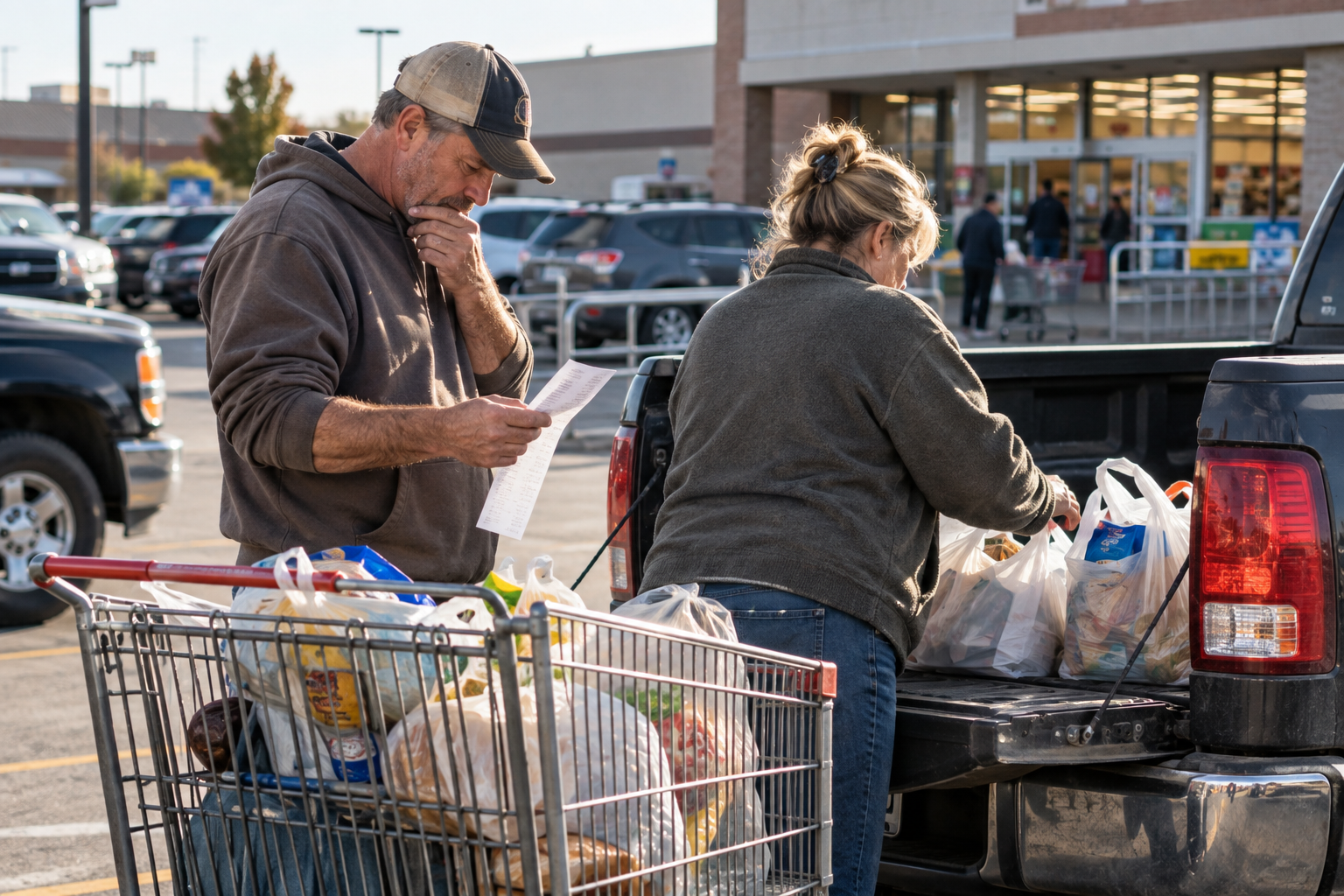
Money.
Groceries.
Gasoline.
Housing.
Insurance.
Utilities.
Everyday expenses.
Trump returned to the White House promising to reduce prices.
Instead, affordability has become perhaps his greatest political vulnerability.
A Reuters/Ipsos poll released this week found Trump's overall approval at just 32 percent, the lowest Reuters/Ipsos has measured during either of his presidencies.
But the number on the cost of living was considerably worse.
Only:
17 percent
approved of Trump's handling of the cost of living.
Even Republicans have become dissatisfied.
For the first time in Reuters/Ipsos polling, more Republicans disapproved than approved of Trump's handling of living costs.
That's an extraordinary development for a president whose 2024 campaign depended heavily upon voters' frustration with inflation under Joe Biden.
Trump successfully convinced millions of Americans that he could make their lives more affordable.
Now those voters are judging him on whether he delivered.
Republicans Are Feeling It Too
Trump's decline isn't limited to independents.
Reuters/Ipsos found his approval among Republicans falling to 73 percent.
For most politicians, 73 percent approval within their own party would be strong.
For Trump, it represents a significant deterioration.
His political power has always depended upon extraordinary loyalty among Republican voters.
That loyalty discouraged Republican lawmakers from challenging him.
It helped Trump destroy primary opponents.
It turned criticism of Trump into a potentially career-ending decision for Republican politicians.
The Republican base hasn't abandoned Trump.
But it is becoming noticeably less enthusiastic about his presidency.
And that matters when an election depends not merely upon whom voters prefer, but whether disappointed voters bother showing up.
The Midterms Are Becoming a Referendum on Trump
Trump himself has encouraged voters to treat the 2026 midterms as a referendum on his presidency.
At a Republican gathering in Dallas, Trump told voters to pretend that he was on the ballot.
Polling suggests many Americans are doing exactly that.
The latest NPR/PBS News/Marist national survey found 45 percent of voters describing their congressional choice as a vote against Trump.
Only about one-quarter described their vote as primarily supporting him.
Among independents, roughly half said their congressional vote was about opposing Trump.
The same survey found registered voters preferring a Democratic congressional candidate by 53 percent to 41 percent nationally.
That doesn't determine who will control Congress.
House elections occur district by district.
Senate elections occur state by state.
But it demonstrates the national political environment in which Republican candidates are running.
And Trump has explicitly invited voters to judge them as an extension of his presidency.
Red States Don't Necessarily Mean Trump States
One of the biggest mistakes in interpreting these numbers would be assuming that negative approval ratings mean traditionally Republican states have suddenly become Democratic.
They haven't.
A voter can disapprove of Trump and still vote Republican.
A voter can dislike the economy and still oppose Democrats.
A voter can be frustrated with Trump without abandoning conservative positions on immigration, guns, taxes or abortion.
Approval polling measures satisfaction with a president.
It does not directly predict an election result.
But the geography of Trump's decline remains significant.
Presidents expect opposition in states controlled by the other party.
They don't expect to be deeply underwater in states they won by double digits less than two years earlier.
MAGA's Working-Class Problem
Trump's weakening support among non-college white voters may ultimately be the most revealing number of all.
MAGA's political success wasn't simply about Donald Trump.
It represented a genuine shift in American politics.
Republicans gained working-class voters who had once been much more competitive between the parties.
Democrats increasingly attracted college-educated suburban voters.
The political map changed.
Trump accelerated that transformation.
But political coalitions survive only as long as voters believe they're benefiting from them.
If working-class Americans conclude that Trump's policies aren't improving their economic lives, the cultural connection alone may not be enough to maintain the enormous margins Republicans have enjoyed among them.
That is precisely why the cost-of-living numbers should concern Republicans.
This Isn't Just Another Bad Poll
One poll can be wrong.
A demographic subgroup can have a large margin of error.
State polling can fluctuate.
Rolling online surveys such as Civiqs use different methodologies from traditional probability-based national polls and should not be treated as election forecasts.
But when different polling organizations using different methodologies begin identifying the same movement, the pattern becomes harder to ignore.
Trump is unpopular nationally.
His economic ratings are worse.
His support among Republicans has weakened.
White working-class voters are increasingly dissatisfied.
And states he carried comfortably in 2024 are giving him negative job ratings.
Donald Trump's political coalition hasn't disappeared.
Millions of Americans remain intensely loyal to him.
But the coalition that returned him to the White House is showing unmistakable signs of strain.
And the most troubling part for Trump may be where those cracks are appearing.
Not merely among the Americans who always opposed him.
Among the Americans who put him back in the White House.