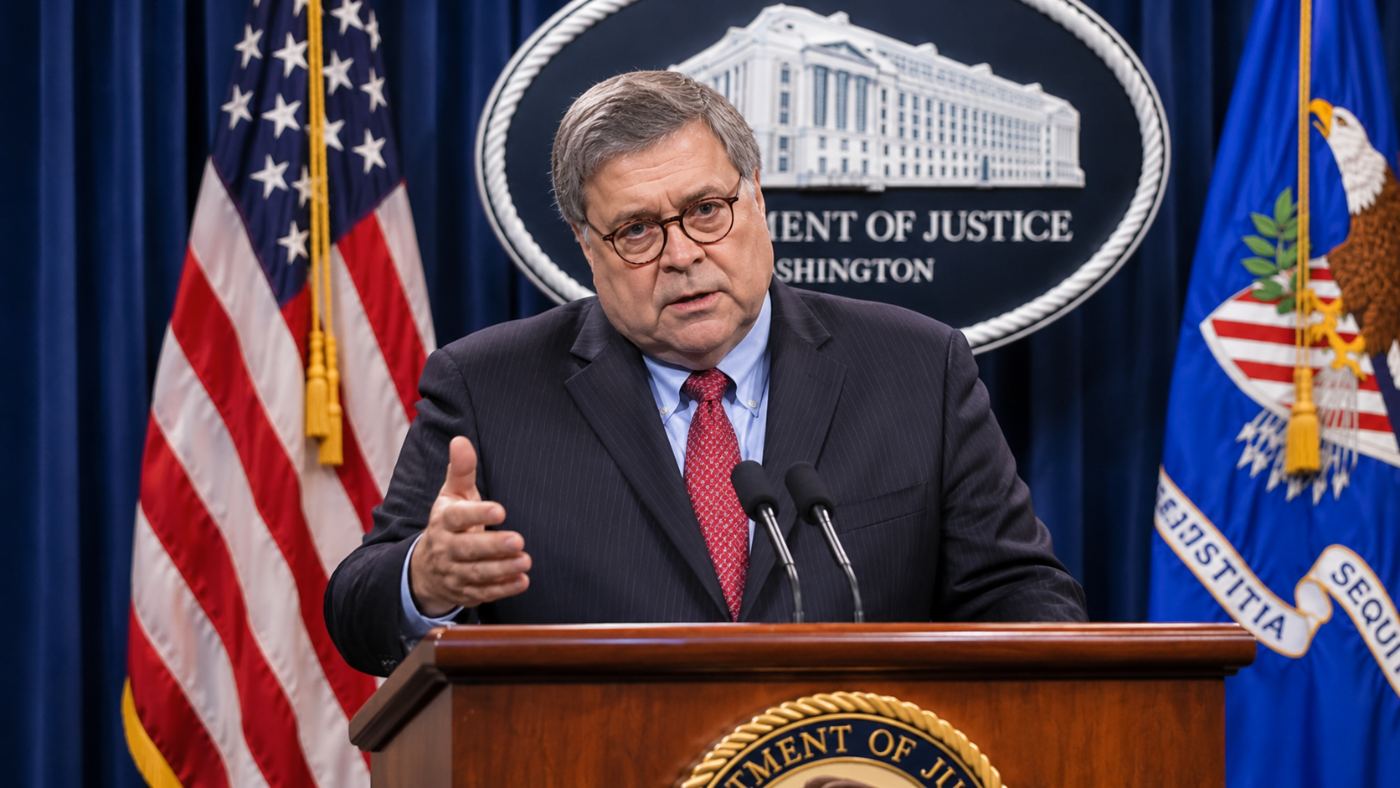
On December 1, 2020, Attorney General William Barr publicly contradicted President Donald Trump's claims that widespread voter fraud had cost him the presidential election.
In an interview with the Associated Press, Barr revealed that the Department of Justice had uncovered no evidence of fraud significant enough to change the outcome of the November election.
The announcement was particularly damaging to Trump's allegations because it came from one of his most loyal Cabinet officials, rather than a political opponent.
Trump's Attorney General Rejects His Claims
For weeks following his defeat by Joe Biden, Trump had insisted that widespread fraud, manipulated voting machines, and illegal ballots had deprived him of victory.
His attorneys filed lawsuits in several battleground states, while Trump repeatedly demanded investigations into alleged election misconduct.
Barr's Justice Department had already authorized federal prosecutors to investigate substantial allegations of voting irregularities before election results were certified.
But those investigations failed to uncover evidence supporting Trump's central accusation.
Barr told the Associated Press:
"To date, we have not seen fraud on a scale that could have effected a different outcome in the election."
The statement directly challenged the narrative Trump and his allies had been promoting since Election Day.
Investigators Found No Evidence of Manipulated Voting Machines
Among the allegations circulating after the election were claims that electronic voting systems had been programmed to transfer votes from Trump to Biden.
Barr confirmed that the Justice Department and Department of Homeland Security had examined those accusations.
Investigators found nothing substantiating the claims.
Barr also explained that isolated allegations of voting irregularities were different from evidence of a coordinated nationwide conspiracy.
Some complaints had been investigated, while others remained under review.
None had produced evidence capable of overturning the presidential result.
Trump's Legal Team Attacks Barr
Rather than accepting the attorney general's findings, Trump's legal representatives challenged them.
Rudy Giuliani and other campaign attorneys issued a statement disputing the adequacy of the Justice Department's investigation.
They insisted that substantial evidence of illegal voting existed in several states.
However, courts had already rejected multiple election challenges because the allegations lacked sufficient supporting evidence.
Even judges appointed by Republican presidents had declined to accept unsupported claims of widespread election fraud.
Trump continued promoting allegations about the election despite his own attorney general's assessment.
A Growing Divide Inside the Administration
Barr had frequently defended Trump throughout his presidency, making his December 1 announcement especially significant.
Before the election, Barr himself had expressed concerns about potential fraud involving mail-in ballots.
His acknowledgment that investigators had not discovered outcome-changing fraud therefore represented an important distinction between hypothetical concerns and actual evidence.
The disagreement contributed to growing tensions between Trump and his attorney general.
On December 14, Trump announced that Barr would leave the Justice Department before Christmas.
The Election Results Remained Unchanged
Joe Biden ultimately received 306 electoral votes to Trump's 232 and won the national popular vote by more than seven million ballots.
Recounts, audits, court proceedings, and election officials in multiple states failed to substantiate Trump's allegations of widespread fraud sufficient to alter the result.
Nevertheless, Trump continued disputing his defeat.
Those claims became central to the political confrontation that culminated in the January 6, 2021, attack on the United States Capitol.
A Warning From Inside Trump's Own Government
The December 1 announcement remains a significant moment in the history of the 2020 election.
Barr was not an opposition politician or an outside critic. He was the nation's highest-ranking law enforcement official, appointed by Trump and responsible for overseeing federal investigations.
His department had examined allegations of election misconduct and found no evidence sufficient to change the outcome.
Trump's continued rejection of the election result, even after that finding, demonstrated the widening divide between his public claims and the conclusions of federal investigators.
December 1, 2020, stands as the day Trump's own attorney general publicly confirmed that the Justice Department had found no widespread election fraud capable of overturning his defeat.