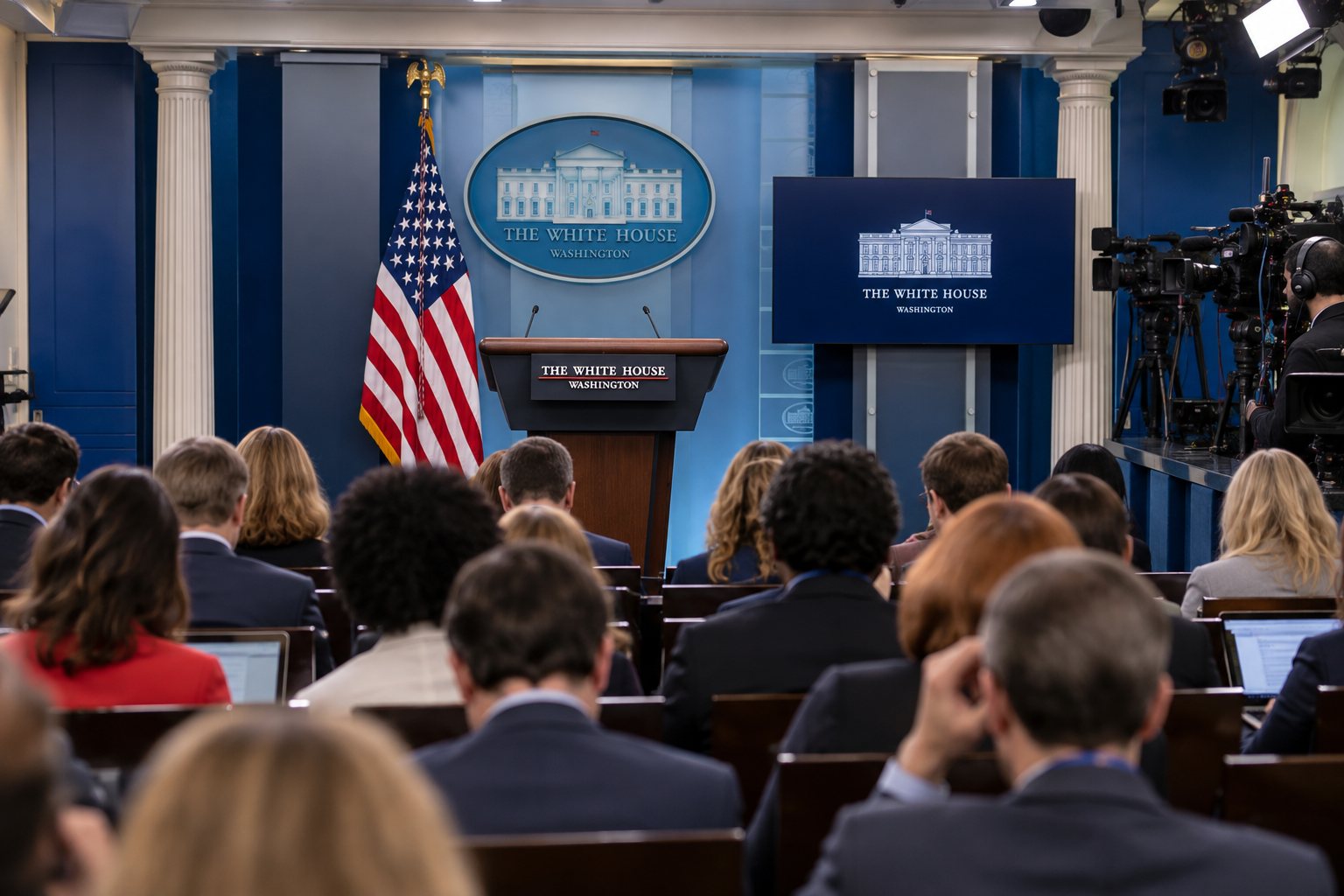
Donald Trump's new White House press secretary, Katie Zacharia, is facing questions about her professional credentials following reporting by The Wall Street Journal that she took the California bar examination after graduating from law school in 2011 but failed to pass.
The revelation adds another controversy to Zacharia's early days as the administration's chief spokesperson, particularly because both Trump and Zacharia have publicly described her as an attorney.
According to the Journal, Zacharia graduated from Pepperdine University School of Law in 2011 and subsequently attempted the California bar examination. A person familiar with the circumstances told the newspaper that she did not pass, reportedly while preparing for her wedding and a move to China.
Failing the bar examination is not itself misconduct. Many law school graduates require multiple attempts to pass. The issue is whether Zacharia has accurately represented her professional qualifications in the years since.
A Law Degree Is Not a Law License
The distinction is straightforward: graduating from law school does not automatically make someone a licensed attorney.
To practice law in California, graduates generally must satisfy the state's admission requirements, including passing the bar examination and meeting professional responsibility and character requirements.
According to reporting on Zacharia's background, the State Bar of California has no record of admitting her under either her married or maiden name.
Despite that, Zacharia has reportedly identified herself as a lawyer during television appearances, while Trump has also described her as an attorney.
Those representations are now receiving renewed scrutiny.
The China Explanation
When questioned about her legal qualifications, Zacharia reportedly responded that she had passed the bar after moving to China.
That explanation raises additional questions rather than resolving them.
China has its own legal qualification system, and foreign nationals generally cannot qualify to practice Chinese law through the country's national legal professional qualification examination.
The distinction matters because living or working in China does not establish that someone is licensed to practice law there, much less in the United States.
The available reporting has not established that Zacharia obtained a law license in China or subsequently qualified as an attorney in an American jurisdiction.
A Formal Complaint
The controversy has now moved beyond questions from journalists.
On October 14, Campaign for Accountability reportedly filed a complaint asking the California State Bar to investigate whether Zacharia improperly represented herself as a licensed attorney.
The complaint does not establish that Zacharia violated any law or professional regulation. That determination would require an investigation and consideration of precisely what she represented about her qualifications.
Nevertheless, the complaint places her public descriptions of her professional background under formal scrutiny.
The White House Defends Its New Spokesperson
The White House has defended Zacharia, emphasizing her experience and qualifications for the press secretary position.
And there is an important distinction: the White House press secretary is not required to hold a law license. Zacharia's reported failure to pass the California bar examination does not, by itself, disqualify her from serving in that role.
But the question is not whether a press secretary needs to be an attorney.
It is whether someone who has repeatedly been presented to the public as a lawyer actually possesses the professional credentials that description ordinarily implies.
Another Credibility Question for the Trump White House
The White House press secretary occupies one of the administration's most visible positions. The job involves communicating official government positions, responding to questions from journalists, and defending the president's statements and decisions.
That makes accuracy about the spokesperson's own professional background especially relevant.
The Wall Street Journal's reporting establishes that Zacharia failed the California bar examination following law school. Publicly available licensing information, meanwhile, has not substantiated her reported claims of being a licensed attorney.
Neither fact alone proves deliberate deception. But together, they warrant a clear explanation of what legal qualifications she actually holds.
For an administration that expects the public to trust its official spokesperson, the question is simple: If Katie Zacharia is an attorney, where is she licensed to practice law?