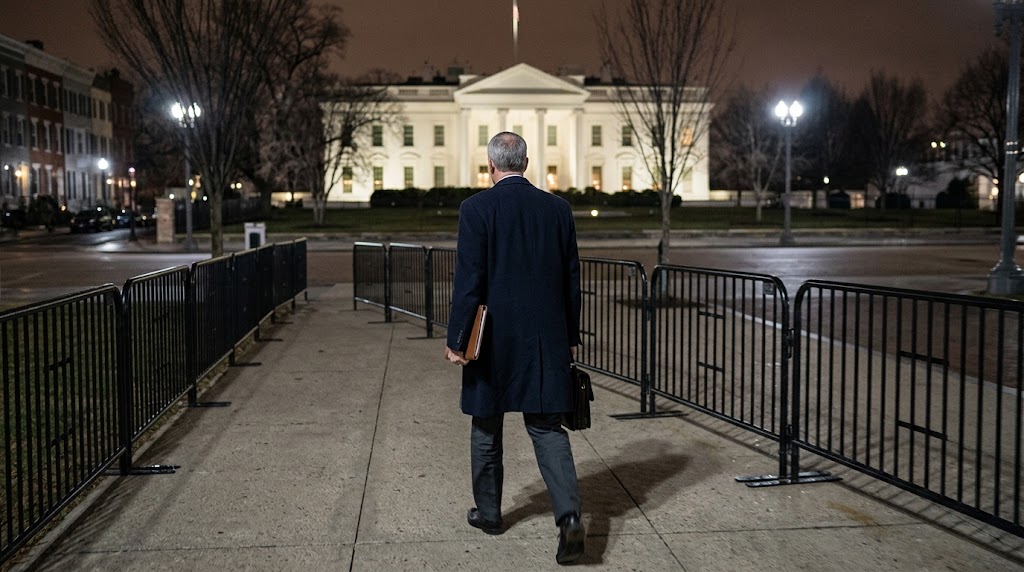
Less than a month into Donald Trump's presidency, one of the most important members of his national-security team was already gone.
National Security Adviser Michael Flynn resigned on February 13, 2017, after acknowledging that he had provided Vice President Mike Pence and others with incomplete information about his conversations with Russian Ambassador Sergey Kislyak.
Flynn had served as national security adviser for just 24 days.
His abrupt departure was an extraordinary early disruption for a new administration and immediately raised questions about how the White House had handled one of the most sensitive positions in the federal government.
The Calls With Russia
The controversy centered on telephone conversations Flynn had with Kislyak during the presidential transition.
The conversations occurred in December 2016, before Trump took office, at a time when the Obama administration was imposing new sanctions on Russia in response to Russian interference in the 2016 election.
Flynn initially gave senior administration officials an incomplete account of those conversations.
That became particularly consequential because Pence subsequently appeared publicly and said Flynn had told him the discussions did not involve sanctions.
The White House would later say that the problem was ultimately one of trust: Flynn had misled the vice president and others about what had occurred.
The Justice Department Had Warned the White House
The situation became even more serious because senior Justice Department officials had already raised concerns with the White House.
Acting Attorney General Sally Yates informed White House Counsel Don McGahn in late January about problems involving Flynn's statements concerning his conversations with Kislyak.
The White House therefore knew there were questions surrounding Flynn well before his resignation became public.
According to the White House's later account, officials spent the following days reviewing the situation and discussing it with Flynn.
During that period, Flynn remained the president's national security adviser — a position that placed him at the center of highly classified information and some of the government's most sensitive national-security decisions.
Flynn Admits Giving Pence Incomplete Information
On February 13, the controversy finally ended Flynn's brief tenure.
In his resignation letter, Flynn acknowledged that the rapid pace of the transition had led him to provide Pence and others with incomplete information regarding his conversations with the Russian ambassador.
He said he had apologized to Trump and Pence.
Then he resigned.
The following day, White House Press Secretary Sean Spicer said the administration's concern was ultimately not simply the underlying telephone conversations.
It was trust.
According to Spicer, Trump's confidence in Flynn had deteriorated because Flynn had misled Pence and others, or potentially failed to remember important details about the conversations.
For a national security adviser — an official expected to provide the president with accurate information on matters involving war, terrorism, intelligence and foreign governments — that loss of trust was consequential.
An Administration Already in Turmoil
The timing made Flynn's departure particularly striking.
Trump had been president for barely three weeks.
The administration was already dealing with nationwide protests and litigation over its travel ban, which had been blocked in federal court.
Now Trump's national security adviser was resigning amid controversy involving communications with a senior Russian diplomat.
It was an unusually turbulent beginning for a new presidential administration.
The episode also raised questions about why Flynn had remained in such a sensitive position after the Justice Department first alerted the White House.
Those questions would not disappear with his resignation.
The Flynn Story Was Just Beginning
Flynn's departure ultimately became only the first chapter of a much larger legal and political controversy.
Later in 2017, Flynn pleaded guilty to making false statements to the FBI about his conversations with Kislyak. He subsequently sought to withdraw that plea, the Justice Department later moved to dismiss the case, and Trump pardoned Flynn in November 2020.
Those later developments would generate years of disputes over the FBI investigation, the Justice Department's conduct and Flynn's treatment.
But none of that changes the basic events of February 2017.
Trump entered the White House with Flynn occupying one of the most powerful national-security positions in the country.
Twenty-four days later, Flynn was gone.
And the administration's own explanation was that the president could no longer trust his national security adviser after Flynn gave the vice president and other officials incomplete information about his contacts with Russia.