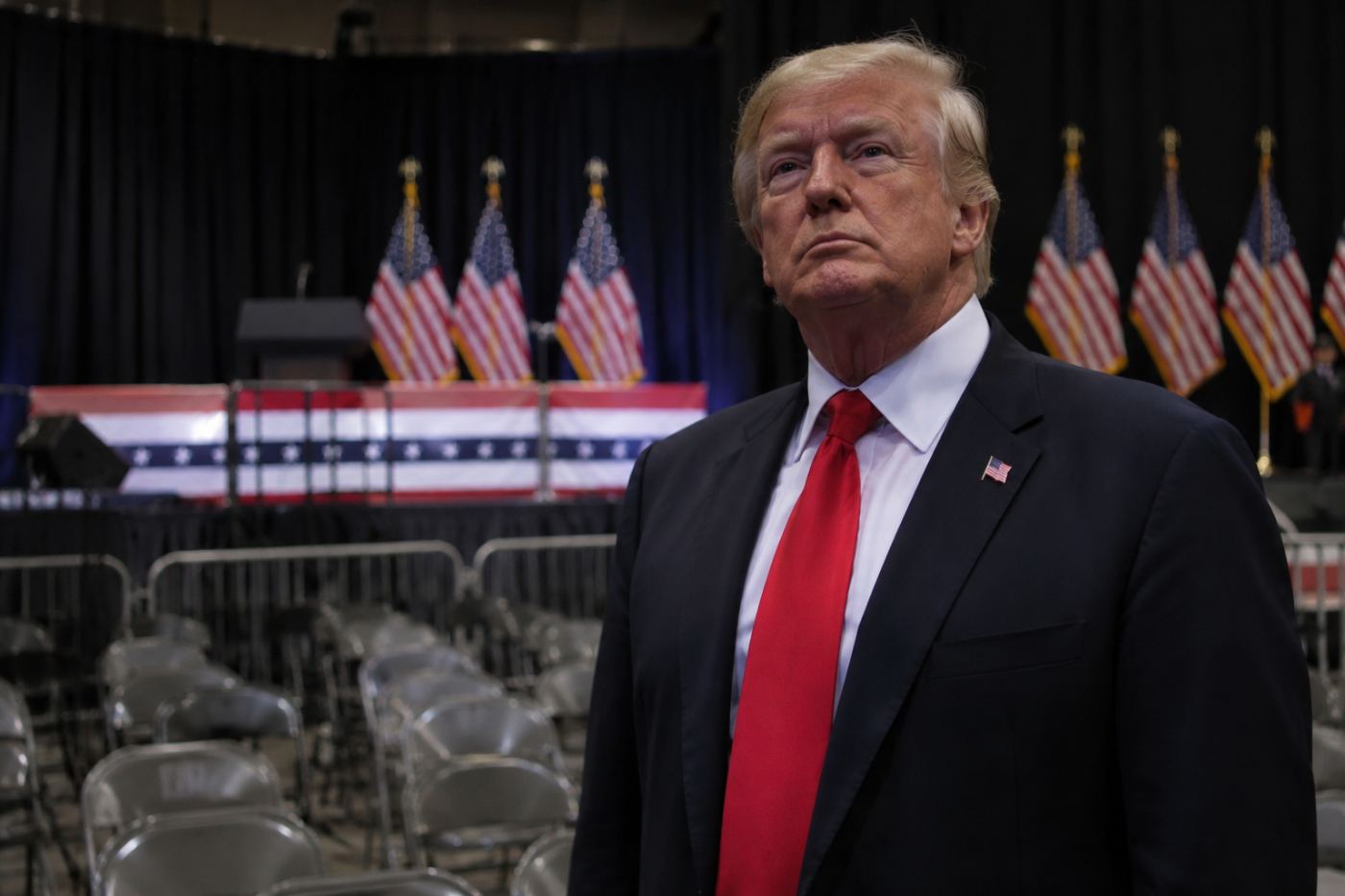
President Donald Trump spent the final weeks of the 2026 midterm campaign urging Americans to vote as though his name appeared on the ballot. On November 3, voters delivered their answer, handing Republicans sweeping defeats and returning control of both chambers of Congress to Democrats.
The results have triggered a reckoning within the Republican Party, raising questions about Trump's political influence, the future of his MAGA movement, and whether Republicans can rebuild their electoral coalition before the 2028 presidential election.
After nearly a decade of Trump's dominance over Republican politics, the party now confronts the consequences of an election in which his leadership became a central issue.
A Referendum Trump Invited
Trump personally embraced the midterms as a test of his presidency, campaigning extensively for Republican candidates and encouraging supporters to treat the election as a referendum on him.
That strategy carried considerable risks.
According to USA TODAY, Republicans lost competitive races across the country, including contests in traditionally conservative territory. Democrats captured both the House and Senate, ending the Republican governing trifecta that had enabled Trump to advance much of his second-term agenda.
Republican pollster Frank Luntz reported that voters participating in his research expressed widespread frustration over affordability and the administration's failure to deliver promised economic improvements.
The message extended beyond traditional Democratic constituencies.
Republicans also struggled with voters who had supported Trump in 2024 but had become dissatisfied with rising costs and the administration's priorities.
The Economy Became Trump's Liability
Trump returned to the White House promising economic prosperity, lower prices, and relief for American families.
Instead, voters entered the midterms confronting persistent inflation, expensive groceries, higher fuel costs, and economic uncertainty associated with the administration's tariffs and war with Iran.
Exit polling reported by USA TODAY found that nearly nine in ten voters considered the cost of living a crucial or major factor in their decisions.
By a margin of 65% to 28%, voters said Trump had made economic conditions worse rather than better.
The administration's focus on major Washington construction projects, including a new White House ballroom and a proposed triumphal arch, also became a political issue as families struggled with everyday expenses.
Republicans Begin Questioning Their Loyalty
For years, Republican candidates treated Trump's endorsement as a valuable political asset, while public criticism of the president frequently carried consequences within the party.
The midterms have complicated that relationship.
Republicans now face competing pressures from Trump's loyal supporters and voters who rejected his administration's policies.
Vice President JD Vance publicly identified the Iran war as a major reason for the party's losses, while other Republicans have questioned the administration's economic priorities.
The debate reaches beyond individual policies. Republicans must decide whether their future identity remains centered on Trump or whether a different approach can appeal to voters who have moved away from the party.
A Democratic Congress Changes Everything
The election also creates significant obstacles for Trump's remaining two years in office.
Democratic control of Congress means the administration will face expanded oversight, congressional investigations, and potential subpoenas examining executive actions and government spending.
Trump retains his presidential veto authority, and Democrats will still need to negotiate with Republicans to advance legislation requiring presidential approval.
Nevertheless, the president will no longer enjoy the same congressional support that characterized the first half of his second term.
The MAGA Movement Faces Its Next Test
Trump remains an influential figure among Republican voters, and one election cannot determine the long-term future of his political movement.
But the scale of the November 3 losses has exposed tensions that Republicans can no longer easily ignore.
The party must confront questions about its economic message, its approach to foreign conflicts, and its dependence on a president who cannot seek another elected term under the Constitution's current presidential term limits.
For years, Trump's political identity and the Republican Party's direction have been closely intertwined.
The 2026 midterms have made the consequences of that relationship impossible to overlook.
As Republicans begin preparing for 2028, their challenge is no longer simply defending Trump's presidency. It is determining what their party will stand for after he leaves office.