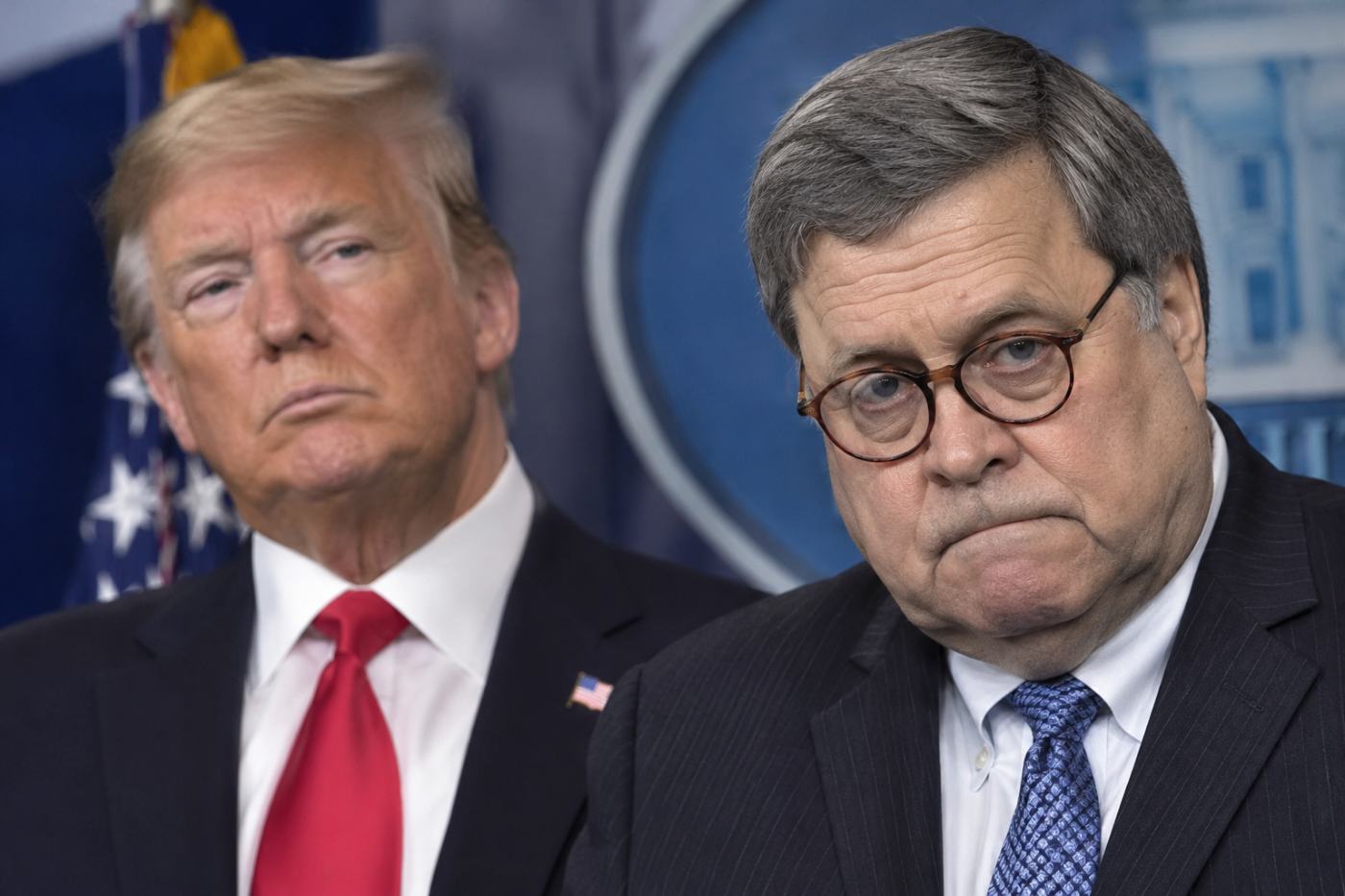
Just two days after Joe Biden was declared the projected winner of the 2020 presidential election, Attorney General William Barr took an extraordinary step that threatened to draw the United States Department of Justice into President Donald Trump's campaign to challenge the election results.
On November 9, Barr issued a memorandum authorizing federal prosecutors to investigate substantial allegations of voting irregularities before states officially certified their election results. The directive departed from longstanding Justice Department guidance intended to prevent federal investigations from interfering with elections.
The announcement came as Trump refused to acknowledge his defeat and continued making sweeping accusations of widespread voter fraud without presenting credible evidence to support them.
Barr's decision immediately raised concerns about whether the Justice Department, traditionally expected to operate independently of partisan political interests, was being drawn into Trump's efforts to contest the election.
A Departure From Established Policy
For years, Justice Department guidance generally discouraged prosecutors from conducting overt investigations into alleged election fraud until after election results were certified.
The reasoning was straightforward: Federal law enforcement investigations conducted during the counting and certification process could influence public confidence, disrupt election administration, or create the appearance of government interference.
Barr's memorandum changed that approach.
Under the new directive, federal prosecutors could pursue certain allegations before certification if the suspected irregularities, if proven, could potentially affect the outcome of a federal election in a particular state.
Barr insisted that investigations should not be based on speculative or unsupported allegations. He also acknowledged that the department had not concluded that voting irregularities affected any election outcome.
Nevertheless, the timing of his announcement was significant.
Trump and his political allies were already advancing allegations of widespread fraud in several battleground states, despite election officials finding no evidence supporting claims of fraud sufficient to overturn the results.
A Senior Justice Department Official Steps Down
The backlash inside the Justice Department was immediate.
Richard Pilger, director of the department's Election Crimes Branch, resigned from that leadership position within hours of Barr's announcement.
Pilger, a career Justice Department attorney responsible for overseeing election-related criminal investigations, cited the new policy and its implications in explaining his decision.
He did not leave the Justice Department entirely, instead returning to another position within its Public Integrity Section.
His departure underscored the seriousness of the internal disagreement over Barr's decision.
According to reporting by The Washington Post, senior officials within the department's Criminal Division had previously resisted proposals to loosen restrictions on election investigations.
Some were reportedly surprised when Barr issued the memorandum.
The Justice Department Under Political Pressure
The controversy raised a fundamental question about the independence of federal law enforcement.
Trump was publicly challenging an election he had lost, while his attorney general was authorizing investigative steps that could lend additional attention and apparent legitimacy to allegations that remained unsubstantiated.
Supporters of Barr's decision argued that prosecutors should not be prevented from investigating credible evidence of serious election misconduct simply because certification had not occurred.
Critics countered that the directive risked allowing the federal government's investigative authority to amplify politically motivated accusations during an exceptionally sensitive period.
The distinction mattered. Investigating credible evidence of a crime is a legitimate Justice Department responsibility. Using the possibility of an investigation to cast doubt on an election without supporting evidence presents a different concern.
As November 9 draws to a close, Trump continues refusing to concede, his allies continue challenging election results, and the Justice Department faces growing scrutiny over whether its independence can withstand the political pressure surrounding the presidential transition.