The latest jobs report delivered another unwelcome reality check for President Donald Trump’s claims about the strength of the American economy.
The United States added just 29,000 jobs in September, according to the Bureau of Labor Statistics, dramatically below the roughly 90,000 economists surveyed by Reuters had expected.
Even worse, the government went back and revised the previous two months — and both revisions went in the wrong direction.
July, originally reported as a gain of 21,000 jobs, was revised to a loss of 10,000 jobs.
August was cut from 162,000 jobs to 133,000.
Together, those revisions erased another 60,000 jobs from the previous estimates.
For an administration that has repeatedly portrayed its economic program as producing extraordinary prosperity, the numbers are becoming increasingly difficult to square with the rhetoric.
Job Creation Is Running Out of Steam
September's 29,000 jobs weren't simply a disappointing month.
The Bureau of Labor Statistics reports that employers have added an average of only 45,000 jobs per month over the past year.
The unemployment rate also edged higher, from 4.1% to 4.2%, while wage growth slowed. Average hourly earnings increased just 0.1% during September and 3.0% over the previous 12 months.
There is an important distinction: America is not experiencing a massive wave of layoffs. Unemployment claims remain historically low, and businesses appear reluctant to fire workers on a large scale.
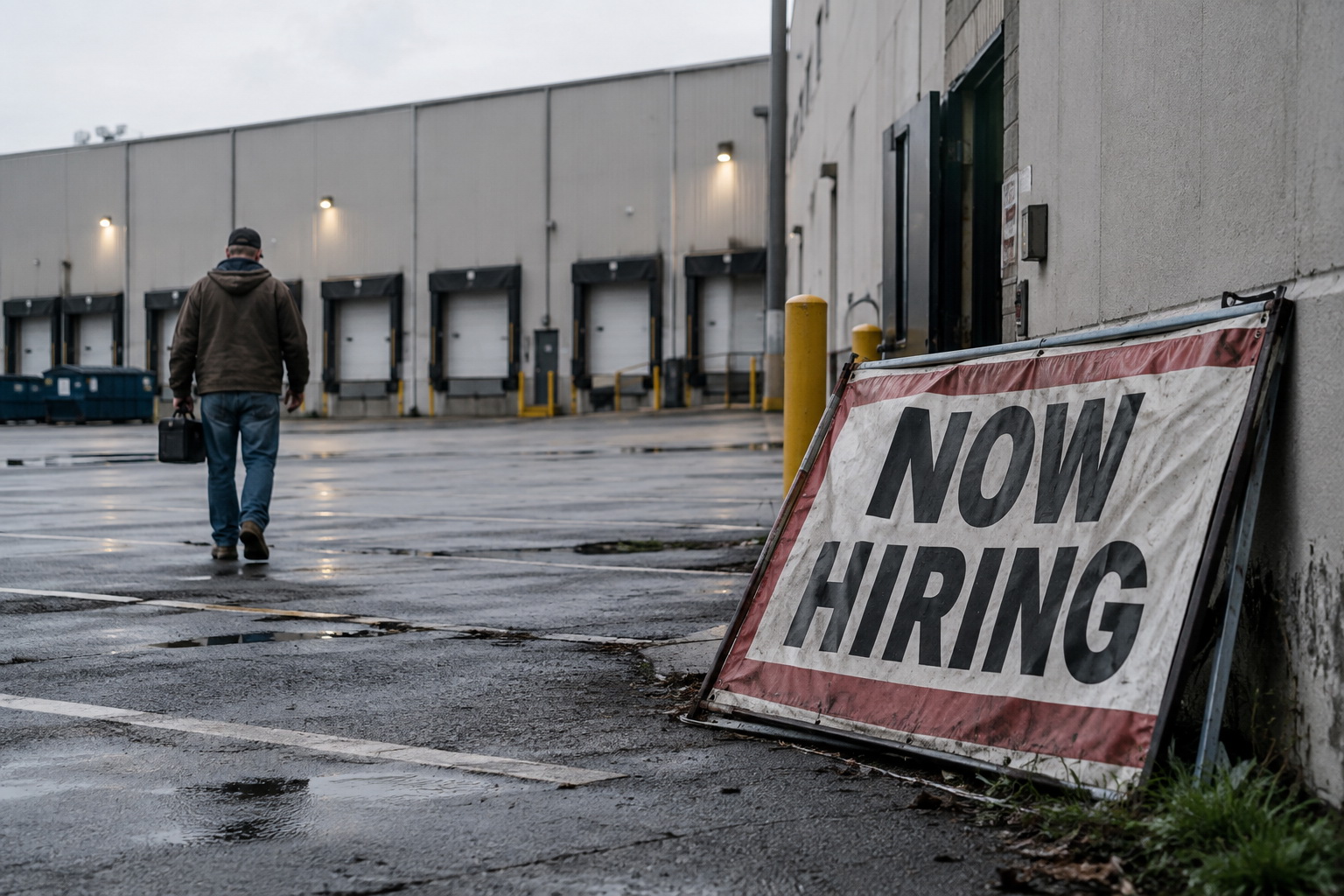
Instead, the problem increasingly appears to be hiring.
Businesses are holding onto many of the employees they already have while becoming considerably more cautious about adding new ones.
That is hardly the booming jobs economy Trump continues to describe.
Trump’s Policies Are Part of the Economic Debate
A president does not control every movement in employment, and no single policy can reasonably be blamed for one month's jobs report.
But Trump's economic policies cannot be separated from the environment businesses are operating in.
His administration has continued to rely heavily on tariffs, increasing costs and uncertainty for companies dependent on imported materials and international supply chains. At the same time, Trump's aggressive immigration crackdown has reduced the availability of workers in industries that have traditionally relied heavily on immigrant labor.
The effects have become visible in some places.
Reuters reported last week that immigration enforcement in southwest Kansas disrupted meatpacking operations as workers stayed home, forcing some beef processors to slow production.
Trump's tariffs have also remained a source of uncertainty for American companies, even as portions of his tariff program have faced repeated legal challenges.
These policies don't prove that Trump personally caused September's 29,000-job number. But they are part of the economic landscape in which businesses are deciding whether to invest, expand and hire.
And those businesses are suddenly doing very little hiring.
The Revisions May Be the Bigger Warning
Perhaps the most disturbing part of Friday's report isn't September.
It's July.
The initial report suggested that employers had created 21,000 jobs that month. After additional data arrived, the government now estimates that the economy actually lost 10,000 jobs.
That matters because revisions can reveal weakness that wasn't apparent when the original numbers were released.
July and August together now contained 60,000 fewer jobs than previously believed.
Instead of a single bad September report, the revised numbers paint a picture of a labor market that has been struggling for several months.
Trump Says the Economy Is Better Than Ever
Just two days before the jobs report, Trump acknowledged that he had done what he called a “very bad job” explaining his economic record while simultaneously insisting that the country was performing extraordinarily well.
The problem may not simply be the sales pitch.
Consumer confidence plunged in September, Americans continue to face affordability pressures, and now the government's employment numbers show hiring slowing dramatically.
Trump can continue arguing that his tariffs, immigration policies and broader economic agenda will eventually produce stronger growth.
But presidents also have to own the economy they actually have.
And right now, the numbers show an economy that added just 29,000 jobs in September, saw unemployment rise to 4.2%, suffered substantial downward revisions to previous job estimates and actually lost jobs in July.
That's not an economic boom.
It's a warning sign.