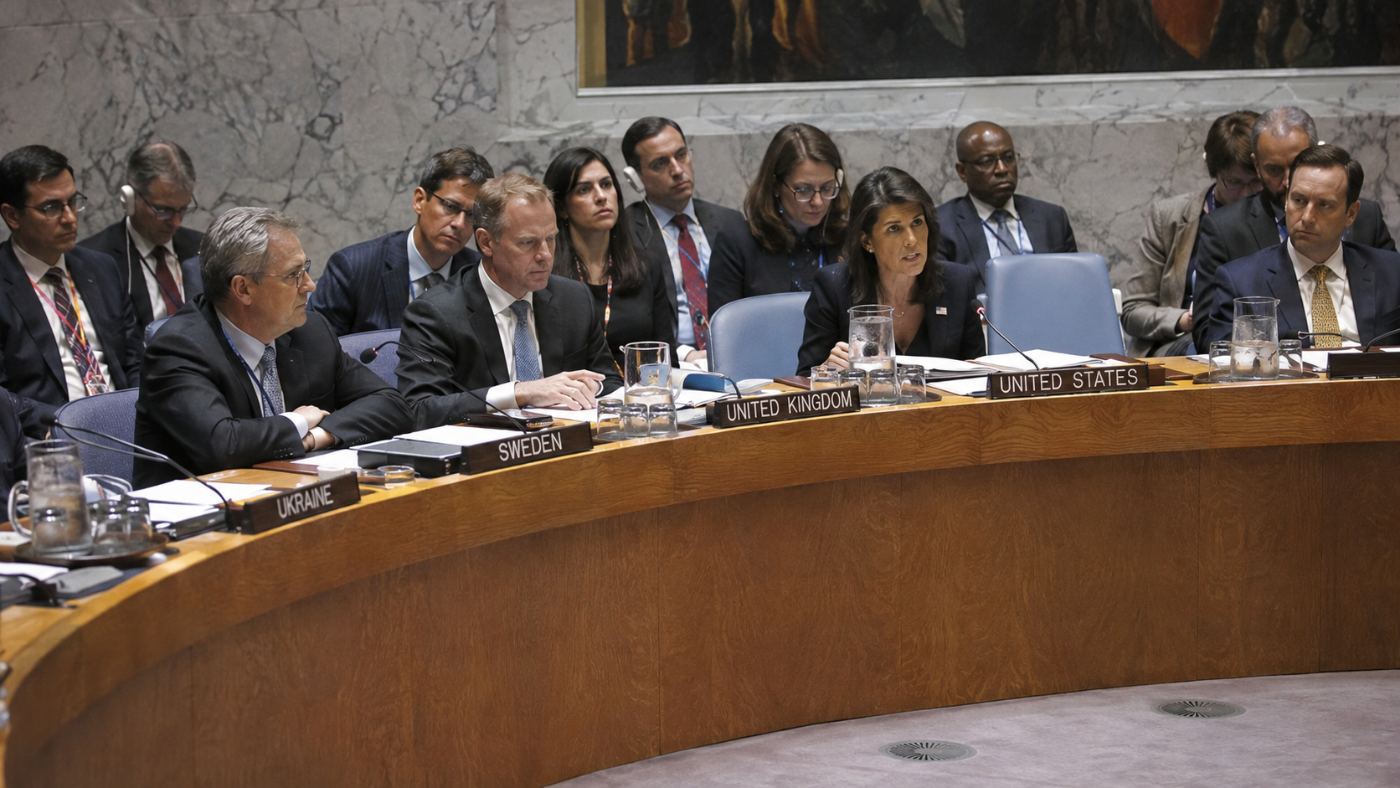
On December 8, 2017, President Donald Trump's decision to recognize Jerusalem as Israel's capital triggered an extraordinary confrontation at the United Nations, where some of America's closest allies publicly challenged his administration's foreign policy.
An emergency meeting of the UN Security Council brought together diplomats from around the world to address the consequences of Trump's announcement two days earlier.
Britain, France, Sweden, Italy, and other nations warned that the decision threatened peace negotiations and risked escalating violence in the Middle East.
American Allies Challenge Washington
Eight Security Council members requested the emergency session: Britain, France, Italy, Sweden, Egypt, Senegal, Bolivia, and Uruguay.
Their concerns centered on Trump's unilateral recognition of Jerusalem, whose final political status had long been considered a matter for negotiations between Israelis and Palestinians.
European diplomats argued that the announcement contradicted established international agreements and risked undermining prospects for a two-state solution.
Britain, France, Germany, Sweden, and Italy issued a joint statement criticizing the decision as harmful to peace efforts.
The disagreement was particularly significant because several of these governments were longstanding American diplomatic partners.
Rather than building an international coalition around his policy, Trump faced public opposition from countries normally aligned with Washington.
Nikki Haley Defends Trump
U.S. Ambassador Nikki Haley defended the administration during the Security Council meeting.
She argued that Jerusalem was already Israel's seat of government and that acknowledging this reality did not prevent future negotiations.
Haley maintained that the United States had not determined Jerusalem's final borders or the boundaries of Israeli sovereignty.
She also accused the United Nations of demonstrating persistent bias against Israel.
But Palestinian representatives rejected Washington's assurances.
Palestinian Ambassador Riyad Mansour argued that Trump's decision compromised America's credibility as a mediator between Israelis and Palestinians.
The disagreement exposed a fundamental diplomatic problem: Palestinian leaders no longer trusted Washington to serve as an impartial negotiating partner.
UN Officials Warn of Escalating Violence
UN Middle East envoy Nickolay Mladenov warned that the announcement had intensified anger and instability.
Demonstrations had already erupted across Palestinian territories, with protesters clashing with Israeli security forces.
During December 8 protests, Palestinians were killed and others injured as unrest spread through Gaza and the West Bank.
Mladenov urged restraint and warned against unilateral actions that could further undermine prospects for peace.
The international organization maintained that Jerusalem's status should be resolved through negotiations rather than unilateral recognition.
Israel Welcomes the Decision
Israeli Prime Minister Benjamin Netanyahu strongly supported Trump's announcement.
Israeli officials argued that Jerusalem had long functioned as the country's capital and that American recognition acknowledged an established political reality.
Supporters also pointed to a 1995 American law calling for the U.S. embassy to relocate to Jerusalem.
Trump's administration insisted that its decision could help advance peace by acknowledging longstanding realities.
However, critics questioned how Washington could facilitate negotiations when Palestinian leaders believed the United States had prejudged one of the conflict's most sensitive issues.
International Opposition Intensifies
The December 8 meeting did not produce a Security Council resolution.
But the diplomatic confrontation continued.
On December 18, the United States vetoed a Security Council resolution opposing unilateral changes to Jerusalem's status. All 14 other members supported the measure.
Three days later, the UN General Assembly voted 128 to nine in favor of a resolution rejecting actions intended to alter Jerusalem's status, with 35 abstentions.
The votes demonstrated the breadth of international opposition to Trump's policy.
December 8, 2017, marked a significant diplomatic confrontation for the Trump administration. Just two days after announcing a major foreign-policy shift, the president faced public opposition from longstanding American allies, criticism from Palestinian leaders, and warnings from the United Nations that his decision could further destabilize the region.