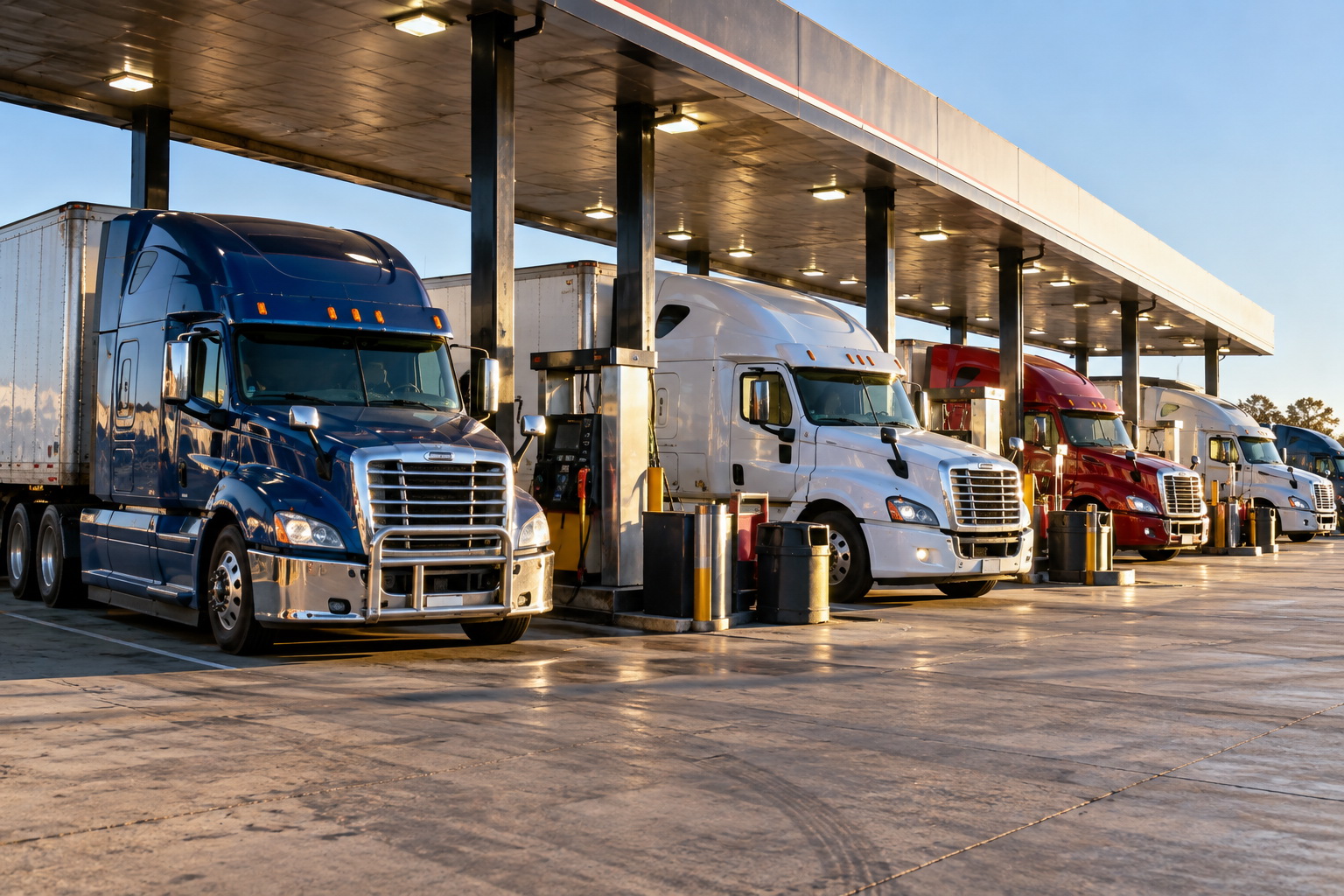
The economic consequences of President Donald Trump’s war with Iran are increasingly showing up in a place that affects virtually everything Americans buy: diesel fuel.
The national average price of diesel reached $6.53 per gallon in September, nearly twice what Americans were paying a year ago.
And unlike gasoline, diesel doesn't just determine what it costs to fill up a personal vehicle.
Diesel moves America.
It powers the trucks carrying groceries to supermarkets, tractors harvesting crops, construction equipment building homes and highways, delivery vehicles bringing packages to doorsteps and much of the machinery that keeps the American economy running.
When diesel becomes dramatically more expensive, those costs don't stay at the truck stop.
They move through the economy.
Diesel Hits Record Territory
According to the U.S. Energy Information Administration, the national average for on-highway diesel reached $6.529 per gallon on September 21.
A year earlier, it was $3.749.
California drivers are experiencing an even larger shock. The state's average reached $8.246 per gallon.
The problem isn't simply the price of crude oil.
The EIA says global supplies of diesel and other distillate fuels have tightened because of reduced refining activity in the Middle East, Russia and China.
The Iran war has become an important part of that disruption.
The Strait of Hormuz Problem
The Strait of Hormuz is one of the world's most important energy corridors.
The ongoing war has severely disrupted traffic through the waterway, restricting petroleum supplies from major Middle Eastern producers.
That matters because the United States participates in a global petroleum market. When supplies disappear elsewhere, buyers compete for the remaining fuel.
American diesel suddenly becomes more valuable overseas.
That creates another problem.
Higher international prices encourage U.S. refiners to export diesel at the same time American inventories are already dangerously low.
America Is Burning Through Its Diesel Reserves
The numbers inside America's storage tanks may be even more concerning than the numbers displayed on gas-station signs.
U.S. diesel inventories fell to approximately 107.9 million barrels by September 11.
According to Reuters, that was the lowest inventory level for that time of year since government records began in 1982.
The Energy Information Administration expects inventories to fall below 100 million barrels and remain below the recent five-year range through the end of 2026 and much of 2027.
That leaves the country with considerably less cushion if another refinery shuts down, another supply route is disrupted or the war expands.
And winter is approaching.
Farmers Are Getting Hammered
Few industries depend on diesel more heavily than agriculture.
Farmers use diesel-powered tractors, combines, trucks, irrigation equipment and other heavy machinery.
The timing couldn't be much worse.
Fall harvest season increases agricultural diesel demand just as refineries traditionally conduct maintenance and heating-oil demand begins increasing.
That means farmers are entering one of their most fuel-intensive periods while diesel inventories are historically low and prices are historically high.
Those costs eventually have to go somewhere.
Some will be absorbed by farmers.
Some will be passed through processors and distributors.
And some may eventually appear on supermarket shelves.
Trucking Costs Don't Stay With Truckers
Virtually everything inside an American store traveled on a diesel-powered truck at some point.
Food.
Clothing.
Furniture.
Electronics.
Construction materials.
Medicine.
Consumer products.
When trucking companies spend substantially more on fuel, transportation becomes more expensive.
Those costs can ultimately work their way into the prices consumers pay.
That is why the diesel crisis potentially matters far beyond people who personally own diesel vehicles.
You don't have to buy diesel to pay for expensive diesel.
Even Food Banks Are Feeling It
The effects are already reaching organizations trying to help Americans struggling with high prices.
The Atlanta Community Food Bank reportedly expects higher diesel prices to add roughly $100,000 to its costs.
The organization says that money represents approximately 122,000 meals that could otherwise have gone to families.
Food banks face the problem twice: they pay transportation costs to receive food and then pay again to distribute it.
The same basic economic pressure exists throughout America's supply chain.
The White House Has Few Easy Options
The crisis has prompted calls from some Republicans for the Trump administration to temporarily ban U.S. diesel exports.
The idea sounds straightforward: if diesel is expensive and supplies are low, keep American-produced diesel in America.
But Energy Secretary Chris Wright has warned that an export ban could backfire.
American refineries produce multiple petroleum products simultaneously. If refiners cannot export excess diesel, storage constraints could eventually force them to reduce refinery operations — potentially affecting gasoline and jet-fuel production as well.
In other words, there may be no simple switch the White House can flip to bring diesel prices back down.
This Isn't Just About the Pump
The Iran war's economic consequences are becoming increasingly difficult to separate from everyday American life.
The United States entered 2026 with diesel inventories already vulnerable to disruptions in the global refining system.
The war in Iran, restrictions around the Strait of Hormuz and disruptions to Russian refining caused by the war in Ukraine have combined to make an already tight market considerably tighter.
Now diesel inventories are at historic seasonal lows.
Prices have reached record territory.
Farmers are paying more.
Truckers are paying more.
Food banks are paying more.
And ultimately, consumers may pay more.
For months, Americans have watched the Iran war largely through images of missiles, ships and military operations thousands of miles away.
But one of its most consequential battlefields may turn out to be much closer to home.
It's the diesel pump.
And the price displayed there doesn't end at the gas station.