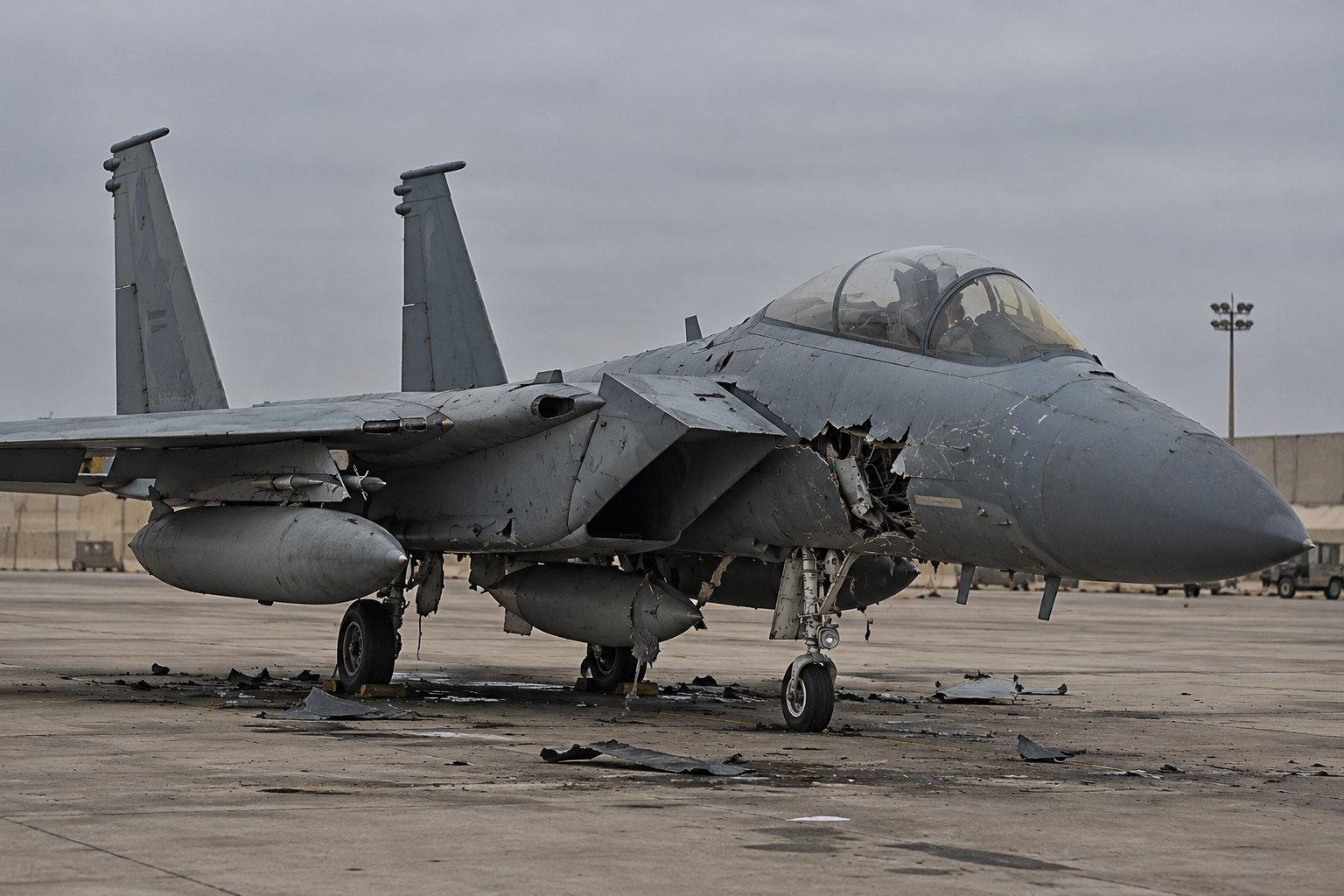
A new congressional accounting exposes the staggering military toll of Donald Trump's war with Iran: 81 American aircraft damaged or destroyed, billions in equipment losses, and at least 18 U.S. service members dead. Eight months into the conflict, the costs continue to mount.
President Donald Trump's war with Iran is proving far more expensive, destructive, and prolonged than the administration's rhetoric would suggest.
A new accounting from the nonpartisan Congressional Research Service reveals that at least 81 American military aircraft have been damaged or destroyed since the United States launched its military campaign against Iran on February 28, 2026.
The aircraft losses alone represent billions of dollars in military equipment, while the broader conflict has already consumed tens of billions in taxpayer money.
And the war is far from over.
81 Aircraft Damaged or Destroyed
The congressional findings paint a troubling picture of the damage inflicted on American military aviation.
Among the aircraft identified are:
- 45 MQ-9 Reaper drones destroyed, each valued at approximately $30 million to $50 million.
- 12 F-15E Strike Eagle fighter jets damaged or destroyed, including aircraft lost to friendly fire and Iranian attacks.
- Seven KC-135 Stratotanker refueling aircraft damaged or lost.
- One F-35A Lightning II stealth fighter damaged, representing one of America's most advanced combat aircraft.
- One MQ-4C Triton surveillance drone lost in a mishap, an aircraft valued at approximately $240 million.
These losses include aircraft destroyed outright, others damaged and subsequently repaired, and equipment lost through accidents or friendly fire.
The distinction matters, but it does not erase the extraordinary scale of the damage.
In May, a previous congressional assessment identified as many as 42 aircraft damaged or destroyed. The latest figure of 81 represents a near doubling in less than five months.
For an administration that has repeatedly portrayed its military campaign as an overwhelming success, the expanding inventory of losses tells a considerably more complicated story.
Billions of Dollars in Military Equipment Gone
The financial consequences are enormous.
According to reporting on the congressional findings, the estimated cost associated with damaged and destroyed aircraft could reach approximately $3.3 billion.
That is just the aviation component of the war.
The Pentagon has reported spending approximately $37.5 billion on the conflict, although other accounting figures and independent assessments have raised questions about the full cost.
These expenditures come at a time when Americans continue to struggle with rising living expenses, energy costs, and pressure on household budgets.
Billions of dollars that could have supported domestic priorities are instead being consumed by a war with no clearly established conclusion.
And the financial damage does not stop when an aircraft is destroyed.
Replacing advanced military equipment can take years. Lost aircraft must be replaced, damaged aircraft repaired, munitions replenished, and military units restored to operational readiness.
The consequences may extend well beyond the eventual end of the fighting.
American Fighter Jets Lost to Friendly Fire
Not every American aircraft was brought down by Iran.
Three F-15E Strike Eagles were shot down during a friendly-fire incident involving Kuwaiti forces in March.
Other aircraft have been lost in accidents or damaged while operating from American military installations across the region.
In September, Iranian attacks on Muwaffaq Salti Air Base in Jordan damaged eight additional F-15E fighters. Those aircraft reportedly returned to service following repairs.
The incidents demonstrate that even an overwhelmingly powerful military remains vulnerable to operational mistakes, defensive failures, and retaliatory attacks.
They also raise questions about how effectively American aircraft and personnel have been protected during the campaign.
At Least 18 Americans Have Died
Behind the financial figures and aircraft inventories is a far more consequential cost: American lives.
At least 18 U.S. service members have died during the conflict, according to reporting on the latest congressional assessment.
Other American troops have suffered injuries, including wounds from Iranian missile and drone attacks against military facilities.
These are not abstract statistics.
They represent American service members sent into a war authorized by the president, families facing devastating losses, and wounded personnel who may live with the consequences for decades.
No amount of military spending can replace those lives.
And every additional month of fighting exposes more American personnel to danger.
The Drone Losses Are Particularly Alarming
Perhaps the most striking finding involves America's MQ-9 Reaper fleet.
The report identifies 45 Reaper drones destroyed during the conflict.
These sophisticated aircraft provide intelligence, surveillance, reconnaissance, and precision-strike capabilities.
They are expensive to manufacture and cannot necessarily be replaced as quickly as they are lost.
Earlier reporting indicated that the Air Force's usable Reaper inventory had already fallen significantly by May.
Losing dozens of these aircraft raises legitimate questions about how long the United States can sustain its current operational tempo without affecting military readiness elsewhere.
The United States maintains military commitments across the globe, including in Europe and the Indo-Pacific.
Every aircraft destroyed in the Middle East is one less available for another mission until replacement equipment becomes available.
A War Without a Clear End
Eight months after the conflict began, the Trump administration still faces fundamental questions.
What is the ultimate objective?
What conditions would constitute victory?
How much additional American military equipment will be sacrificed?
How many more American service members will be placed in danger?
And how much more will taxpayers be required to spend?
The United States possesses the world's most powerful military, but military superiority does not guarantee a quick victory or an affordable war.
The growing losses are evidence of that reality.
The American Public Deserves a Full Accounting
The latest congressional findings underscore the importance of independent oversight.
The Congressional Research Service assembled its assessment using Defense Department information, U.S. Central Command statements, and publicly available reporting.
The Pentagon has not provided a single comprehensive public inventory detailing every aircraft lost or damaged throughout the conflict.
That leaves Congress, journalists, and independent researchers working to assemble the broader picture.
Americans should not have to piece together the cost of a war from scattered reports.
They deserve a complete accounting of the lives lost, personnel wounded, aircraft destroyed, money spent, and strategic objectives achieved.
Donald Trump launched this war. His administration is responsible for explaining its objectives, defending its costs, and accounting for its consequences.
Eighty-one aircraft damaged or destroyed. Billions of dollars in military losses. At least 18 American service members dead.
Those are not the numbers of a conflict that can simply be dismissed as insignificant.
They are the mounting costs of a war that continues to demand American lives, American resources, and American accountability.