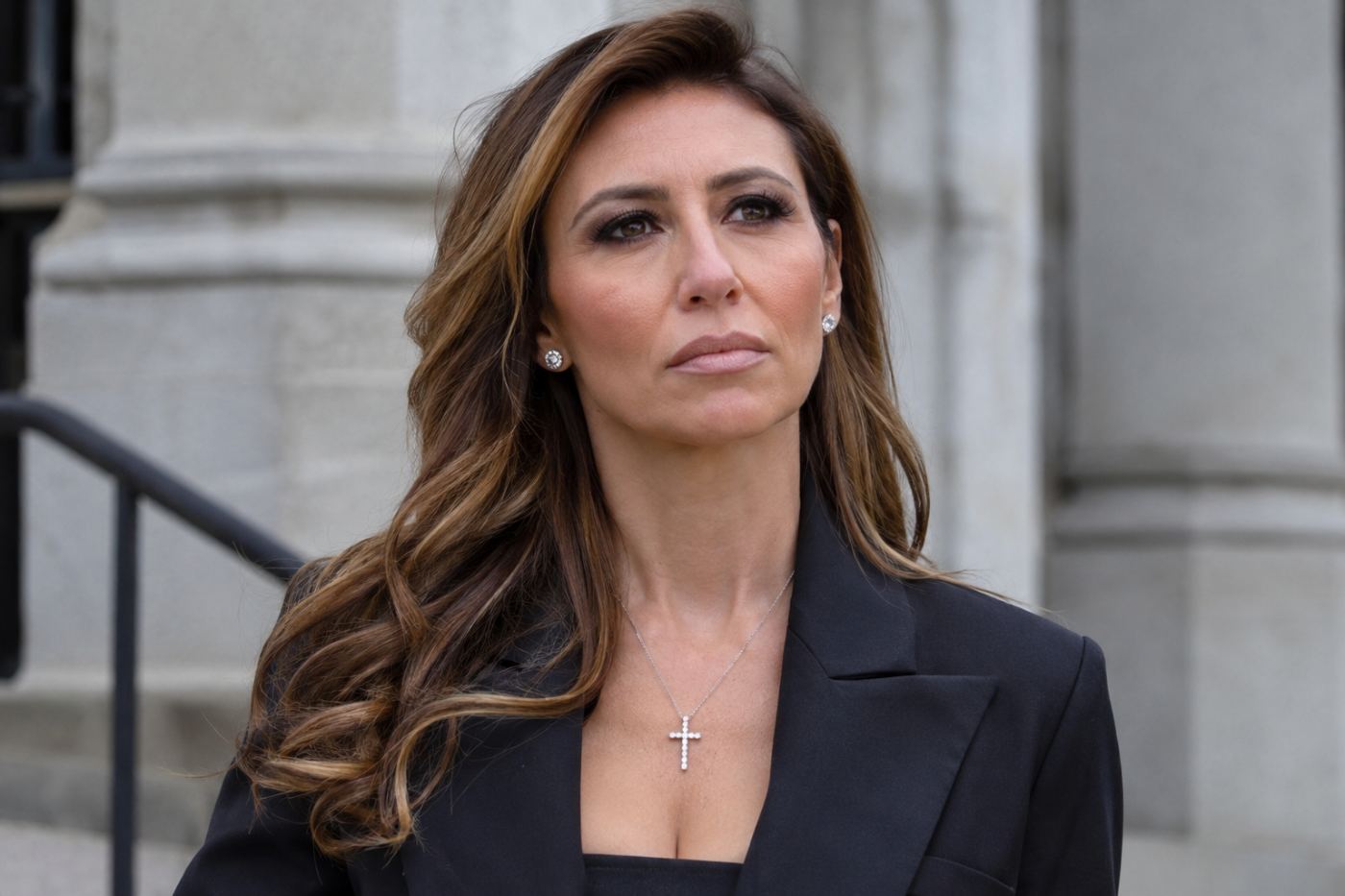
Donald Trump's former personal attorney Alina Habba is facing a professional ethics complaint that could cost her the right to practice law, following allegations that she manipulated a young sexual harassment complainant into accepting a settlement favorable to Trump's New Jersey golf club.
The New Jersey Supreme Court's Office of Attorney Ethics has accused Habba of serious professional misconduct stemming from her involvement in a 2021 sexual harassment dispute at Trump National Golf Club Bedminster.
At the center of the case is Alice Bianco, who was just 21 years old when she alleged that a manager at the club sexually harassed her.
According to the ethics complaint, Habba befriended Bianco, encouraged her to abandon her attorney, and helped arrange a $15,000 settlement that included a restrictive nondisclosure agreement.
The complaint alleges that Habba failed to disclose her financial relationship with the golf club while presenting herself as someone helping resolve the dispute.
A Young Employee, a Powerful Club, and a $15,000 Settlement
Bianco had accused her supervisor of sexual harassment while working at Trump's Bedminster property.
Rather than simply allowing the employee and her attorney to pursue the complaint, Habba allegedly inserted herself into the dispute.
Ethics investigators contend that Habba persuaded Bianco to stop working with her original lawyer and accept terms benefiting the golf club.
Those terms included a nondisclosure agreement despite New Jersey restrictions on confidentiality provisions in workplace harassment settlements.
The ethics complaint alleges that Habba's conduct deprived Bianco of important legal protections.
Habba has denied improperly representing either side, maintaining that she was acting as a neutral intermediary attempting to resolve the dispute.
But investigators have challenged that characterization, pointing to her relationship with the golf club and the circumstances surrounding the settlement.
The $400,000 Settlement That Followed
Bianco eventually retained attorney Nancy Erika Smith, who challenged the original agreement.
The resulting litigation produced a substantially larger settlement.
Bianco obtained an $82,500 settlement involving the golf club and later reached a separate $400,000 settlement with Habba over allegations surrounding the original agreement.
The contrast between the initial $15,000 agreement and the subsequent settlements has become a central feature of the controversy.
Smith has publicly called for Habba to be disbarred, arguing that the alleged conduct represented a particularly serious violation of an attorney's professional responsibilities.
The settlements themselves do not establish that Habba committed the ethical violations alleged in the disciplinary complaint.
Those allegations must still be evaluated through New Jersey's disciplinary process.
From Trump's Golf Club to Trump's Inner Circle
Shortly after her involvement in the original settlement, Habba became one of Trump's most recognizable personal attorneys.
She represented him in major civil litigation, including cases involving New York Attorney General Letitia James and writer E. Jean Carroll.
Her public profile grew as she became an outspoken defender of Trump in court appearances, television interviews, and political events.
Following Trump's return to the White House, Habba was appointed to serve as New Jersey's top federal prosecutor.
That appointment generated a separate legal controversy. In December 2025, a federal judge ruled that the administration's arrangement for keeping her in the position was unlawful.
Now, the latest ethics proceedings raise questions about conduct dating back to before she became a nationally prominent Trump ally.
The Allegations Go Beyond a Bad Settlement
The central issue is not simply whether Bianco received enough money.
Attorneys have professional obligations concerning conflicts of interest, disclosure, and the protection of people who may reasonably believe they are receiving legal advice.
The ethics complaint alleges that Habba violated those obligations by presenting herself as a neutral participant while helping negotiate terms favorable to the golf club.
For someone alleging workplace sexual harassment, the consequences of receiving misleading legal guidance can be substantial.
A restrictive settlement can affect a person's ability to speak publicly, pursue additional remedies, or challenge the circumstances surrounding an agreement.
Those concerns are particularly significant when the dispute involves a young employee and a business associated with one of the country's most powerful political figures.
Will Habba Face Consequences?
The New Jersey disciplinary process is not a criminal prosecution.
Habba has not been convicted of a crime in connection with these allegations, and the ethics complaint does not itself establish professional misconduct.
The case is expected to proceed through a disciplinary hearing process, with the New Jersey Supreme Court ultimately responsible for determining whether sanctions are warranted.
Possible outcomes include a reprimand, suspension, or disbarment.
Habba's attorney has emphasized that the complaint begins a lengthy process involving allegations about conduct from more than five years ago.
Nevertheless, the case places another prominent figure from Trump's legal and political circle under formal scrutiny.
The central question is whether a lawyer entrusted with protecting legal rights instead used her position to secure an agreement favorable to a powerful institution at the expense of a vulnerable employee.
That question deserves a full examination, regardless of Habba's political connections or her former client's position in the White House.
And this time, the decision will rest with New Jersey's attorney disciplinary authorities—not Donald Trump.