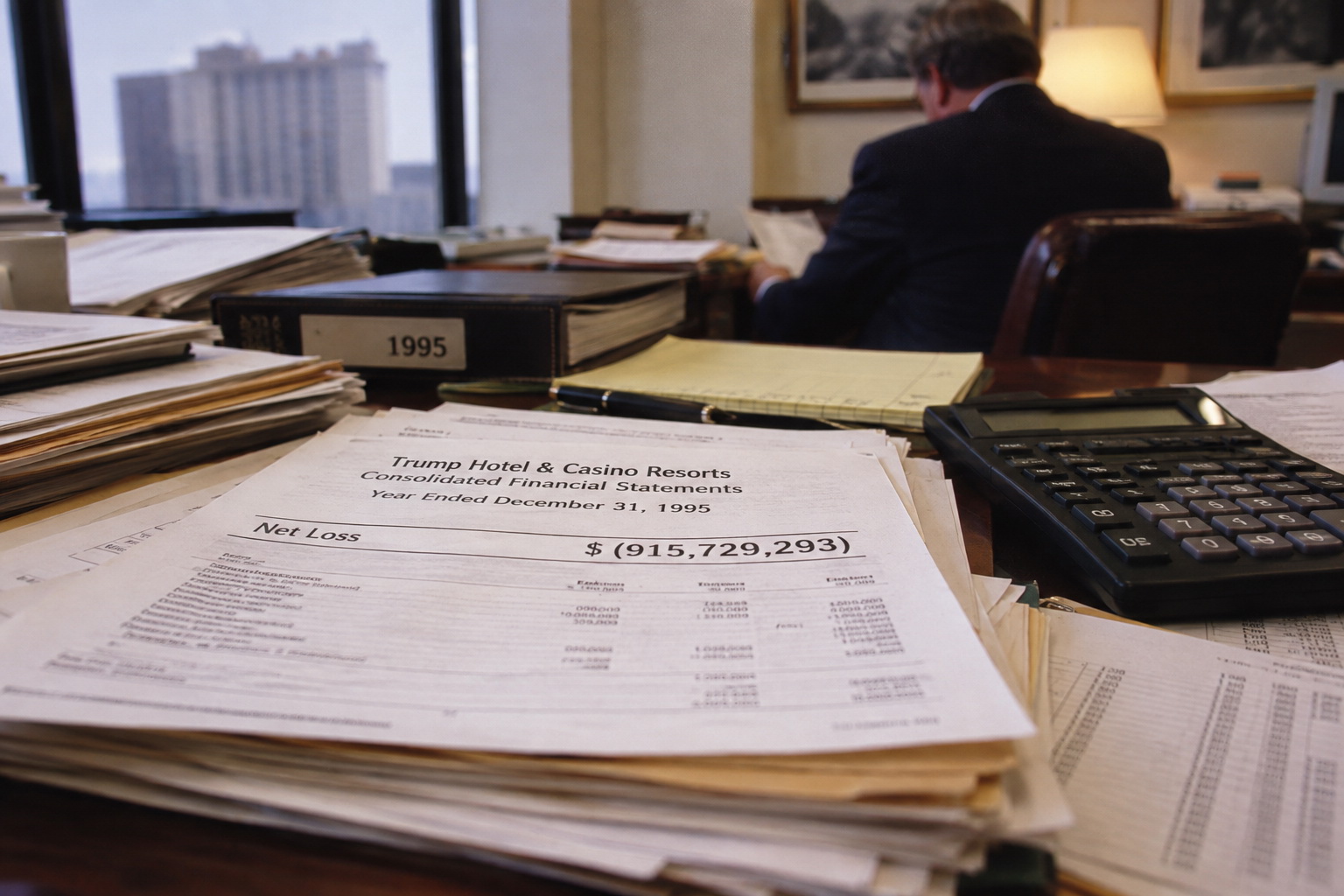
Just weeks before Americans went to the polls, a glimpse into Donald Trump’s long-hidden tax history raised a remarkable question: Had the billionaire businessman gone years without paying federal income taxes?
On October 1, 2016, The New York Times reported that portions of Trump’s 1995 tax records showed he had declared a staggering $915.7 million loss.
The size of that loss mattered for more than what it revealed about Trump’s business fortunes. Tax experts consulted by the newspaper said the loss was potentially large enough under tax rules then in effect to offset hundreds of millions of dollars in taxable income over subsequent years — potentially allowing Trump to legally avoid federal income taxes for as long as 18 years.
The revelation immediately became one of the biggest financial stories of the 2016 presidential campaign.
A Nearly $1 Billion Loss
Trump had built his presidential campaign in part around his reputation as an extraordinarily successful businessman.
The 1995 tax records complicated that image.
The loss followed a turbulent period for Trump’s businesses during the early 1990s, when his casino and real-estate empire experienced serious financial problems and several Trump-associated businesses went through bankruptcy proceedings.
Under the tax code, certain business losses could be used to offset taxable income in other years.
That meant Trump's enormous 1995 loss potentially had value long after the year in which it was reported.
The records released publicly did not establish exactly how much federal income tax Trump paid in each subsequent year. But tax experts said the size of the loss meant it could theoretically have sheltered taxable income for many years.
Trump Had Refused to Release His Returns
The disclosure was particularly significant because Trump had repeatedly declined to release his complete tax returns during the campaign.
Major-party presidential nominees had traditionally released tax information voluntarily, but Trump said he would not release his returns while they were under audit.
The partial 1995 records therefore offered voters a rare glimpse into finances Trump had kept private.
Trump’s campaign did not dispute the central figure reported from the records. Instead, it defended his use of the tax laws and emphasized that Trump had paid other forms of taxes, including property, real-estate, sales and employment-related taxes.
The campaign also criticized the manner in which the records had been obtained and published.
“That Makes Me Smart”
The tax issue had already surfaced days earlier during Trump’s first presidential debate with Hillary Clinton.
When Clinton suggested Trump may not have paid federal income taxes, Trump interjected:
“That makes me smart.”
After the October 1 disclosure, Trump and his allies increasingly presented his ability to minimize taxes as evidence of business sophistication rather than wrongdoing.
Trump later said he had legally used the tax laws to benefit himself and his businesses.
That distinction was important: the reporting did not establish that Trump had illegally evaded taxes. Using legitimate deductions and losses to reduce taxable income is permitted under federal tax law.
The controversy instead centered on the extraordinary scale of the loss, what it suggested about Trump’s business record, and the possibility that a wealthy presidential candidate had legally paid little or no federal income tax during some years.
The Tax Mystery Would Follow Trump Into the White House
The October 2016 disclosure did not settle the questions surrounding Trump's taxes.
It intensified them.
Trump continued refusing to voluntarily release his complete tax returns after winning the presidency, turning his finances into a continuing political and legal dispute.
The battle eventually involved congressional investigators, courts and years of litigation over access to his financial records.
But on October 1, 2016, Americans received one of their first substantial glimpses behind the curtain.
A presidential candidate who had made his business success central to his public identity had reported a loss approaching $1 billion in a single year — a loss so large that the tax code potentially allowed it to shield income for years afterward.
The disclosure transformed Trump's tax returns from a campaign transparency dispute into a much larger question about his business history, wealth and use of the American tax system.