President Donald Trump has rejected an Iranian proposal that could have halted fighting, reopened the Strait of Hormuz to commercial shipping within seven days and restarted negotiations over Iran’s nuclear program.
The rejection comes nearly seven months after Trump ordered the United States military to begin what he himself called “major combat operations” against Iran.
But the road to this war began years earlier.
Trump inherited an international nuclear agreement that restricted Iran’s nuclear program and subjected it to extensive international monitoring. He withdrew the United States from that agreement.
The diplomatic framework eventually unraveled. Iran expanded its nuclear activities. International monitoring was reduced.
Eight years after abandoning the agreement, Trump ordered American forces into combat against Iran.
Now, with thousands dead, energy markets disrupted and one of the world’s most important shipping routes severely restricted, Iran has presented another diplomatic proposal.
Trump has rejected that one, too.
From Nuclear Agreement to War
When Trump first entered the White House in January 2017, the United States was a participant in the Joint Comprehensive Plan of Action, commonly known as the Iran nuclear deal.
Negotiated under President Barack Obama and signed in 2015 by Iran, the United States, Britain, France, Germany, Russia, China and the European Union, the agreement imposed substantial restrictions on Iran’s nuclear activities in exchange for sanctions relief.
Iran reduced its stockpile of enriched uranium, dismantled thousands of centrifuges and accepted an extensive monitoring regime administered by the International Atomic Energy Agency.
Trump despised the agreement.
In May 2018, despite opposition from European allies, he withdrew the United States from it and restored sweeping economic sanctions against Iran as part of what his administration called a campaign of “maximum pressure.”
Iran did not immediately abandon the agreement after Trump withdrew.
But beginning the following year, Tehran progressively exceeded its restrictions. Over subsequent years, Iran accumulated increasingly enriched uranium while the enhanced international monitoring established under the agreement deteriorated.
Trump had promised that abandoning the JCPOA would produce something better.
It did not.
February 28, 2026
On February 28, Trump dramatically escalated the confrontation.
“A short time ago, the United States military began major combat operations in Iran,” Trump announced.
American and Israeli forces launched attacks against Iran.
Congress had not declared war on Iran and had not specifically authorized the military operation before it began.
Iran retaliated.
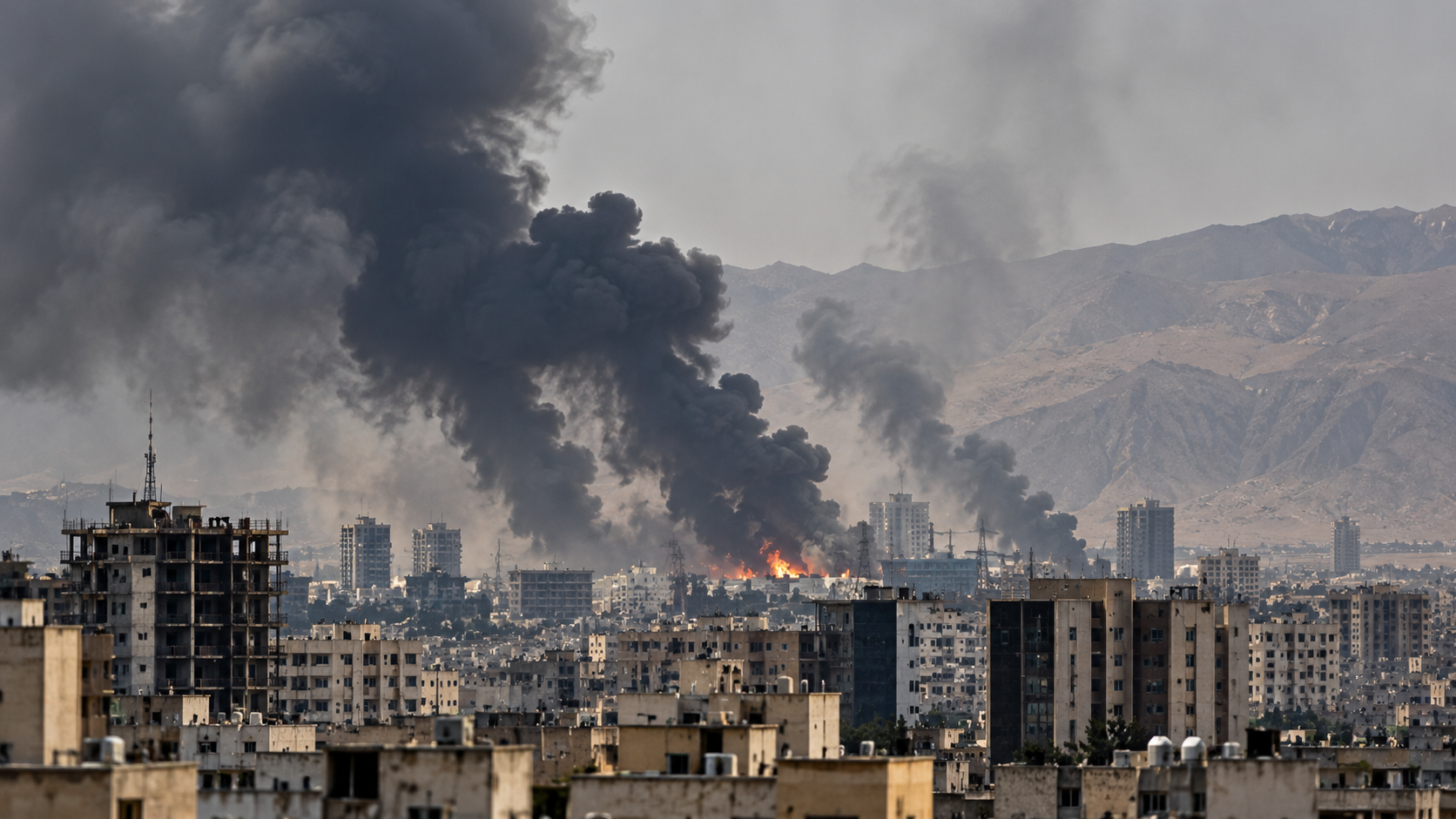
The conflict that followed spread across the region and ultimately disrupted the Strait of Hormuz, the narrow waterway through which roughly one-fifth of the world’s oil and liquefied natural gas normally travels.
A dispute that had once centered on nuclear inspections, uranium enrichment, sanctions and diplomacy had become an actual war.
Iran Offers a Seven-Day Roadmap
This week, Iran offered a possible way out.
Iranian Foreign Minister Abbas Araghchi announced that Tehran had transmitted a seven-day proposal to Washington through Qatar.
Under the proposal, the United States would lift its naval blockade of Iranian ports, waive sanctions on Iranian oil sales, release frozen Iranian assets and observe a regional ceasefire.
Iran, in return, said the Strait of Hormuz could reopen to normal commercial traffic within seven days.
The proposal also called for renewed negotiations between Iran and the United States over a broader agreement, including Iran’s nuclear program.
The terms would have required significant concessions from Washington and there was no guarantee that negotiations would ultimately produce a permanent settlement.
But they offered a diplomatic path toward ending months of fighting and reopening one of the world's most economically important waterways.
Trump rejected it.
“I reject their proposal,” the president told reporters Saturday.
Trump Says America Is Winning
Trump portrayed Iran’s proposal not as an opportunity to end the conflict but as evidence that his military and economic pressure is succeeding.
He said Iran wants an agreement because it is “losing so badly.”
“We’re winning tremendously,” Trump said.
The administration can point to substantial damage inflicted on Iran’s military capabilities and economy. Trump has also maintained throughout the conflict that Iran must never be permitted to obtain a nuclear weapon and has argued that military and economic pressure are necessary to force Tehran to accept stronger terms.
Iran, meanwhile, has its own long record of regional military activity, support for armed proxy groups and confrontation with the United States and its allies.
None of that changes the sequence of American decisions that brought the United States to its current position.
The History Matters
The Trump administration did not inherit this war.
Trump inherited a nuclear agreement.
It was imperfect. Critics argued that its restrictions eventually expired, that it failed to address Iran’s ballistic missile program and that it did too little about Tehran’s support for armed groups throughout the Middle East.
Trump nevertheless made the decision to withdraw the United States rather than remain in the agreement and attempt to strengthen it.
His administration replaced diplomacy with maximum economic pressure.
The nuclear agreement deteriorated.
Iran's nuclear program expanded.
Years later, Trump ordered American forces into major combat operations against Iran without a declaration of war from Congress.
The Strait of Hormuz subsequently became entangled in the conflict.
And now, nearly seven months into the war, Iran has offered terms that could reopen that waterway and restart negotiations.
Trump has said no.
Where Does It End?
Perhaps the most consequential question is what happens next.
The Wall Street Journal reported Friday that Trump has told aides he expects renewed American bombing of Iran after the November midterm elections. The report cited unnamed U.S. officials familiar with the president’s thinking.
Trump has not publicly announced such a bombing campaign, so the report should not be treated as a formal military decision.
But it raises an extraordinary possibility.
The United States may be preparing for another round of attacks while simultaneously rejecting an Iranian proposal to temporarily stop the fighting and return to negotiations.
There is no certainty Iran’s proposal would have produced lasting peace. Tehran's terms demanded substantial concessions from Washington, and decades of hostility between the two countries cannot be resolved by a seven-day timetable.
But there is also no escaping the history that preceded Saturday's decision.
Trump withdrew America from the nuclear agreement.
His maximum-pressure campaign failed to produce the stronger nuclear agreement he promised.
Iran's nuclear program subsequently expanded.
Trump ordered U.S. forces into the current war.
And now, confronted with Iran's latest proposal to stop the fighting and return to negotiations, Trump has rejected it.
The question facing the country is no longer simply how the United States got here.
It is how much longer Trump intends to keep America here.