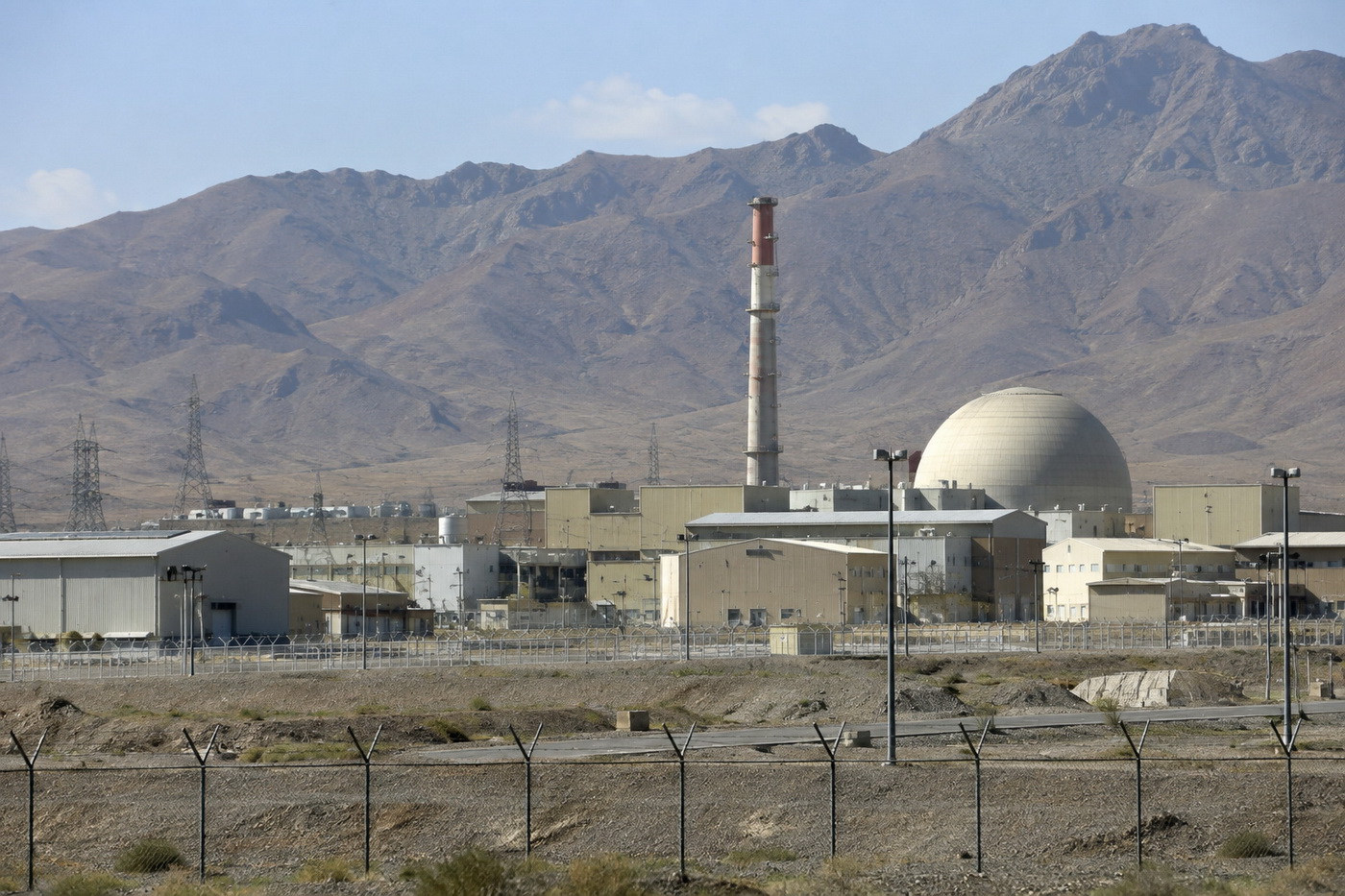
For more than two years, the Iran nuclear agreement had restricted Tehran's nuclear program in exchange for relief from international economic sanctions.
International inspectors were reporting that Iran was implementing its nuclear commitments.
Donald Trump nevertheless wanted a different approach.
On October 13, 2017, Trump announced that he would refuse to certify the Iran nuclear agreement under a separate American law governing congressional review of the deal.
The decision did not immediately withdraw the United States from the agreement.
It did not automatically restore the nuclear sanctions that had been lifted.
And it did not mean that international inspectors had determined Iran was violating the agreement.
Instead, Trump rejected a broader certification required under U.S. law and demanded that Congress and America's allies address what he considered fundamental weaknesses in the deal.
It was the clearest indication yet that the United States might eventually abandon one of the Obama administration's signature foreign-policy achievements.
Seven months later, that is exactly what Trump would do.
The Iran Nuclear Agreement
The Joint Comprehensive Plan of Action — commonly known as the JCPOA or Iran nuclear deal — had been reached in July 2015.
The agreement involved Iran, the United States, Britain, France, Germany, Russia, China and the European Union.
Its central bargain was relatively straightforward.
Iran accepted substantial restrictions on its nuclear activities.
In return, the United States, European Union and United Nations lifted or suspended nuclear-related economic sanctions.
Iran reduced its stockpile of enriched uranium.
It limited uranium enrichment.
It removed thousands of centrifuges.
Its nuclear facilities became subject to an extensive international monitoring and inspection system.
The objective was to make it substantially more difficult for Iran to produce enough fissile material for a nuclear weapon without the international community detecting the effort.
Trump Had Opposed the Deal From the Beginning
Trump had repeatedly attacked the agreement during the 2016 presidential campaign.
He described it as one of the worst agreements the United States had ever negotiated and argued that the Obama administration had given Iran too much in exchange for temporary nuclear restrictions.
Once in office, however, Trump faced a complication.
The agreement was already being implemented.
And international inspectors were not reporting the kind of Iranian nuclear violation that would provide an obvious justification for abandoning it.
Trump's administration certified the agreement twice during his first year.
But the president made clear that he was dissatisfied.
By October, he was ready to take a different course.
What “Certification” Actually Meant
The certification Trump refused to make was not itself part of the international nuclear agreement.
It came from an American law passed by Congress in 2015: the Iran Nuclear Agreement Review Act.
Under that law, the president was periodically required to make several determinations to Congress.
Those determinations went beyond the simple question of whether Iran was complying with the technical nuclear restrictions contained in the JCPOA.
Among other things, the president had to determine whether continued suspension of nuclear-related sanctions remained “appropriate and proportionate” to the measures Iran had taken regarding its nuclear program and whether it remained vital to U.S. national-security interests.
Trump said he could no longer make that certification.
“We cannot and will not make this certification,” he announced.
That distinction mattered.
Trump was not simply announcing that inspectors had caught Iran secretly building a nuclear weapon.
He was making a broader judgment about whether continued U.S. participation in the existing arrangement served American interests.
The Nuclear Inspectors Had a Different Job
The International Atomic Energy Agency was responsible for monitoring Iran's nuclear commitments.
By October 2017, the IAEA had repeatedly reported that Iran was implementing those commitments.
The agency's August 2017 report — its most recent before Trump's announcement — continued to verify Iran's compliance with the nuclear restrictions it monitored.
Trump's own senior officials had also acknowledged that distinction.
Secretary of State Rex Tillerson had described Iran as being in “technical compliance” with the agreement.
General Joseph Dunford, chairman of the Joint Chiefs of Staff, told Congress that Iran was adhering to its JCPOA obligations and that the agreement had delayed Iran's ability to develop nuclear weapons.
That did not mean the United States considered Iran's broader conduct acceptable.
Far from it.
Iran continued developing ballistic missiles, supporting armed groups and governments throughout the Middle East, backing Hezbollah, supporting Syrian President Bashar al-Assad and competing aggressively for regional influence.
But many of those activities were outside the nuclear agreement.
That became the fundamental disagreement.
Trump Says the Deal Is Too Narrow
Trump argued that judging Iran exclusively by its nuclear commitments ignored the larger threat posed by Tehran.
He criticized Iran's missile program.
He condemned its support for militant and terrorist organizations.
He objected to its involvement in regional conflicts.
And he attacked the agreement's so-called sunset provisions, under which some restrictions on Iran's nuclear activities would eventually expire.
Trump argued that the United States had granted Iran substantial sanctions relief while receiving an agreement that merely postponed portions of the nuclear problem.
His administration wanted a broader strategy.
That strategy would attempt to constrain not only Iran's nuclear program but also its ballistic missiles, support for regional proxies and influence throughout the Middle East.
Iran's Critics Saw a Flawed Agreement
Trump was not alone in criticizing the JCPOA.
Opponents of the agreement had argued since 2015 that it granted Iran too much sanctions relief while leaving important problems unresolved.
Israel strongly opposed the deal.
Critics in the United States argued that restrictions on Iran's nuclear activities should have been permanent.
They also objected to the fact that the agreement did not comprehensively restrict Iran's ballistic missile program or its support for militant organizations.
From this perspective, Iranian compliance with the nuclear provisions did not necessarily make the agreement a good deal.
Trump embraced that argument.
His administration's position was essentially that Iran could comply with the technical requirements of an agreement that was itself fundamentally inadequate.
America's Allies Disagree
The other major participants in the agreement were not eager to reopen it.
Britain, France and Germany continued to support the JCPOA and argued that preserving the nuclear restrictions was important to international security.
For European governments, concerns about Iran's missile program and regional activities could be addressed separately without destroying an agreement that was limiting Iran's nuclear program.
That created another problem for Trump.
The JCPOA was not simply an agreement between Washington and Tehran.
It was a multilateral arrangement involving several of the world's major powers.
The United States could withdraw from it.
But Trump could not simply rewrite it by himself.
The Decision Goes to Congress
Trump's refusal to certify opened a period in which Congress could consider whether to reimpose nuclear-related sanctions.
The president also called on lawmakers to strengthen U.S. law surrounding the agreement.
He wanted tougher restrictions on Iran's nuclear activities, stronger enforcement and action addressing ballistic missiles.
Trump also issued a warning.
If Congress and America's allies could not address what he considered the agreement's serious flaws, he said the United States could terminate its participation.
For the moment, however, the United States remained inside the JCPOA.
That distinction sometimes disappeared in descriptions of Trump's October announcement.
The United States did not withdraw from the Iran nuclear agreement on October 13, 2017.
That would come later.
Seven Months Until Withdrawal
For the next several months, the Trump administration attempted to persuade European allies to agree to changes that would satisfy the president's objections.
Those negotiations failed to produce an arrangement Trump considered sufficient.
On May 8, 2018, he announced that the United States would withdraw from the JCPOA.
The administration subsequently began restoring American sanctions that had been lifted under the agreement.
That decision fundamentally changed the trajectory of U.S.-Iran relations.
But the road toward withdrawal had been clearly marked seven months earlier.
October 13 was the warning.
Compliance Wasn't Trump's Only Question
The dispute surrounding Trump's decision highlighted two separate questions that were frequently treated as though they were the same.
Was Iran implementing its nuclear commitments under the JCPOA?
International inspectors said it was.
Did the agreement adequately protect American interests and address the broader threat posed by Iran?
That was a political and strategic judgment, and Trump said it did not.
His administration argued that an agreement could be technically followed while still being fundamentally inadequate.
Supporters of the JCPOA argued that abandoning a functioning nuclear agreement because it did not solve unrelated problems risked eliminating restrictions that were actually working.
Those competing arguments would define the next stage of the confrontation.
On October 13, 2017, Trump stopped short of withdrawing the United States from the Iran nuclear agreement.
But he made something else unmistakably clear.
He no longer intended to accept the deal as it existed.
The countdown toward American withdrawal had begun.